
Seoraksan: Which Entrance to Use, and What You Can Actually Do There
Seoraksan has three separate entrances an hour apart from each other, and the one you pick decides your whole day. Here is the cable car, the short walks, the autumn timing and the peak.
| Three entrances | Seorakdong for the cable car and the rock, Osaek for easy valley walking, Baekdam for temples deep in the mountains. |
|---|---|
| First visit | Use Seorakdong. It is twenty minutes from Sokcho and four short routes start from the same car park. |
| No hiking needed | The cable car takes five minutes each way, and the Jujeongol valley path is boardwalk most of the way. |
| Cable car | Return tickets only, sold on the day at the window. There is no advance booking and no walking path down. |
| Entry times | Short routes are open all daylight hours. Anything crossing the mountain closes to new walkers in the morning. |
| Autumn | The high ground turns first and the popular valleys turn later, so pick which one you want before you book. |
1. Seorakdong, Osaek and Baekdam are the three ways in
2. Sogongwon is the entrance most people mean
3. The cable car sells return tickets only
4. Ulsanbawi is the one with the stairs
5. Biseondae and the Cheonbuldong valley
6. The Towangseong Falls viewpoint
7. Sinheungsa temple is free now
8. Osaek and Jujeongol are the easy walking
9. Heullimgol needs a booking in autumn
10. Cars cannot reach Baekdamsa
11. Daecheongbong: four ways up the summit
12. The time you arrive decides how far you get
13. Sleeping on the mountain
14. Autumn: the top turns first
15. Getting there and parking
16. Camping and left luggage
17. What to bring
18. The quieter Inje entrances
19. How many days, and how to combine them
20. The cable car being built at Osaek
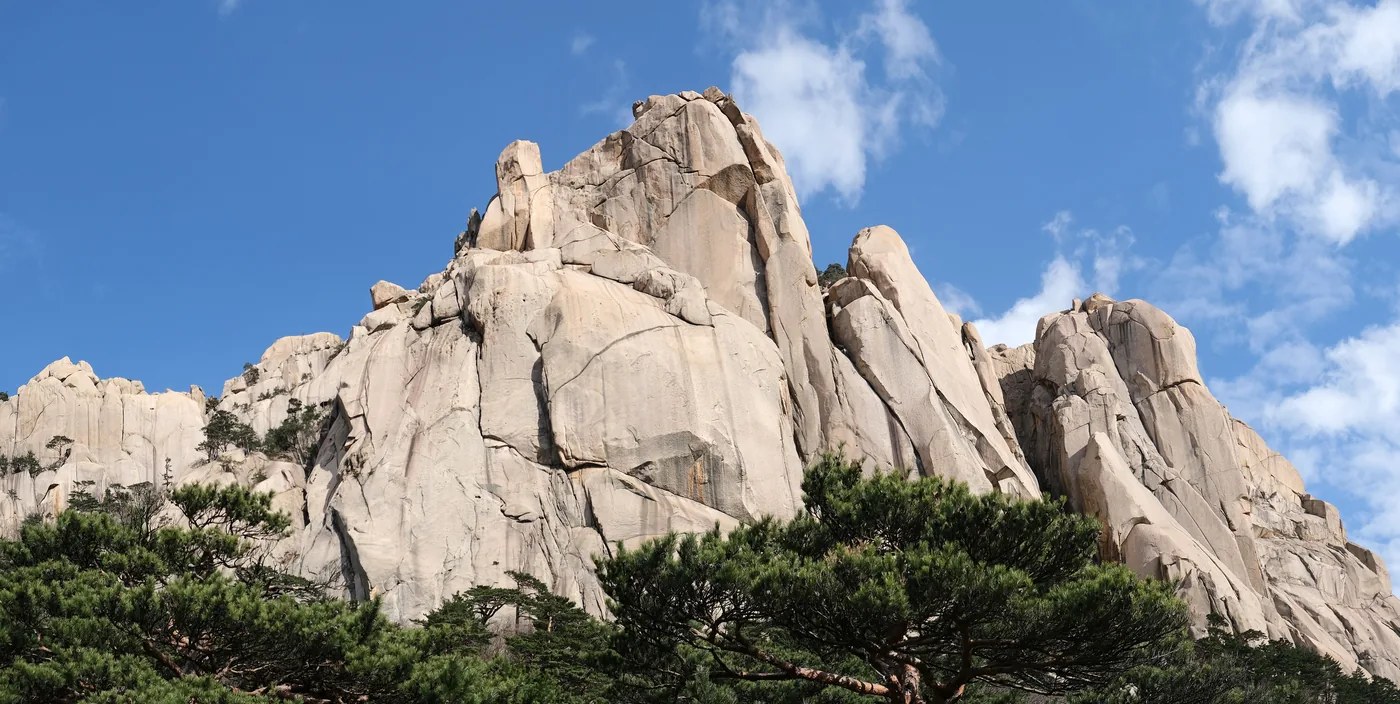
1. Seorakdong, Osaek and Baekdam are the three ways in
People picture one place when they hear Seoraksan, but the ways in are Seorakdong on the Sokcho side, Osaek on the Yangyang side and Baekdam on the Inje side. If you are fitting this into a trip to Sokcho, settle the entrance before anything else.
The park service splits Seoraksan into three parts. Outer Seorak covers the Sokcho side, Inner Seorak is over in Inje, and South Seorak runs from the Hangyeryeong pass down to Osaek. These are not neighbourhoods of the same place. They are separate valleys with separate roads. Outer Seorak is twenty minutes from central Sokcho; the other two are on the far side of the ridge and take about an hour.
| Area | Where | What is there | From central Sokcho |
|---|---|---|---|
| Outer Seorak | Sokcho, part of Yangyang, Goseong | Sogongwon, Ulsanbawi, Gwongeumseong, Biseondae, Cheonbuldong valley | 20 minutes by car |
| Inner Seorak | Inje | Baekdamsa, Suryeomdong, Oseam, Bongjeongam | About an hour |
| South Seorak | Hangyeryeong down to Osaek | Osaek mineral spring, Jujeongol, Heullimgol, Yongso Falls | About an hour |
One day means Outer Seorak
If this is a day trip, go to Outer Seorak and do not try to combine it with anything else. The cable car, Ulsanbawi, Biseondae and the Towangseong Falls viewpoint all start from the same car park, so you can leave a bag in the car and come back to it.
Two days lets you add South Seorak
Osaek is the easy side. The valley path there is close to flat, which makes it a good second day after a climb. Many visitors who cannot face stairs do this one instead and still see the gorge.
Inner Seorak needs a day of its own
Cars cannot reach Baekdamsa. You park down in Yongdae-ri and change to a village bus, and once you add that transfer there is no half-day version of this.
2. Sogongwon is the entrance most people mean
Take the bus from Sokcho and the last stop is the Seoraksan car park. That is Sogongwon. Walk in from the car park and you pass under a painted temple gate, and behind it sit Sinheungsa temple, the cable car station and the start of the trails.
What starts here
Four routes leave from this one spot: Ulsanbawi, the Towangseong Falls viewpoint by way of Biryong Falls, Biseondae, and the cable car up to Gwongeumseong. All four bring you back to the same place, so none of them needs a second car park or a pickup.
These four are also the relaxed ones. They close only from sunset until two hours before sunrise, so during daylight you can start whenever you like. That is not true of the routes that cross the mountain.
The visitor centre closes on Mondays
The Seorakdong visitor centre beside the car park is shut on Mondays. If you want a paper map or the exhibits, come another day. The smaller ranger post stays open all year, morning to late afternoon.
There is no park entrance fee
Walking into the park costs nothing. What you pay for is parking, the cable car, and a hut or campsite if you use one. Older pages that mention a separate temple admission are out of date, and that charge is covered further down.
Map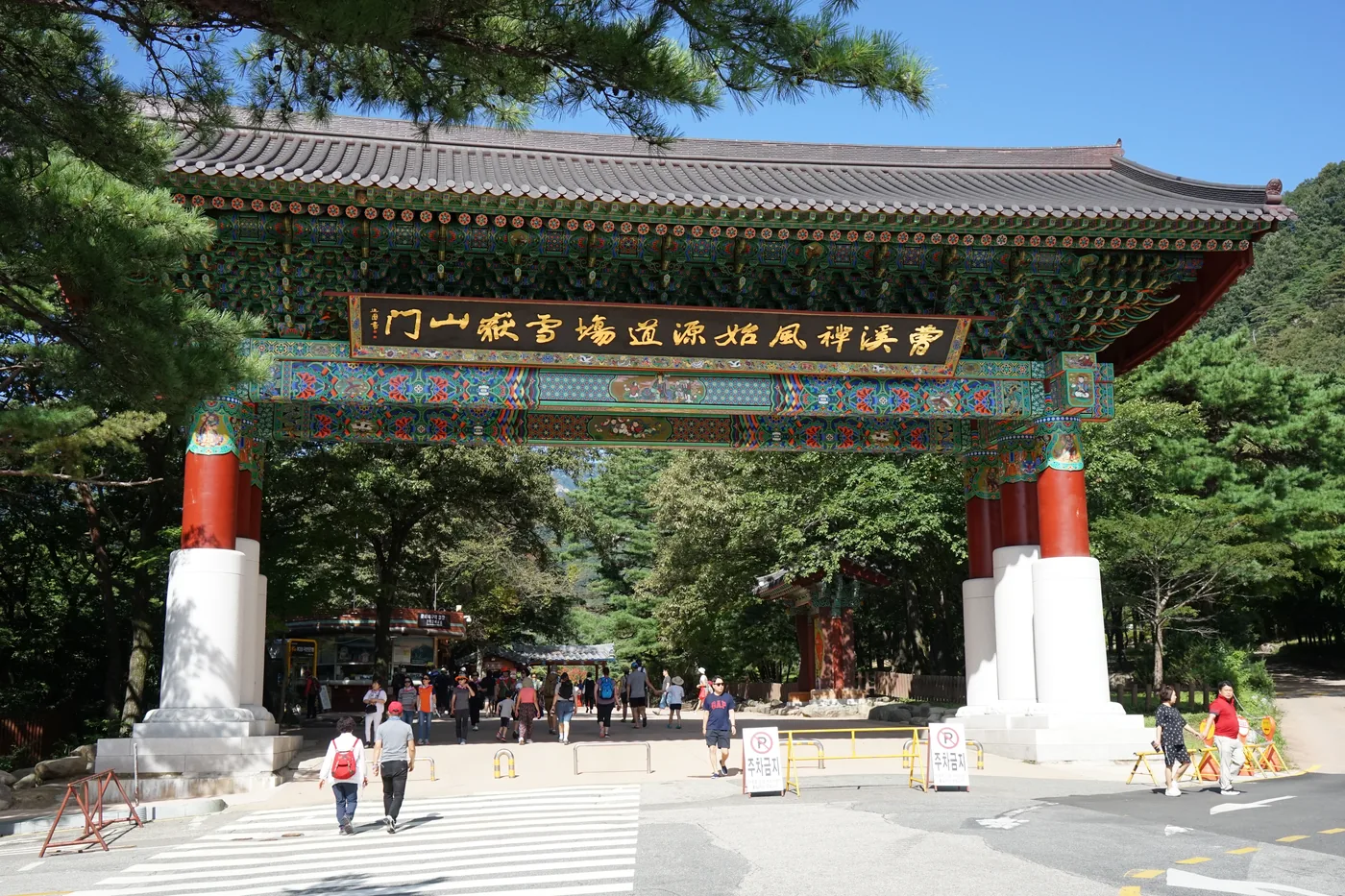
3. The cable car sells return tickets only
The station is a five-minute walk from the car park. This is how you get a mountain view without climbing. It drops you at Gwongeumseong, an old fortress site on a rock shoulder, and from up there you see Ulsanbawi, the town of Sokcho and the sea beyond it.
You cannot book ahead
There is no advance booking at all. You buy at the ground-floor window on the day, and that is the only way. Weather changes the service too often for anything else. Strong wind closes it, and when that happens unused tickets are refunded in full.
There is also no path down. Tickets are sold as returns, and everyone who goes up rides back down.
| Ticket | Who | Return fare |
|---|---|---|
| Adult | Middle school age and above | 16,000 won |
| Child | 37 months to elementary school | 12,000 won |
| Infant | Under 36 months | Free |
| Adult, reduced | Veterans, severe disability | 13,000 won |
| Child, reduced | Severe disability | 9,500 won |
| Senior | 65 and over | 14,000 won |
| Sokcho resident | Proof of address, one ticket each | 8,000 won adult, 6,000 won child |
🔴 The senior fare is suspended in autumn
The operator publishes blackout dates every year, and the autumn block is long. In 2026 it runs from 18 July to 23 August, and again from 19 September to 15 November. The whole leaf season falls inside it.
Only the senior fare is affected. Disability, veteran and Sokcho resident discounts apply all year, including these weeks. If you are travelling with an older parent and budgeted the reduced price, check again before you go.
Practical things worth knowing
The ride is five minutes up and about ten there and back. You can stay as long as you like at the top, but you have to catch the last car down, which means that if you go up on the last one you get roughly twenty minutes up there.
Refunds are full until ten minutes before departure and partial after that, and the same deduction applies if you change your time slot. Lost tickets are not reissued.
Pushchairs are not allowed in the cabin; there is a free rack outside the building. Wheelchairs are fine and a lift takes you to the boarding level. The cabins have no power supply, so there is no heating or cooling in them.
The toilet at the top uses foam rather than water, so most people prefer to go before buying a ticket. There is a snack counter and a coffee shop at the summit station.
Do not trust a timetable you found online
There is no fixed schedule. Hours shift with the season and the weather, and the operator posts the day’s hours on the front page of its website each morning. Most timetables circulating online are old. Check on the morning you travel.
Map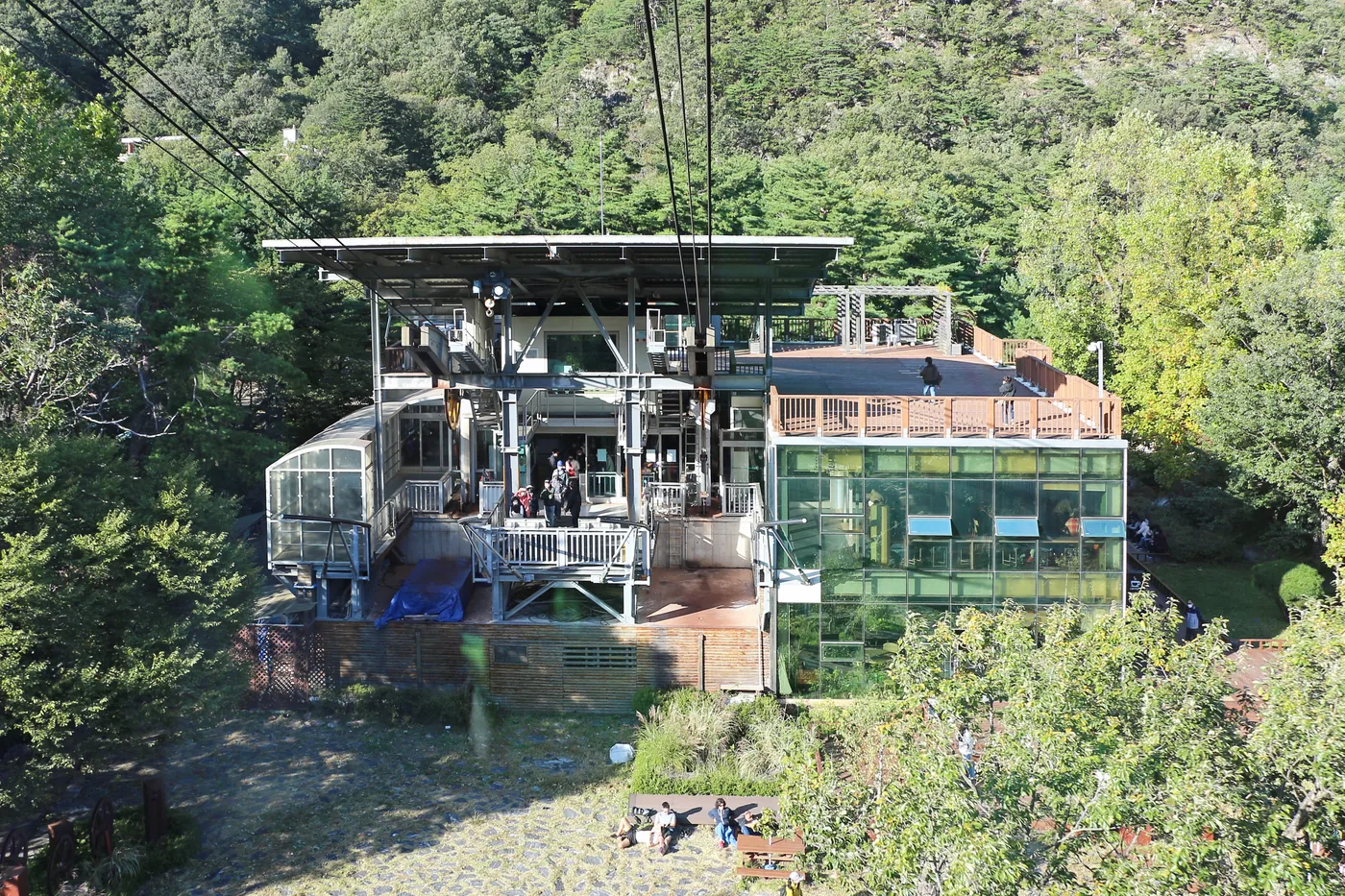
4. Ulsanbawi is the one with the stairs
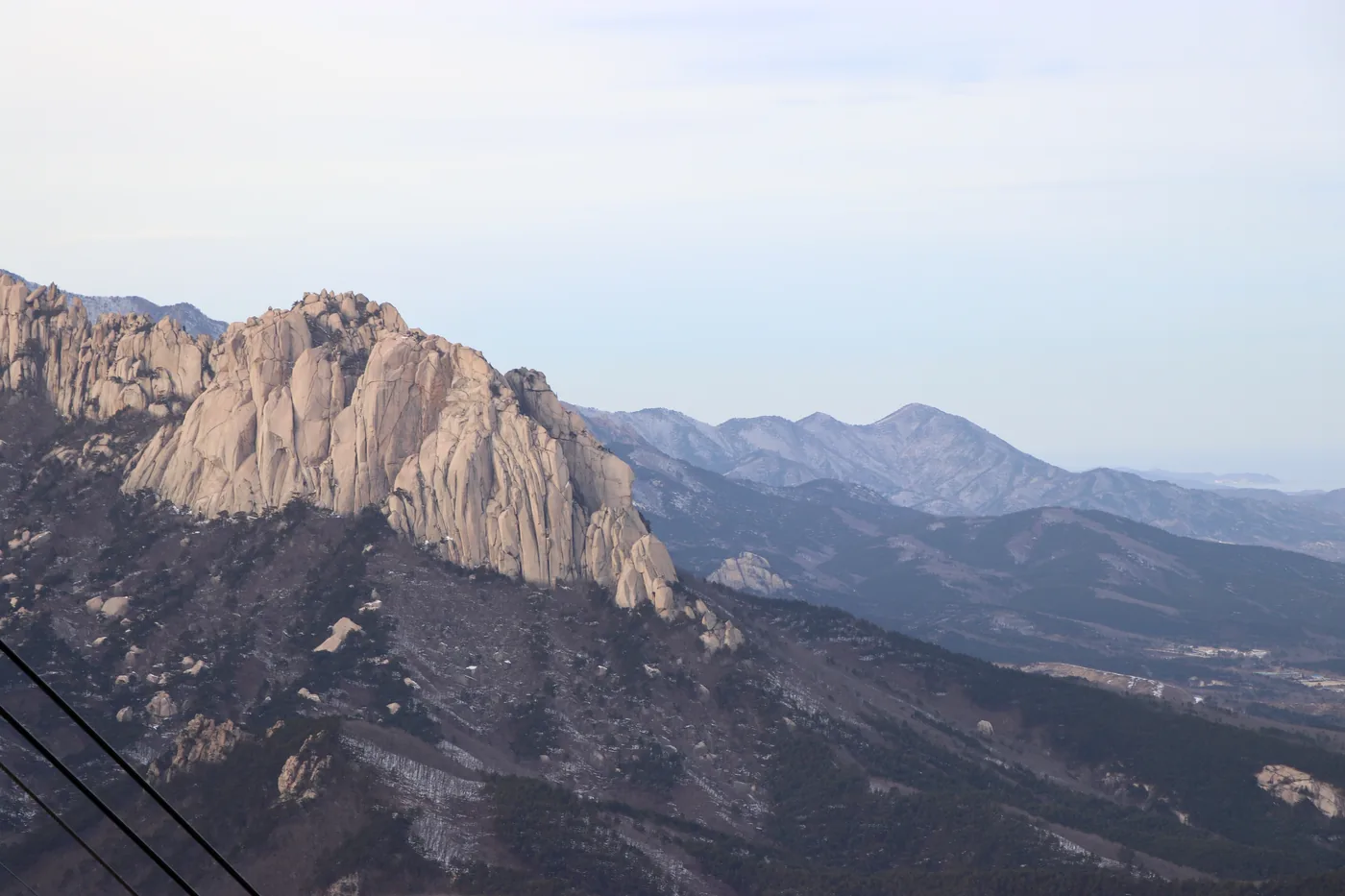
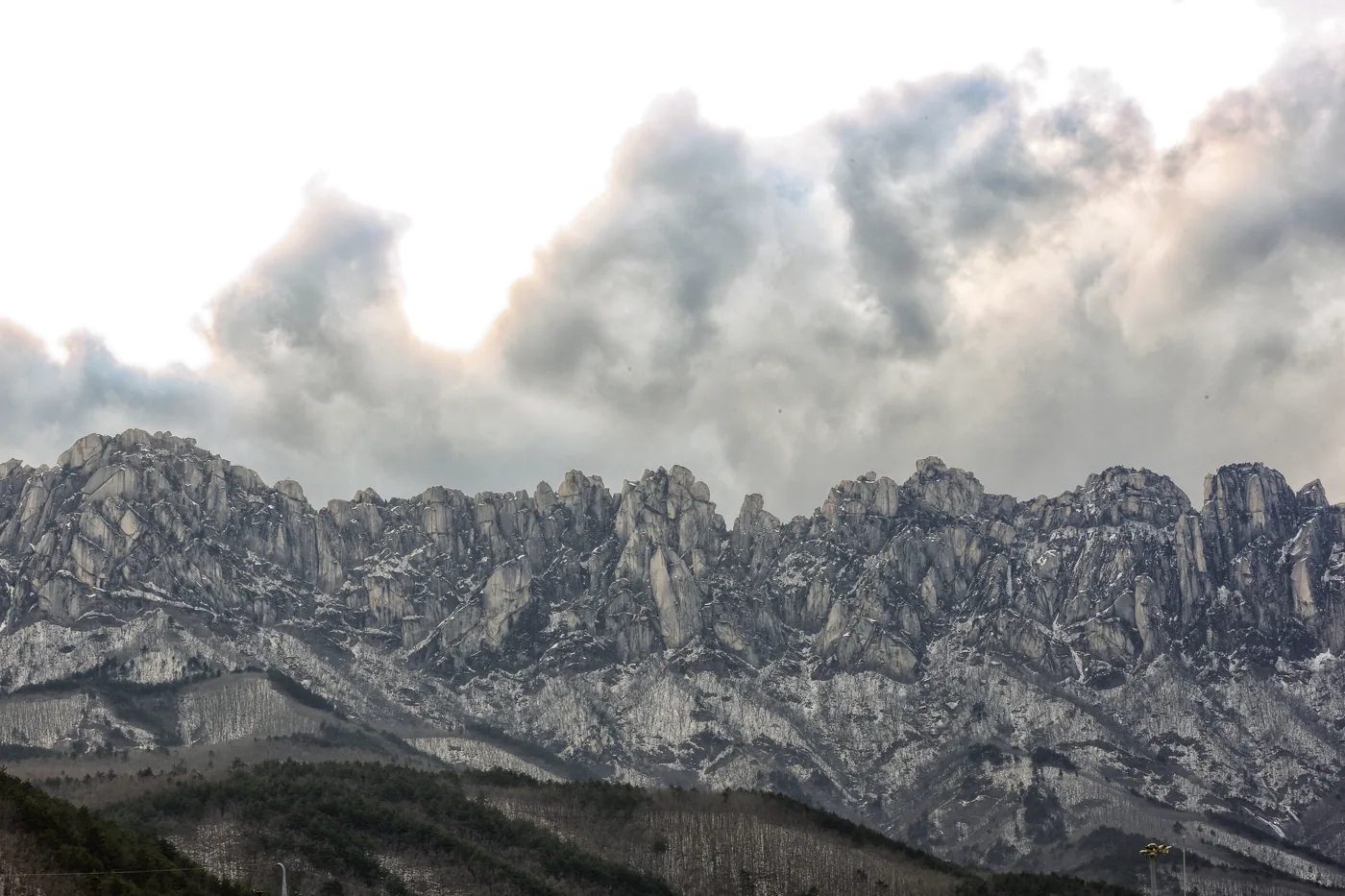
This is the rock formation in almost every Seoraksan photograph, a long granite wall standing above the forest. The route starts and finishes at Sogongwon. The first part is gentle and the last part is metal staircases bolted to the rock.
No time limit, but watch the light
Like the other short routes here you can set off at any point during the day. The risk is different: people start late, run out of daylight on the way back, and end up on steep metal steps in the dark. Work backwards from sunset.
Heundeulbawi is on the way
Partway up you pass a large round boulder that rocks when you push it and does not go anywhere. Plenty of visitors treat that as the destination and turn around, which makes for an easy walk. The hard part is everything after it.
How hard is it really
You need no equipment and no scrambling skill. The stair section is simply long, and your legs will know about it the next day. If you are unsure, go as far as the boulder and decide there.
Map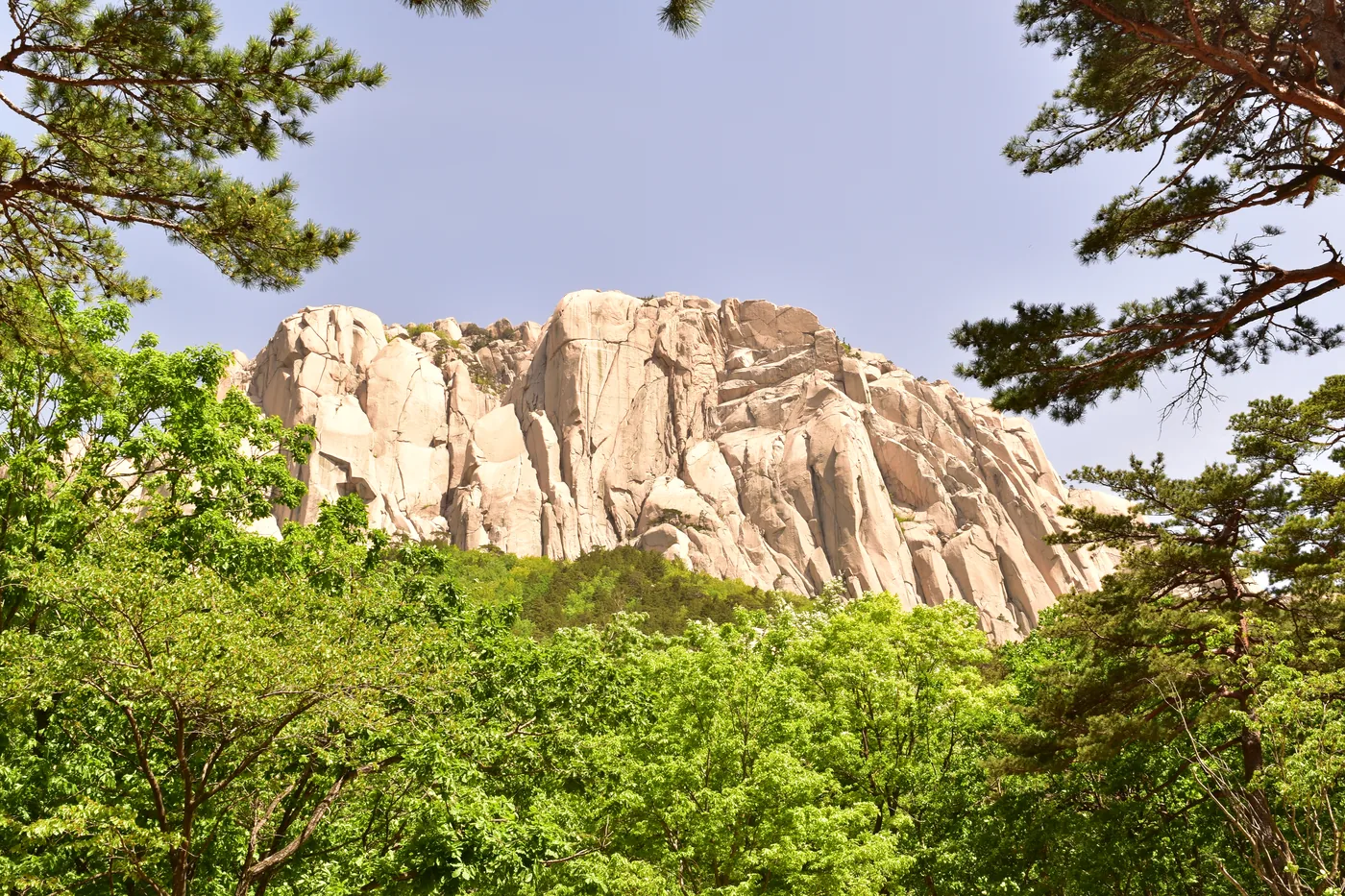
5. Biseondae and the Cheonbuldong valley
This route follows the stream inland from the car park. The early part is flat enough that sections take pushchairs and wheelchairs, which makes it the gentlest thing on this side of the park.
The carved rock at Biseondae
The valley opens out onto a wide slab of pale rock with water running beside it. Visitors centuries ago carved their names and lines of verse into the surface and they are still legible. For most people this is the turning point.
Going further changes the rules
Past Biseondae the path continues into Cheonbuldong, a chain of waterfalls that is one of the best-known autumn stretches in the country. From here on there are entry-time limits, and they depend on which way you turn.
| From Biseondae towards | November to March | April to October |
|---|---|---|
| Yangpok | 04:00 to 12:00 | 03:00 to 14:00 |
| Madeungnyeong | 04:00 to 10:00 | 03:00 to 11:00 |
| Geumganggul | 04:00 to 14:00 | 03:00 to 14:00 |
The second time in each column is when rangers stop letting people in. The Madeungnyeong direction shuts earliest because it is the longest way out. Standing at the same junction, one turn is open and another is already closed.
Map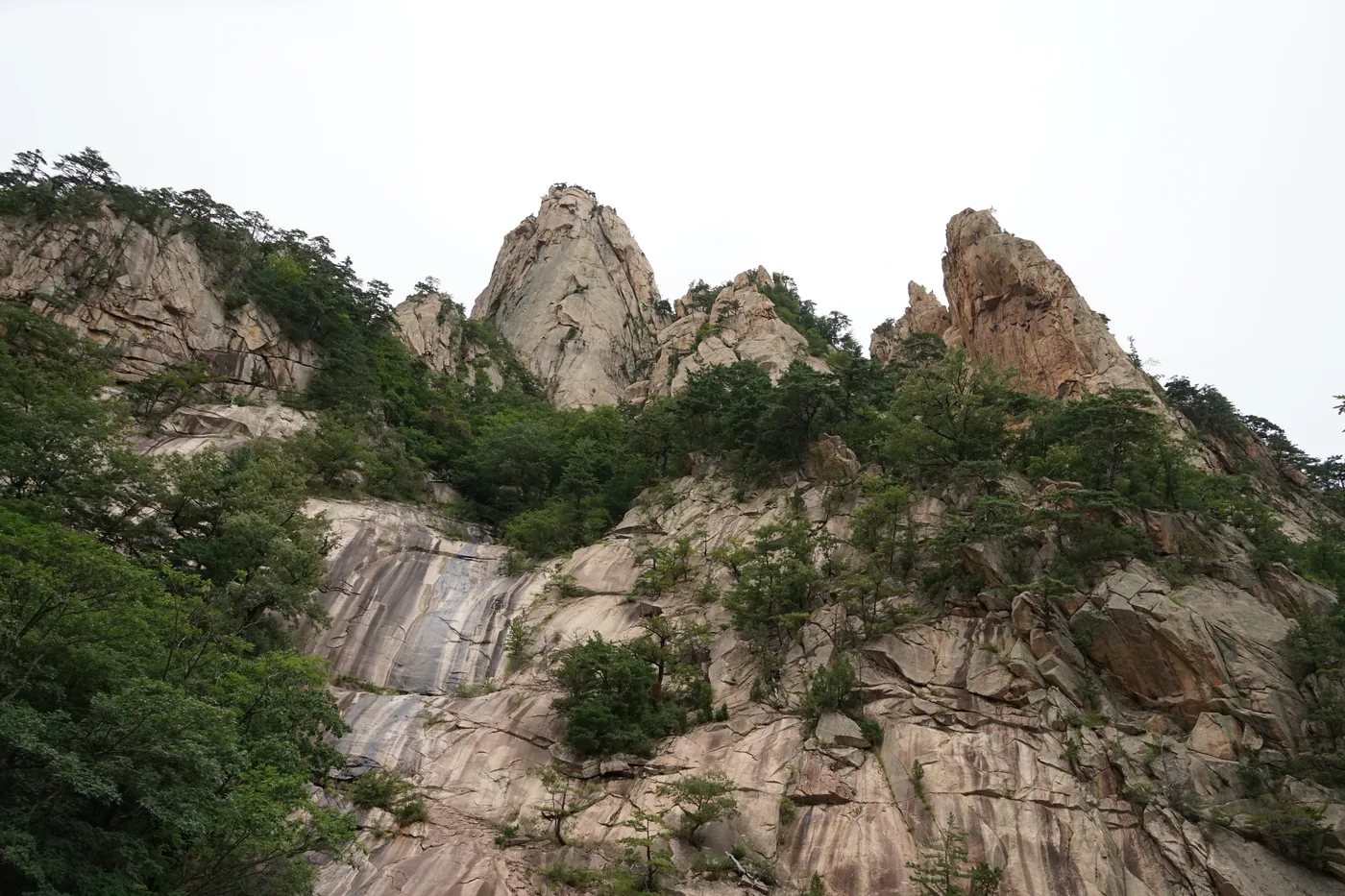
6. The Towangseong Falls viewpoint
There is no path to the foot of this waterfall. You look at it across the valley from a platform, reached from the car park by way of Biryong Falls. The last stretch is steep steps.
You need rain for it to look like the photos
Most of the year the water is a thin line, and in dry spells there is nothing at all. Go while it is raining or within a few days of rain. Arriving on a clear, dry afternoon expecting a curtain of water is a common disappointment.
The lower section is easy
The path as far as Biryong Falls is flat at the start and takes pushchairs and wheelchairs for part of the way. With small children, treat Biryong Falls as the destination and skip the climb.
Map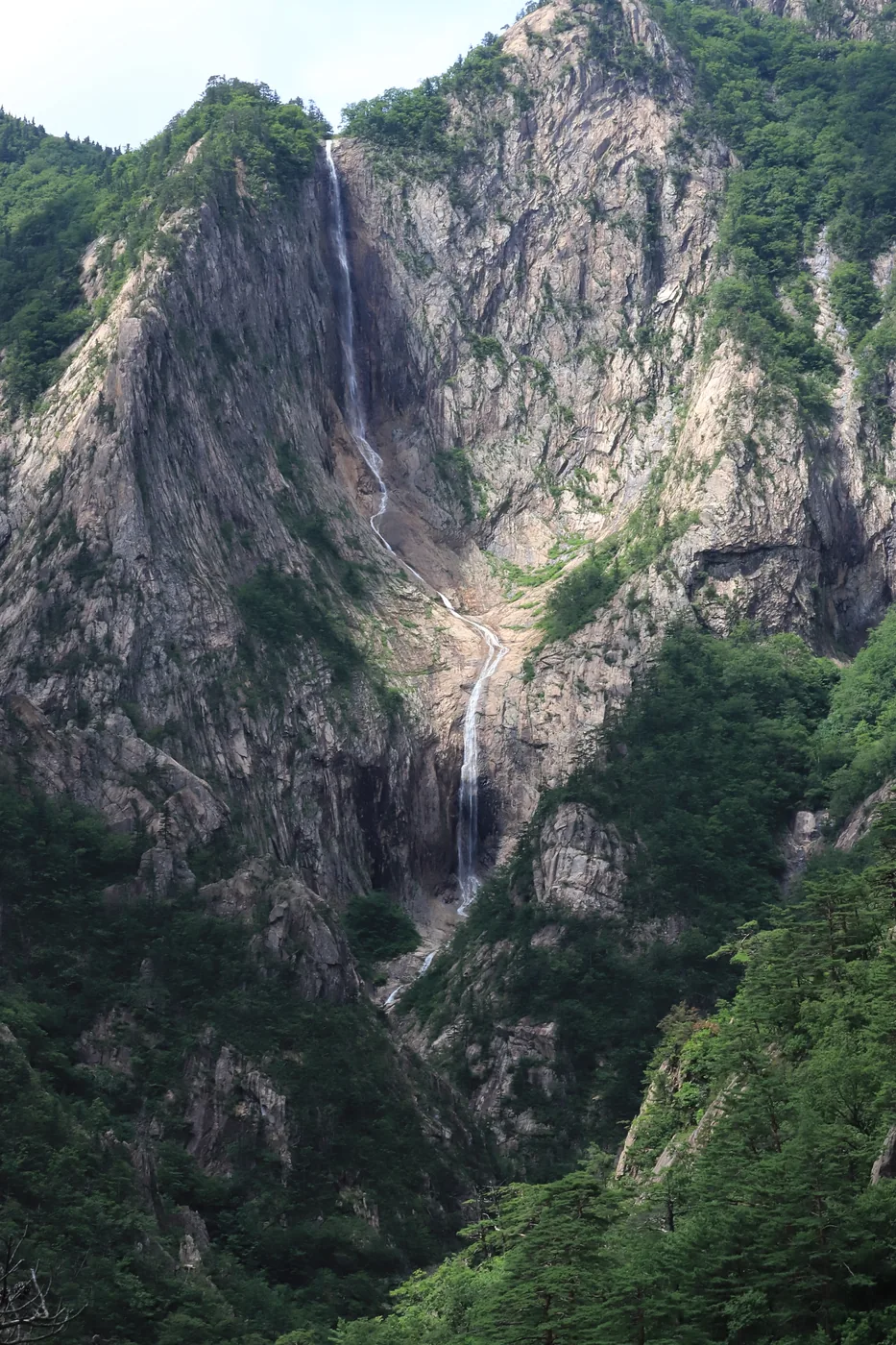
7. Sinheungsa temple is free now
The temple sits inside the park boundary, on the way to the trailheads, so you walk past it whether or not you meant to visit. A large bronze Buddha sits in the open in front of it.
The old cultural property fee is gone
Visitors used to pay a separate temple charge even if they were only hiking and never went into the temple grounds. It caused arguments for years. The law changed and the charge was dropped. Sinheungsa and Baekdamsa are both free to enter.
Guides and blog posts that still list an admission price are describing the old system.
Map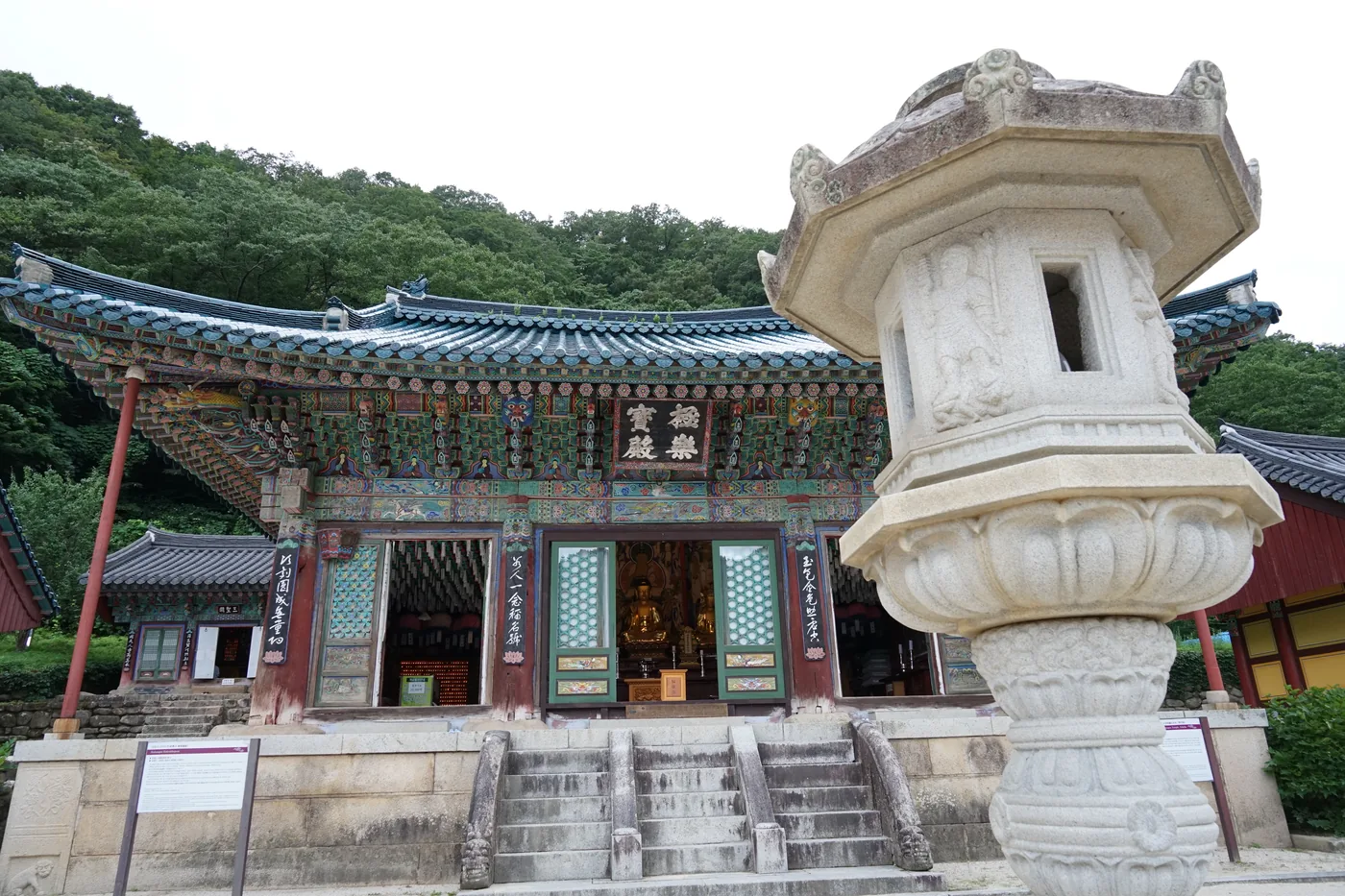
8. Osaek and Jujeongol are the easy walking
This is the Yangyang side. Instead of climbing, you walk along the floor of a gorge, which makes it the right choice for anyone who wants scenery without stairs. The ranger office here is open all year, daytime hours.
The mineral spring
Water comes up through holes worn into the rock. It is heavy with iron, which is why it tastes metallic and why the stone around it is stained orange. The spring is a designated natural monument.
Jujeongol is nearly flat
The path runs from the spring to Yongso Falls, mostly on boardwalk with a gentle gradient, and the park service lists it as suitable for children and older walkers. Allow about an hour each way.
The name comes from a story about counterfeiters minting coins in the gorge. The pools and the narrow rock gate partway along are the parts people photograph in autumn.
Different time rules apply here
This section has no morning cut-off. It is closed only from sunset until two hours before sunrise, so any daylight arrival works.
Map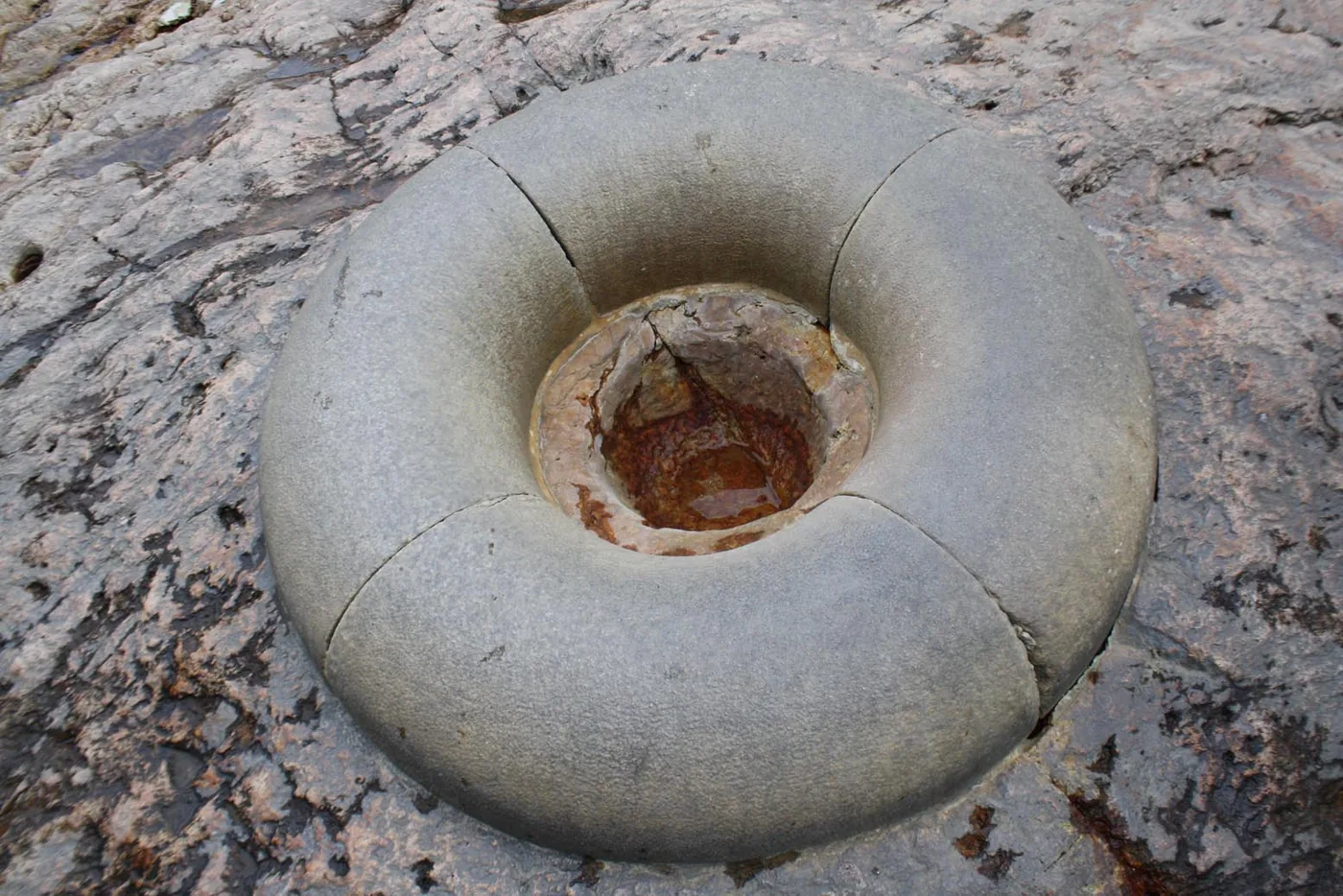
9. Heullimgol needs a booking in autumn
Heullimgol is the gorge above Jujeongol. It was closed for a long stretch of years and reopened, and it holds the steepest ground on this side of the park.
October and November are reservation-only
When the crowds arrive the rules change completely. Through October and November it becomes a booked trail and walking is one-way only. The window for entering narrows to the middle of the day.
October is busier still, so the window is widened slightly at both ends for that month. Bookings go through the national park reservation system, which is the same site used for the huts. Turning up without one in autumn means being turned back at the gate.
One-way walking changes your parking
You walk from the Heullimgol entrance down towards Yongso Falls and you cannot go back up the way you came. Work out in advance where the car ends up, or plan to walk the road or take a taxi back to it.
Map10. Cars cannot reach Baekdamsa
Baekdamsa is where Inner Seorak starts. There is a car park down at Yongdae-ri and a village bus covers the rest. The road up is narrow and rough and private cars are not allowed on it.
The village bus
A local company runs it. The trip is about seven kilometres and takes fifteen to eighteen minutes. Walking the same road takes two hours. Standing passengers are not carried because of the road.
Departures run roughly every half hour, measured from when the first passenger buys a ticket after the previous bus leaves, and when it is busy the bus simply goes once the seats fill. Fares are per direction, so budget for both ways.
| Fare, one way | Price |
|---|---|
| Age 18 and over | 2,500 won |
| Under 18 | 1,200 won |
| Period | Service hours | Note |
|---|---|---|
| 1 Jan to 15 May | 09:00 to 17:00 | Trails closed for fire season from mid-March |
| 16 May to 30 Jun | 07:00 to 18:00 | |
| 1 Jul to 22 Jul | 07:00 to 19:00 | |
| 23 Jul to 15 Aug | 07:00 to 19:00 | Summer peak |
| 16 Aug to 30 Sep | 07:00 to 19:00 | |
| 1 Oct to 30 Oct | 07:00 to 19:00 | Autumn peak |
| 31 Oct to 14 Nov | 07:00 to 18:00 | |
| 15 Nov to 31 Dec | 09:00 to 17:00 | Trails closed for fire season to mid-December |
Going deeper than the temple
From Baekdamsa the path carries on to Suryeomdong, then Oseam and Bongjeongam. Bongjeongam is a hermitage high on the ridge and it is not a day trip from the car park. If that is your plan, give it a full day and check the hut situation first.
Map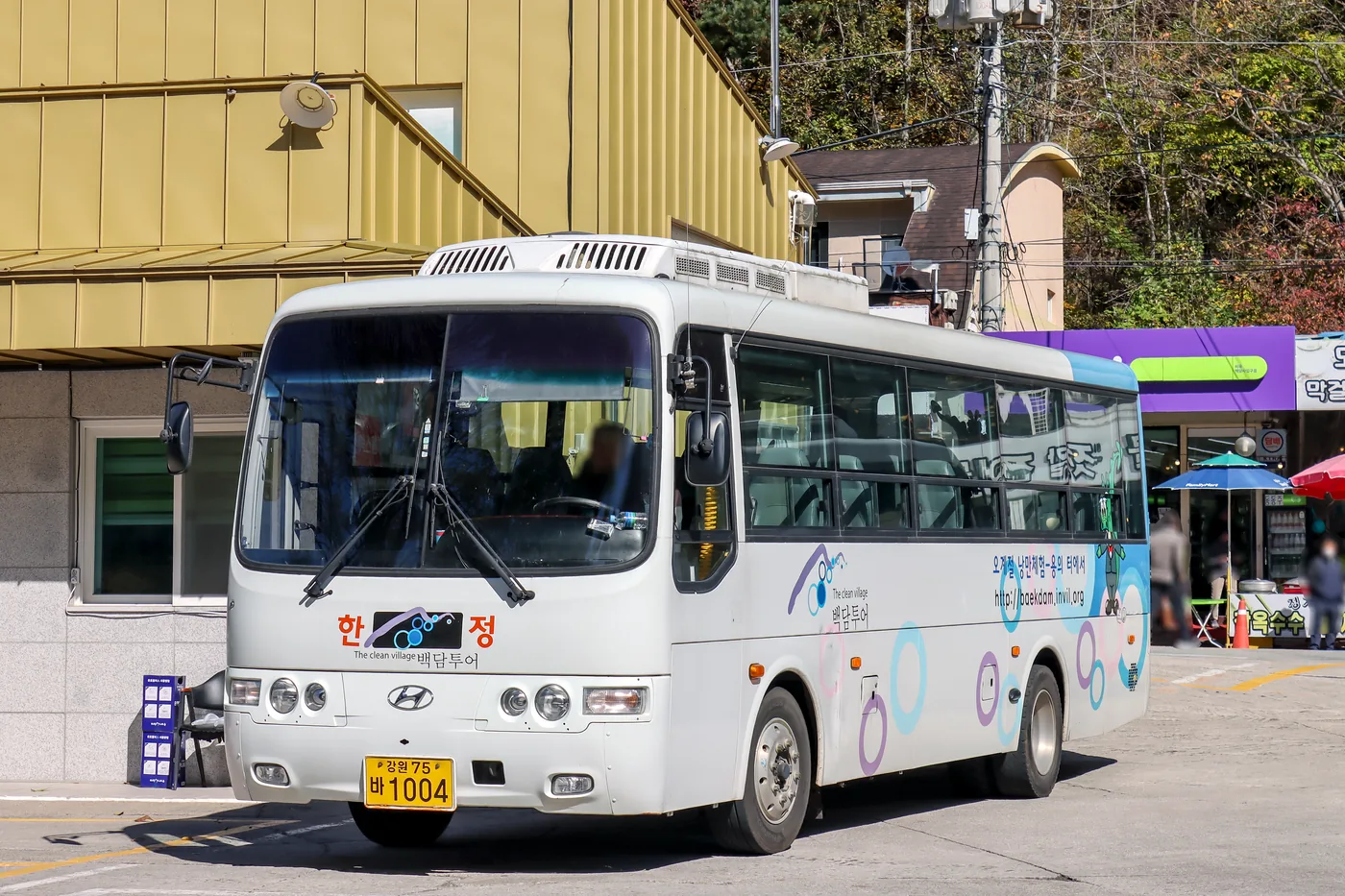
11. Daecheongbong: four ways up the summit
Daecheongbong is the top of the mountain. Routes start at Osaek, Hangyeryeong, Baekdam and Seorakdong, and all of them take a full day.
The shortest route is not the easy one
Osaek is the shortest line to the summit, and it climbs without a break almost the whole way. There is very little flat ground to recover on. Treat “short” as a statement about distance only.
You cannot start from Sokcho in the morning
Buses from town do not run early enough to get you through the gate. Summit routes require a pre-dawn start. In practice that means sleeping near Osaek or Hangyeryeong the night before, or booking a hut and splitting the walk over two days.
| Starting point | November to March | April to October |
|---|---|---|
| Osaek to Daecheongbong | 04:00 to 11:00 | 03:00 to 12:00 |
| Hangyeryeong to the junction | 04:00 to 10:00 | 03:00 to 12:00 |
| Baekdam through Suryeomdong to Socheong | 04:00 to 13:00 | 03:00 to 14:00 |
| Biseondae to Madeungnyeong | 04:00 to 10:00 | 03:00 to 11:00 |
The second figure is the moment the gate closes to new walkers. Going in after it is an offence, not a warning.
Map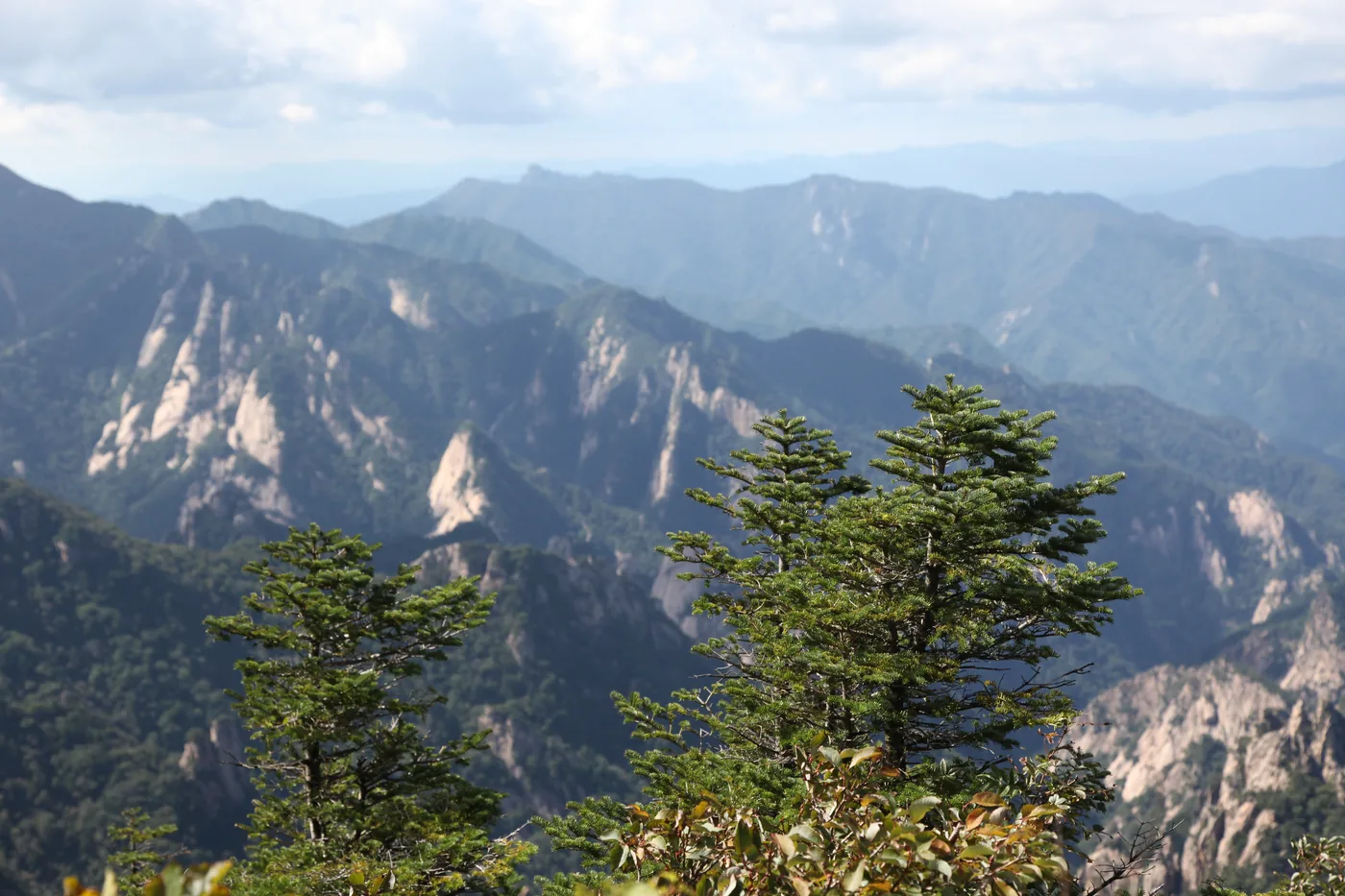
12. The time you arrive decides how far you get
On Seoraksan the clock matters more than your fitness. The park sets an opening time and a cut-off time at each gate, separately for each direction, and rangers enforce them on the ground.
Short routes are not affected
Ulsanbawi, the Towangseong viewpoint, Biseondae and the cable car at Sogongwon are open through daylight, and so is the Osaek to Yongso Falls section. The cut-offs exist for routes that cross the mountain, where being late means finishing in the dark on hard ground.
Missing the cut-off is a fine
Walking past a closed gate carries a penalty that rises with each offence, starting at 200,000 won. There is no discretion for tourists who did not know.
If you arrive late, switch to a short route rather than arguing at the gate. There is enough at Sogongwon to fill a day.
Late entries get logged
At some gates, anyone entering after a set hour is written into a register. It exists so rescuers know who is still on the mountain.
Weather closes everything regardless
Heavy rain, snow and typhoon warnings shut the trails whatever the hour. Large sections also close during the spring and autumn fire-prevention periods, and rockfall risk closes others during the thaw.
The park office publishes closures and answers the phone in Korean. If you are travelling in the shoulder months, have your accommodation check for you the night before.
13. Sleeping on the mountain
Seoraksan has staffed huts you can book. Reservations go through the national park system online, and there is no way to get a place by turning up.
🔴 Jungcheong hut no longer exists
The largest hut, and the closest to the summit, has closed. The building was failing safety checks and the high ground around it was eroding, so it was taken down and a smaller replacement is being built.
A great deal of English-language route advice still routes you through Jungcheong for the night. The park’s own website is inconsistent too: the facilities page still lists it while the price page does not. These four are what you can actually book.
| Hut | Places | Where |
|---|---|---|
| Socheong | 62 | Near the summit |
| Huiungak | 80 | On the ridge route |
| Suryeomdong | 10 | Above Baekdamsa |
| Yangpok | 8 | Inside the Cheonbuldong valley |
Note the last two. Suryeomdong and Yangpok hold single figures, and people who read about Socheong and assume all four are similar get a surprise.
Price and check-in
A partitioned place costs 20,000 won midweek and 30,000 won at weekends and in peak periods, and that price covers a two-person berth as well. Check-in opens mid-afternoon and closes in the early evening, an hour earlier in winter. Huts shut during the fire-prevention periods.
Cancel three days ahead and you get everything back. After that a share is withheld, rising the closer you get, and not turning up costs the most. Campsite bookings follow the same scale.
A hut booking extends your entry time
Booked guests may enter after the normal cut-off. How much later depends on which gate you use and which hut you booked, which catches people out.
| Entering at | Hut booked | Extra time |
|---|---|---|
| Biseondae | Huiungak | 1 hour |
| Biseondae | Yangpok | 2 hours |
| South Seorak or Hangyeryeong | Socheong or Huiungak | 1 hour |
| Baekdam | Socheong | 1 hour |
| Baekdam | Suryeomdong | 2 hours |
14. Autumn: the top turns first
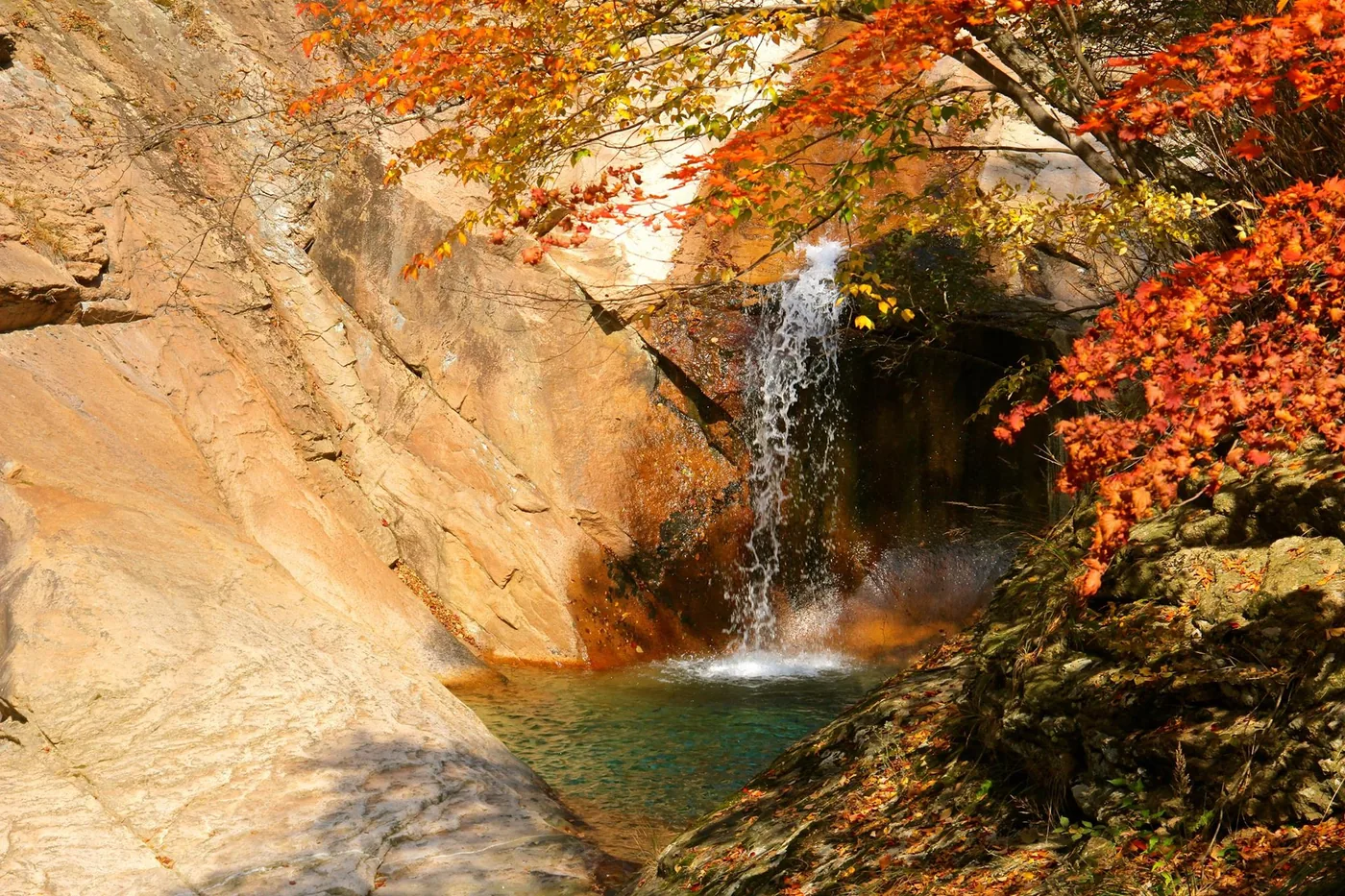
Seoraksan colours before anywhere else in the country, which is why the national leaf forecast starts here every year.
Altitude, not the calendar
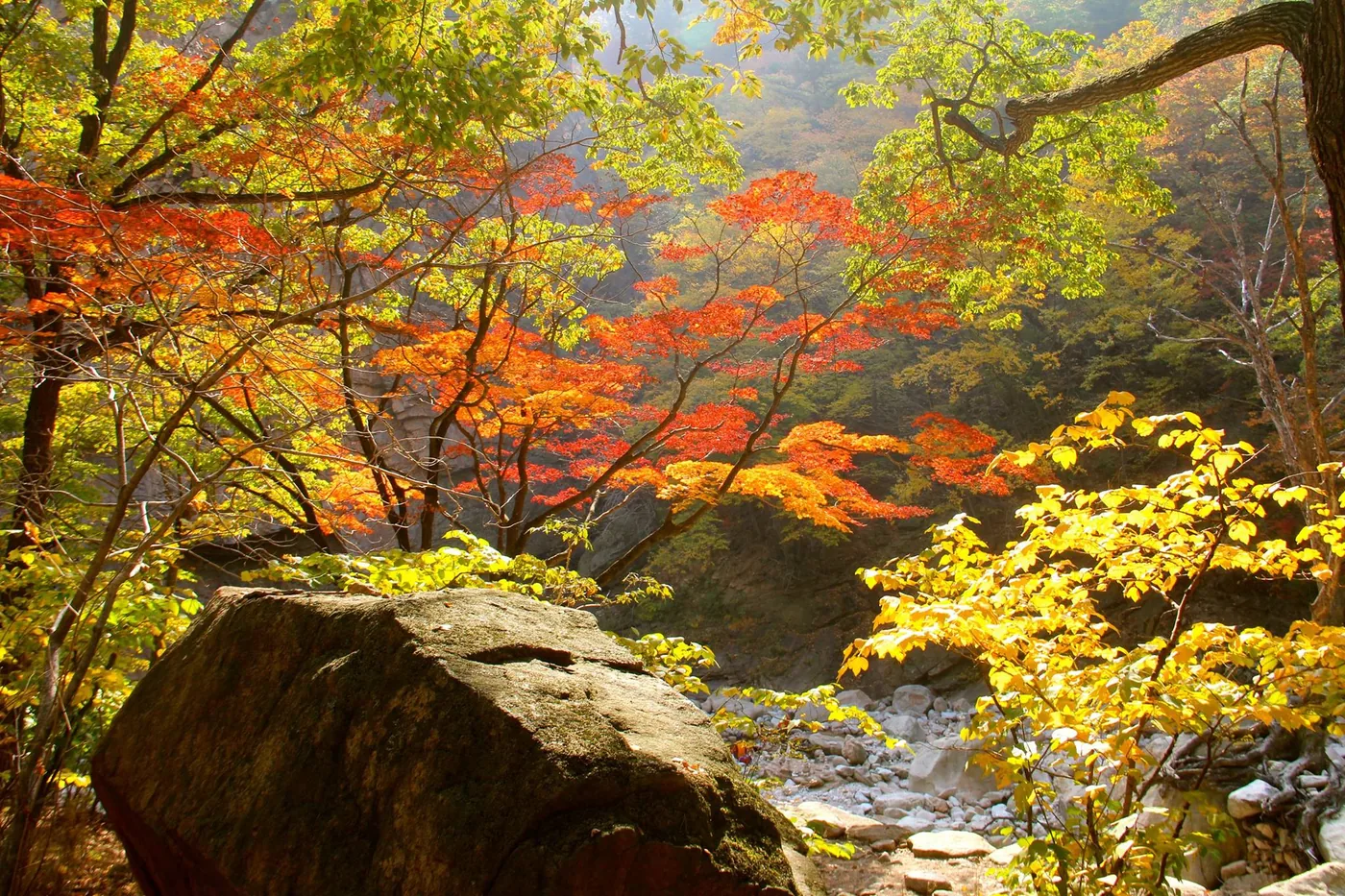
Colour starts high and works downhill. The summit ridge goes first. The valleys everyone actually walks in, meaning Biseondae, Cheonbuldong and Jujeongol, go later. Reading that Seoraksan has peaked and heading for the valley the same week is how people end up looking at green trees.
The reverse trap is real too. By the time the gorges are at their best the ridge has been bare for a while.
Roughly when
Colour begins around the end of September and the best stretch is the middle to late part of October. A warm year pushes everything later. Forecasters disagree by a week, so treat any exact date you read as a guess and check a few days before you travel.
This is the busiest time of year
Car parks fill early on October weekends, buses are crowded and the cable car queue is long. Arriving early is the only real defence. It is also the stretch when hut places and the Heullimgol booking go first.
15. Getting there and parking
There is no train. Sokcho has no railway station, so everyone arrives by road.
From Seoul
Express and intercity buses to Sokcho run frequently from the Dong-Seoul and Express Bus terminals and take a little over two hours. Book ahead on autumn weekends. From the terminal in Sokcho you change to a city bus.
Sokcho to Seorakdong
City buses 7 and 7-1 run from the intercity terminal through town and finish at the Seoraksan car park. By car it is about twenty minutes.
Reaching Osaek and Baekdam
These are on routes through Inje and Yangyang and services are sparse. Both are much easier with a car, and a taxi from Sokcho is a long ride. If you are relying on buses, check the last departure back before you commit to the day.
Parking
Sogongwon has a paid car park and the cable car has no separate one, so everyone shares it. On autumn weekends it fills in the morning.
For Baekdamsa you park at Yongdae-ri and change to the village bus. For Heullimgol, remember the one-way rule when deciding where to leave the car.
16. Camping and left luggage
The park runs a campsite at Seorakdong, booked online through the same system as the huts.
| Pitch | Midweek | Weekend and peak |
|---|---|---|
| Car camping, per night | 20,000 won | 30,000 won |
| Campervan pitch, per night | 30,000 won | 35,000 won |
| Caravan, per night | 75,000 won | 100,000 won |
Car pitches include power and water. Campervan pitches charge for electricity separately. A caravan booking includes parking for one car and four people.
Lockers and showers
There are lockers at Sogongwon, priced by size for the day, which matters if you are carrying luggage between towns and want to walk first. Coin showers are there too, which is worth knowing after a summer climb.
17. What to bring
The car park and the ridge are different climates on the same day. Dressing for the temperature at the bottom is the standard mistake here.
Bring a layer you do not think you need
Even in summer the wind up high is cold, and in autumn the gap is wider. A windproof layer in the bag solves most of it.
Footwear
Nothing here is technical, but Ulsanbawi and the Towangseong viewpoint finish on long staircases. Shoes with grip are enough. Poles help if your knees are unhappy on descents.
Winter means traction
Once snow settles, the steps and slabs ice over and going down without crampons is genuinely dangerous. Shops near the car park rent and sell them.
Food and water
There is almost nothing to buy once you are on a trail. Stock up at Sogongwon. The summit cable car station has a snack counter, but the walking routes do not.
Rules that surprise visitors
The whole park is non-smoking, and cooking is only allowed in designated places. Drones are not permitted. Rangers do enforce these.
18. The quieter Inje entrances
Most visitors only ever hear about Seorakdong, Osaek and Baekdam, but the Inje side has several more gates, and they are far emptier.
Namgyo-ri and the Twelve Pools
From Namgyo-ri the path follows a chain of rock pools up the valley. Walking in as far as the last pool and returning the same way is the usual plan, and because it is an out-and-back the cut-off is two hours later than it would otherwise be.
Carrying on to the ridge is a different proposition with a much earlier cut-off. Decide which one you are doing before you reach the gate.
Daeseung Falls
This one starts from the Hangyesanseong post. Going only as far as the falls, the gate stays open until late afternoon, the most generous window anywhere in the park. Crossing the ridge from there closes much earlier.
Gombaeryeong
Gombaeryeong sits on the Jeombongsan side and is known for wildflower meadows. It is booking-only. The entry window is a narrow two hours in the morning and everyone must start down from the top in the early afternoon.
It is an out-and-back, so the short window is manageable, but arriving without a reservation means being turned away.
19. How many days, and how to combine them
One day
Do Sogongwon only. Ride the cable car in the morning, come down and do either Ulsanbawi or Biseondae, and look in at the temple on the way past. That is a full day.
Two days
Add Osaek on the second day. The valley walking there is easy on legs that climbed the day before. Sleeping in Sokcho keeps both within reach.
Three days
Add Baekdamsa and give it the whole day, including the drive out and the bus transfer. If you would rather see the coast, spend the third day on Sokcho’s beaches and the fish market instead.
If you want the summit
Daecheongbong does not combine with anything. It needs a night near the trailhead and a pre-dawn start, or a hut booking and two days. Sort the booking before anything else in the itinerary.
20. The cable car being built at Osaek
A second cable car is under construction on the Osaek side, running much higher up the mountain than the existing one. It was argued over for decades before work began.
It is not running and you cannot ride it. The opening date has moved several times and is not settled. Pages written when construction started still describe it as opening soon, so do not build a trip around it.
The only cable car you can ride today is the one from Sogongwon up to Gwongeumseong.
🎡Things to Do3
🧭All-Korea essentials122
Frequently asked questions
Images: Photographs via Wikimedia Commons: kallerna (CC BY-SA 4.0), De-Shao Liu (CC BY-SA 4.0), Bernard Gagnon (CC0), Appel mahmud1 (CC BY-SA 4.0), Eugenia15 (CC BY-SA 3.0), Camangbarry (CC BY-SA 3.0), 문화재청 (KOGL Type 1), YanggoK (CC BY 4.0), Olga Lipunova (CC BY-SA 3.0), SEUNGMIN WOO (CC BY-SA 3.0), Joycekim77 (CC BY-SA 3.0).