
Money in Korea: Cash, Cards, ATMs & the No-Tipping Rule
Everything you need to handle money in Korea — the won, where to change cash at the best rates, which ATMs take foreign cards, how to dodge hidden fees, tax-free shopping and why you should never tip. Clear and up to date.
| Currency & rate | The won (₩, KRW). Mid-2026: roughly 1,450–1,530 won to US$1 (rates move — check before you go). Notes: 1,000 / 5,000 / 10,000 / 50,000. |
|---|---|
| Cash or card | Card works almost everywhere, even for tiny amounts. Still carry 50,000–100,000 won in cash for markets, street food and small old eateries. |
| Exchange | Change cash in the city, not the airport (Myeongdong in Seoul; Nampo-dong/Seomyeon in Busan). At ATMs, look for ‘Global ATM’ and always choose to be charged in won. |
| Fees | Always pick won (KRW) on any screen (skip ‘dynamic currency conversion’). Use a no-foreign-fee card; each ATM use costs ~3,600 won. |
| Tipping & tax | Don’t tip — it isn’t a thing here. And claim your tax refund (~5–8%) on shopping over ₩15,000 per store; bring your passport. |
1. The Korean won: notes, coins and what things cost
2. Cash or card? How Korea actually pays
3. Where to change money — and where not
4. Should you bring your own currency or US dollars?
5. Foreign cards and ATMs in Korea
6. The fees nobody warns you about
7. Mobile payments and transit cards for foreigners
8. Tax-free shopping: get up to ~8% back
9. Tipping in Korea: you really don’t
10. A money game plan for Korea — and the verdict
1. The Korean won: notes, coins and what things cost
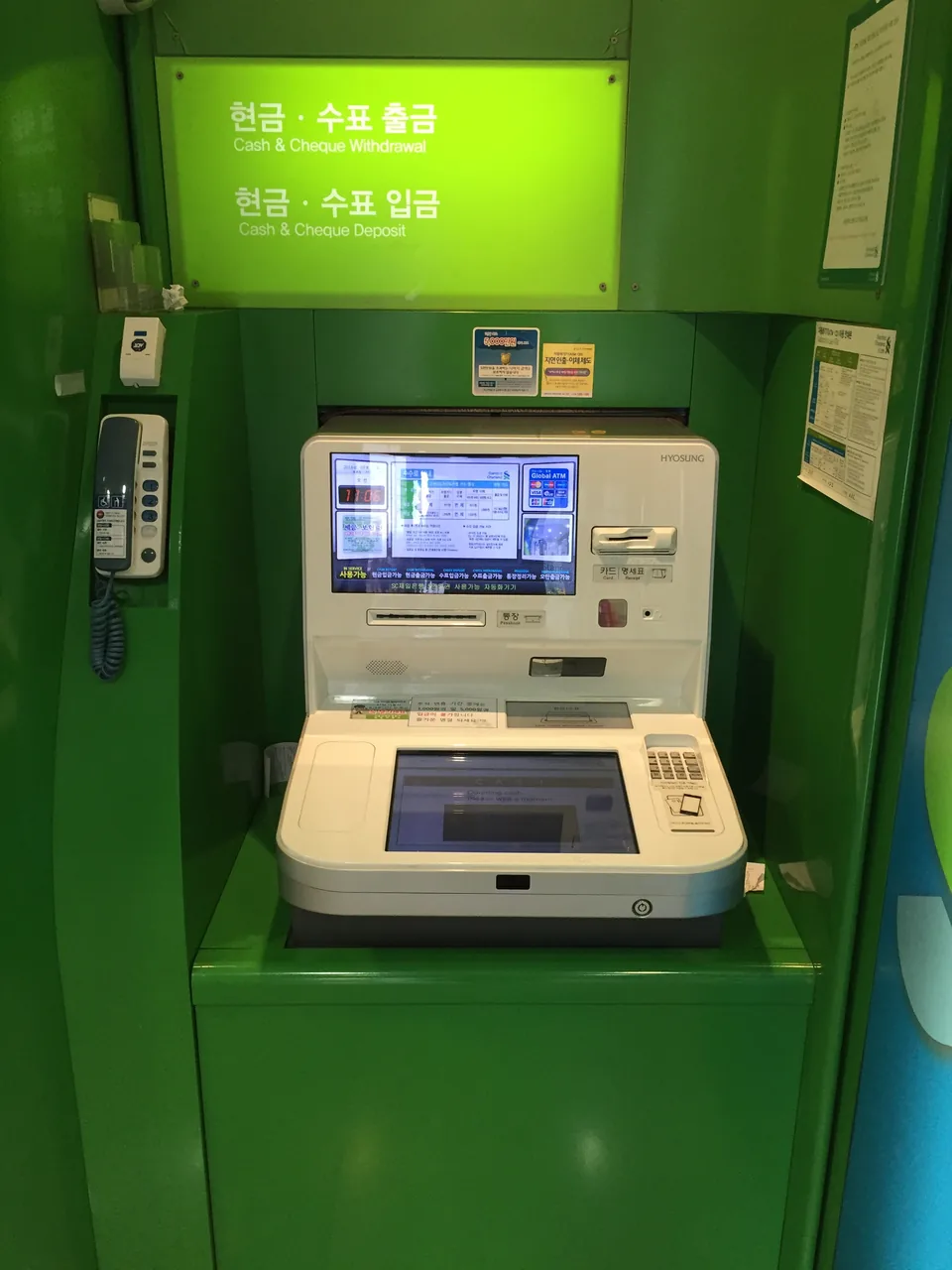
Korea’s currency is the won (₩, code KRW), and in mid-2026 it trades at roughly 1,450–1,530 won to one US dollar — though rates move, so check a converter before you travel. Here’s a handy shortcut: at around 1,400–1,500 to the dollar, just drop three zeros off a price and you’re close to the figure in US dollars (₩10,000 ≈ US$7).
- Banknotes: 1,000 (blue), 5,000 (red), 10,000 (green) and 50,000 (yellow) won.
- Coins: 10, 50, 100 and 500 won — mostly you’ll use 100 and 500 for vending machines and lockers.
- Rough prices: a subway ride about 1,600 won; a bowl of soup like dwaeji-gukbap 9,000–11,000 won; a convenience-store coffee around 1,500 won; a mid-range dinner 15,000–25,000 won a head.
2. Cash or card? How Korea actually pays
Korea is overwhelmingly a card society — you can tap a Visa or Mastercard for almost anything, right down to a single coffee — but a little cash still smooths the edges. In practice most travellers put nearly everything on a card and keep maybe 50,000–100,000 won as backup.
- Card works almost everywhere: restaurants, cafés, shops, convenience stores, most taxis and every chain. Nobody bats an eye at paying a small amount by card.
- Cash still rules in a few spots: traditional markets, street-food stalls, some small or old-school eateries, temples and the odd mom-and-pop shop.
- Getting around: a T-money or Cashbee card (topped up with cash) covers buses and the subway nationwide.
3. Where to change money — and where not
The golden rule: change just a little at the airport and do the rest at a licensed money changer in the city, where rates are far better. Airport counters typically give rates 3–5% worse than downtown, and on a few hundred dollars that’s real money gone.
- Best rates: the clusters of licensed exchange shops in Myeongdong (Seoul) and, in Busan, around Nampo-dong, Seomyeon and Gukje Market. They post rates on the window and compete street by street.
- At the airport: change just enough for your transfer and first meal — say US$50–100 — then change the rest in the city.
- Banks also exchange at fair (if slightly worse) rates, and some districts have 24-hour automated exchange machines.
- Bring clean, large bills: crisp US$100 notes usually fetch the best rate; torn or marked notes can be refused or discounted.
4. Should you bring your own currency or US dollars?
All the major hard currencies exchange easily in Korea, so you can simply bring your own cash to change.
- US dollars, euros, British pounds, Canadian and Australian dollars are all widely accepted at Korean money changers at competitive rates — no need to convert to USD first.
- US dollars remain the single most universal option and often fetch the keenest rates, so any you happen to have are never wasted.
- Cards as backup: whatever you bring, a Visa or Mastercard covers you between exchanges.
5. Foreign cards and ATMs in Korea
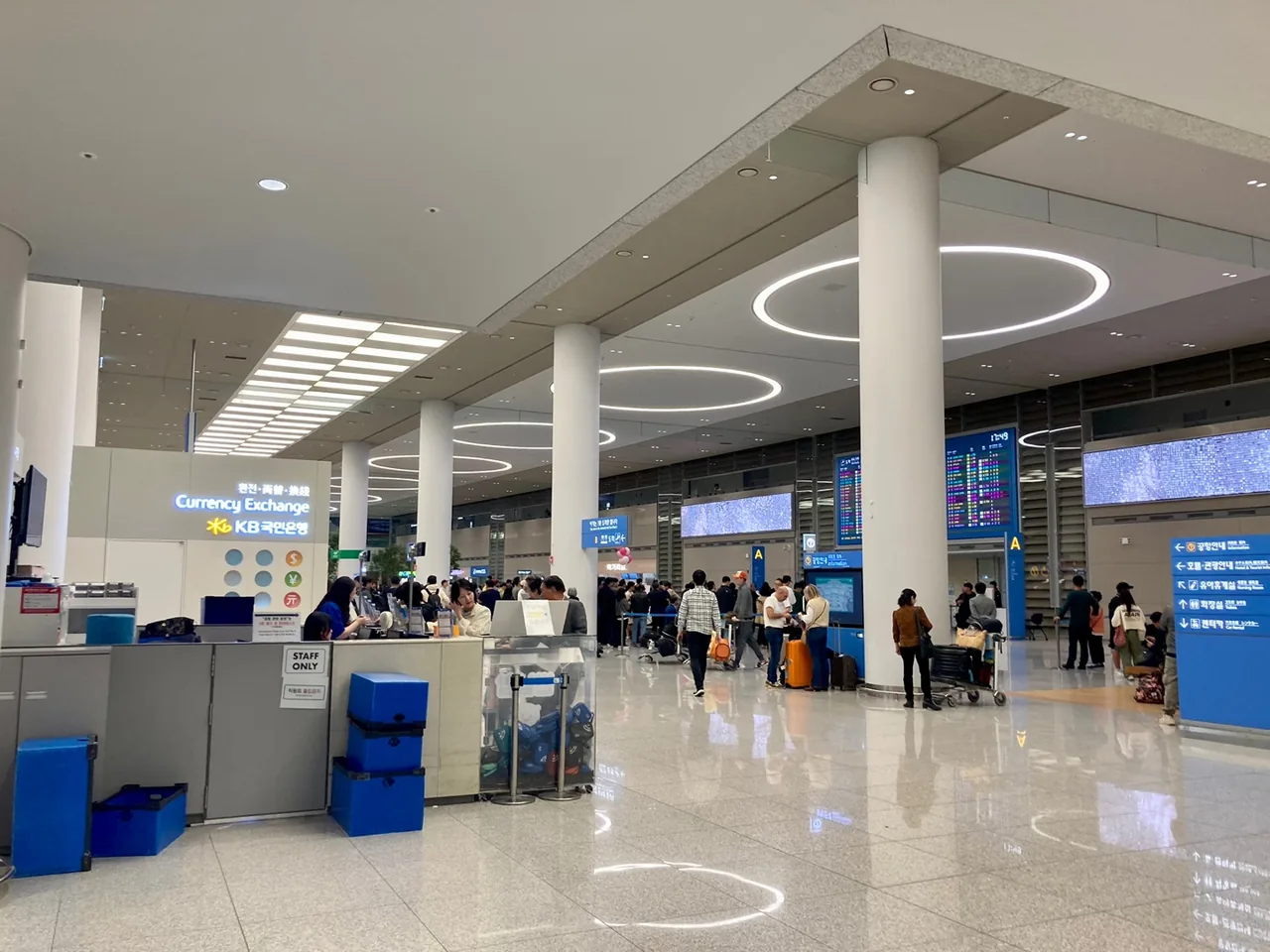
You can withdraw won with a foreign card, but only at the right machines: look for a ‘Global ATM’ or ‘Global Service’ sign with the Visa/Mastercard logos and an English menu. Only about one in five Korean ATMs takes foreign cards — the rest will simply hand your card back.
| Detail | What to know |
|---|---|
| Where | Major banks (Woori, KB Kookmin, Hana, Shinhan, NH) and convenience stores (CU, GS25, 7-Eleven, Emart24) showing a ‘Global ATM’ sticker |
| PIN | Korean ATMs take 4-digit PINs only — sort this with your bank before you go |
| Limits | Usually 100,000–1,000,000 won per transaction |
| Fees | A local machine fee (~3,600 won) plus your own bank’s foreign/ATM fees |
| Network | Mastercard tends to work slightly more reliably than Visa at Korean ATMs |
- Always choose to be charged in won (KRW), not your home currency — see the next section on fees.
- Airports and big hotels reliably have foreign-card ATMs if you need cash on arrival.
6. The fees nobody warns you about
The biggest avoidable cost in Korea isn’t the exchange rate — it’s the fees, especially ‘dynamic currency conversion’ (DCC). When a card machine or ATM asks whether to charge you in won or in your home currency, always choose won; picking your home currency lets the machine apply a poor rate and a markup.
- DCC: at shops and ATMs, pick KRW every time. Paying ‘in dollars’ (or pounds, euros…) almost always costs more.
- Foreign transaction fees: many cards add about 1–3% on overseas spending. A travel card with no foreign-transaction fee pays for itself on a trip.
- ATM fees: the ~3,600-won machine fee plus your bank’s withdrawal fee adds up, so take out a sensible lump sum rather than lots of small amounts.
- Exchange spread: the rate itself is a cost; city changers beat airports and most banks.
7. Mobile payments and transit cards for foreigners
Korea runs on slick local payment apps, but most of them need a Korean bank account and phone number, so foreign visitors usually can’t use them. Don’t worry — your physical card and cash cover everything.
- Korean apps (Naver Pay, Kakao Pay, Toss, Payco): generally off-limits to short-term visitors, as they require local banking.
- Alipay+ and WeChat Pay: increasingly accepted at shops via nationwide QR rollouts — useful if you already use them.
- Transit cards: a T-money or Cashbee card is the simplest way to ride; buy and top up with cash at any convenience store. Some Seoul Metro kiosks now also sell T-money to foreign Visa/Mastercard/JCB/UnionPay/Amex cards.
8. Tax-free shopping: get up to ~8% back
Foreign visitors can reclaim most of Korea’s 10% VAT on shopping — a net refund of around 5–8% — as long as you shop at ‘Tax Free’ stores and follow the steps.
- Who & minimum: tourists staying under six months, on purchases of ₩15,000 or more per store, per transaction. Bring your passport every time you shop.
- Immediate refund: at shops with a ‘Tax Free’ logo, show your passport at the till and the tax comes off on the spot (common for smaller buys).
- Airport refund: otherwise keep your receipts and the goods unopened, then get a customs check and use the refund kiosks at the airport before you check in.
- Rules: keep items unused in Korea, and leave the country within three months of purchase.
9. Tipping in Korea: you really don’t
Tipping simply isn’t part of Korean culture — it’s not expected in restaurants, taxis, hotels or salons, and staff are paid a proper wage. Leaving extra can even cause mild confusion, so the easy, correct move is not to tip.
- Restaurants & cafés: pay the bill as shown; there’s no tip and no service charge to add.
- Taxis: round up if you like, but it isn’t expected; drivers won’t chase you for change.
- The one exception: international tour guides who host foreign visitors appreciate a thank-you — around 10,000–20,000 won for a half- or full-day tour, ideally in a small envelope handed with both hands.
10. A money game plan for Korea — and the verdict
Here’s how to handle money for a typical Korea trip, start to finish.
- Before you flyTell your bank you’re travelling, set a 4-digit PIN, and pack a no-foreign-fee card plus some clean home-currency cash.
- At the airportChange just US$50–100 (or equivalent) for the airport train/bus and a first meal; buy a T-money card at a convenience store.
- In the cityChange the rest at a city money changer (Myeongdong in Seoul, Nampo-dong or Seomyeon in Busan) for a better rate.
- Day to dayTap your card for most things, keep about 50,000 won cash for markets and street food, and always choose to be charged in won.
- Before you leaveSpend down or re-exchange leftover won (it’s hard to change abroad), claim your tax refund, and declare if you’re carrying over US$10,000.
Verdict: money in Korea is genuinely easy once you know the four rules — tap your card freely, change cash in the city not the airport, use ‘Global ATM’ machines and always pay in won, and don’t tip. Do that and you’ll spend less on fees, never get stuck without cash at a market, and keep more of your budget for the food and the fun. Plan the rest of your trip with our complete Korea Travel Guide.