
Jeonju Travel Guide: Hanok Village, Gyeonggijeon, Bibimbap and How to Get There
What to see, what to eat and how to move around Jeonju. The old quarter is walkable end to end; the parks and the arboretum need a bus.
| Where to start | Gyeonggijeon, Jeondong Catholic Church and Pungnammun sit within a few minutes of each other inside the Hanok Village. |
|---|---|
| Tickets | Only Gyeonggijeon charges: 3,000 won for an adult. The church, the Confucian school, Omokdae and Jeolla Gamyeong are free. |
| Getting there | About 1 hour 40 minutes by KTX from Seoul, but far more trains leave from Yongsan than from Seoul Station. |
| Guided walks | Eight free walking tours run daily without booking. Two of them have English commentary. |
| What to eat | Bibimbap sitting down, kongnamul gukbap at Nambu Market, makgeolli by the kettle in the evening. |
| How long | One day covers the Hanok Village. Two days add the market and the old downtown. Three reach the park and the arboretum. |
1. What Jeonju is, and whether it earns a detour
2. Getting there from Seoul: use Yongsan, not Seoul Station
3. Coming straight from Incheon Airport
4. The Hanok Village: what it actually is
5. Gyeonggijeon: the one ticket you actually buy
6. Jeondong Catholic Church and Pungnammun gate
7. Jeonju Hyanggyo closes on Mondays
8. Omokdae, Imokdae and the mural village
9. Hanbyeokdang, the stream and the old rail tunnel
10. Jeolla Gamyeong and Pungpaejigwan, with a free guide
11. Free guided walks, and which ones run in English
12. Nambu Market, from four in the morning
13. Bean sprout soup, blood sausage and the drink that goes with them
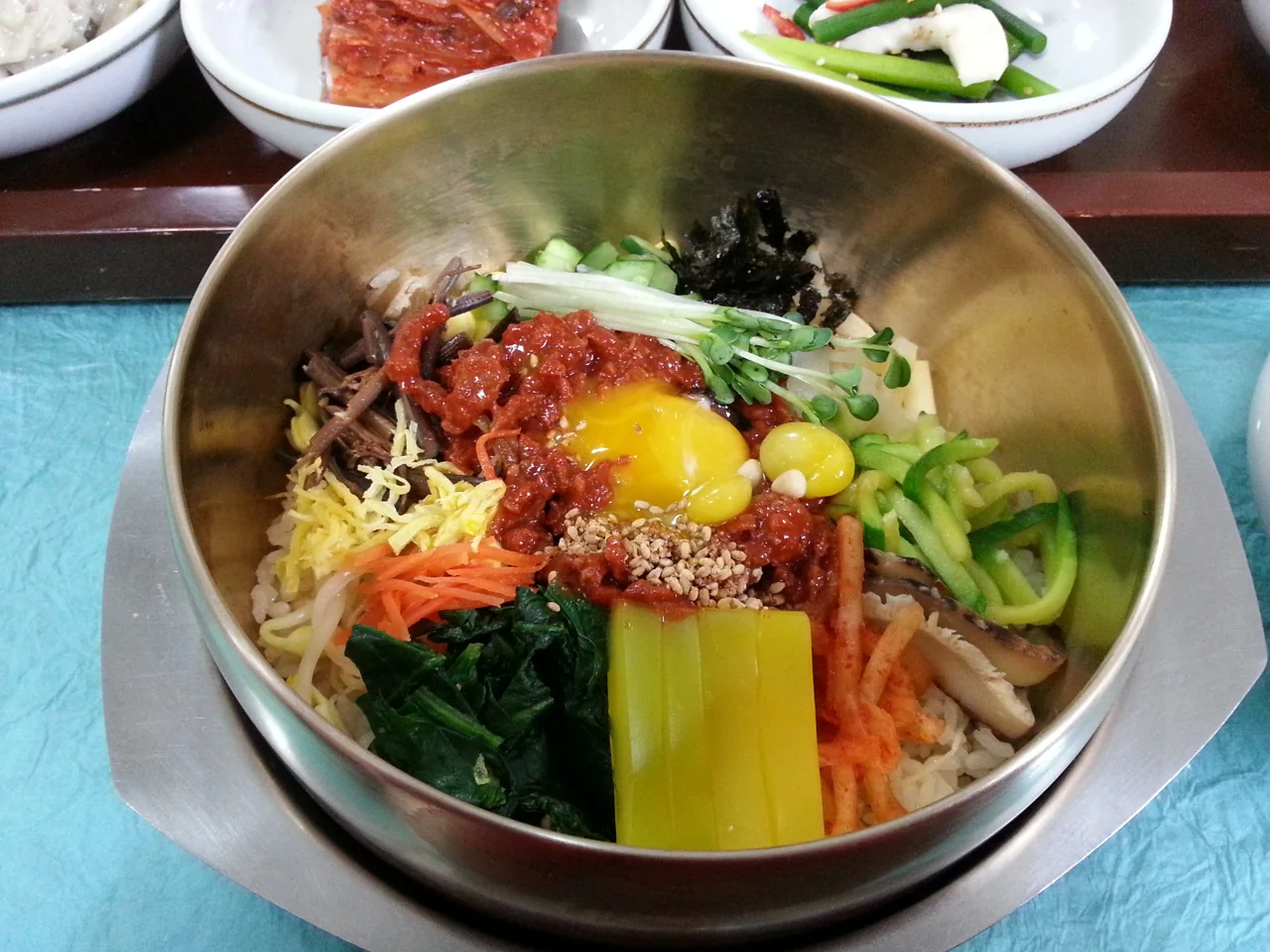
14. Bibimbap: where to eat the dish the city is named for
15. Makgeolli is ordered by the kettle
16. Gaekridan-gil, the street that came back
17. Cheotmajung-gil, if you arrive by train
18. Art villages and a converted factory
19. Deokjin Park and the lotus season
20. The zoo, Dreamland and the arboretum
21. Water, parks and where the flowers are
22. Fortress walls, hills and a martyrs’ site
23. Museums, craft centres and a rainy afternoon
24. With children
25. City buses, transfers and whether a pass pays
26. Parking, and the free shuttle almost nobody mentions
27. Bikes and the tour taxi
28. Where to stay
29. Festivals worth planning around, or avoiding
30. Luggage, information centres and getting help in English
31. How many days, and in what order
32. What has changed, and what older pages get wrong
Jeonju is the city bibimbap is named after, and the one place in Korea where several hundred traditional houses still stand together in the middle of a working city. Most of what visitors come for sits inside one walkable quarter. If Jeonju is going into a wider Korea trip, the useful first step is separating what you can walk to from what needs a bus.
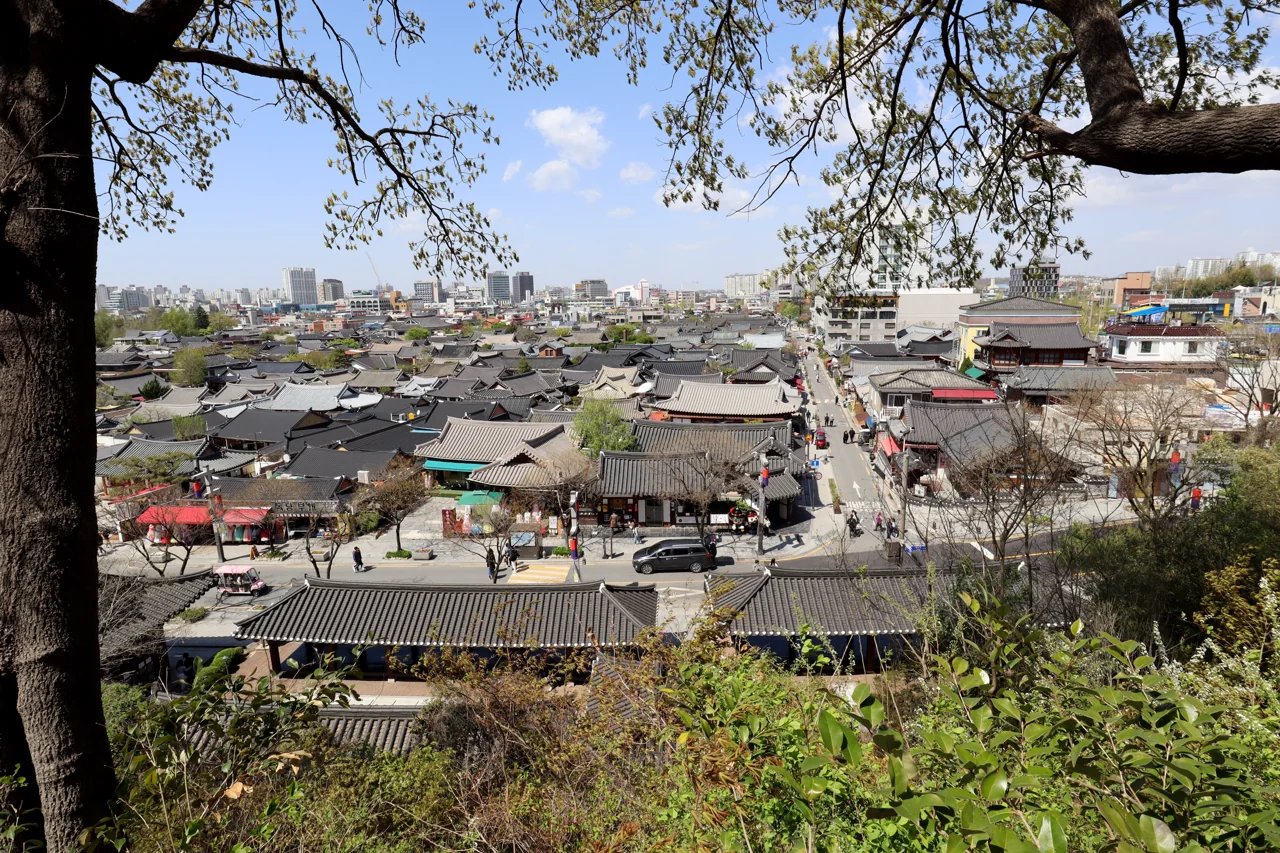
1. What Jeonju is, and whether it earns a detour
Jeonju sits in the southwest of the country, inland, roughly halfway between Seoul and the south coast. It is a provincial capital of about 650,000 people, and almost everything a visitor comes for is packed into one corner of it.
That corner is the Hanok Village. Gyeonggijeon, Jeondong Catholic Church, Pungnammun gate, the Confucian school and the old market are all within walking distance of one another. You can see the core of the city in an afternoon and still have the evening free.
Walkable versus bus
- On foot: Gyeonggijeon, Jeondong Catholic Church, Pungnammun, Jeonju Hyanggyo, Omokdae and Imokdae, Jaman Mural Village, Hanbyeokdang, Nambu Market, Jeolla Gamyeong, Gaekridan-gil
- By bus: Deokjin Park, Jeonju Zoo, the arboretum, Palbok Art Factory, Cheotmajung-gil, Ajung Lake, the Samcheon-dong makgeolli alley
Is one day enough?
For the Hanok Village alone, yes. Many people come from Seoul in the morning and go back at night. The argument for staying over is that the village empties after about six in the evening and fills again around ten in the morning, and the two quiet windows are the only times you will photograph it without crowds.
The second argument is dinner. Jeonju’s food is not really a lunch proposition. The makgeolli alleys and the night market both start in the evening.
2. Getting there from Seoul: use Yongsan, not Seoul Station
KTX takes about 1 hour 40 minutes from Seoul to Jeonju. The trap is which station you search from.
Far more Jeonju services depart from Yongsan than from Seoul Station. Jeonju’s own official transport guide says so explicitly. If you put Seoul Station into the booking screen you will see a handful of trains, several of them sold out, and conclude the day is not possible. Change the origin to Yongsan and the timetable opens up.
Yongsan is on Seoul Metro Line 1 and the Gyeongui-Jungang line, and it is a short ride from Seoul Station if you have already based yourself there.
Booking without a Korean phone number
Korail’s own site and the Korail Talk app accept foreign travellers without membership or Korean phone verification. You enter passport details and an email address, pay with a foreign card through the dedicated payment window, and travel on the e-ticket. The interface is available in English, Chinese and Japanese.
Global booking platforms also sell the same seats and issue a QR voucher, which some travellers find simpler at the gate.
When seats disappear
Jeonju is a popular domestic destination, not only a foreign one. Weekends, public holidays and the two big festival weeks sell out early. Buying at the station on the day often leaves only standing tickets. If your plan depends on a specific return train, book it before you leave Seoul.
Intercity coach
Express buses run when trains do not, and they land you closer to the old downtown than the train station does. Our guide to getting around Korea covers the booking apps. Jeonju is one of the busier coach routes out of Seoul, so Sunday afternoons and the last day of a long holiday fill up in the same way the trains do.
3. Coming straight from Incheon Airport
You do not have to go into Seoul first. A direct coach runs from both Incheon Airport terminals to Jeonju, with your luggage in the hold and no transfer in between.
| Terminal | Where to board |
|---|---|
| Terminal 1 | Outdoor stands outside arrivals on level 1, intercity bus zone, bays 12 and 13 |
| Terminal 2 | Indoor transportation centre on level B1, intercity bus zone, bay 8 |
Buying the ticket
The simplest route for a short-stay visitor is the counter or the kiosk inside the arrivals hall. The kiosks run in English, Chinese and Japanese, and they take foreign credit cards. Choose Jeonju as the destination and a paper ticket prints immediately.
If you want to book in advance on the Tmoney GO app you will need Korean phone verification first, which most short-stay visitors do not have. Set the destination as “Daehan Limousine (Jeonju)” rather than simply Jeonju, or the route will not come up.
Which is better
The coach saves you the airport-to-Seoul leg and a change of stations, and the seats are the wide reclining type used on long routes. The train is faster once you are already in Seoul. If Jeonju is your first stop in Korea, the coach usually wins.
4. The Hanok Village: what it actually is
Jeonju Hanok VillageMap is a residential neighbourhood, not a museum. It covers about 298,000 square metres of Pungnam-dong and Gyo-dong, and the city counts more than 900 buildings inside it.
Around 735 of those are hanok, the traditional timber-and-tile houses. The rest are ordinary brick houses and shopfronts. Photographs tend to be taken from the one angle where only roofs are visible, so the reality is a little more mixed than the pictures suggest.
It is also a commercial district
The city counts over 570 businesses inside the village, including more than 200 places to stay and around 180 places to eat. The rest are shops and rental counters, a great many of them renting hanbok by the hour.
That density is why timing matters. Between about 10am and 6pm at weekends the main streets are shoulder to shoulder. Early morning is the only reliably quiet window.
The main streets
Taejo-ro is the main street. Gyeonggijeon’s gate, Jeondong Catholic Church, the crafts exhibition hall and the fan museum all stand on it. Hanji-gil and Eunhaeng-ro run one block back and carry noticeably fewer people.
Hyanggyo-gil, at the eastern end, leads to the Confucian school and the old houses around it. It is the quietest part of the village.
People live here
The village was designated an international Slow City in 2010, and residents, merchants and civic groups run a joint organisation that manages it. Courtyards behind the walls are private homes. Staying on the lanes is the expected courtesy.
5. Gyeonggijeon: the one ticket you actually buy
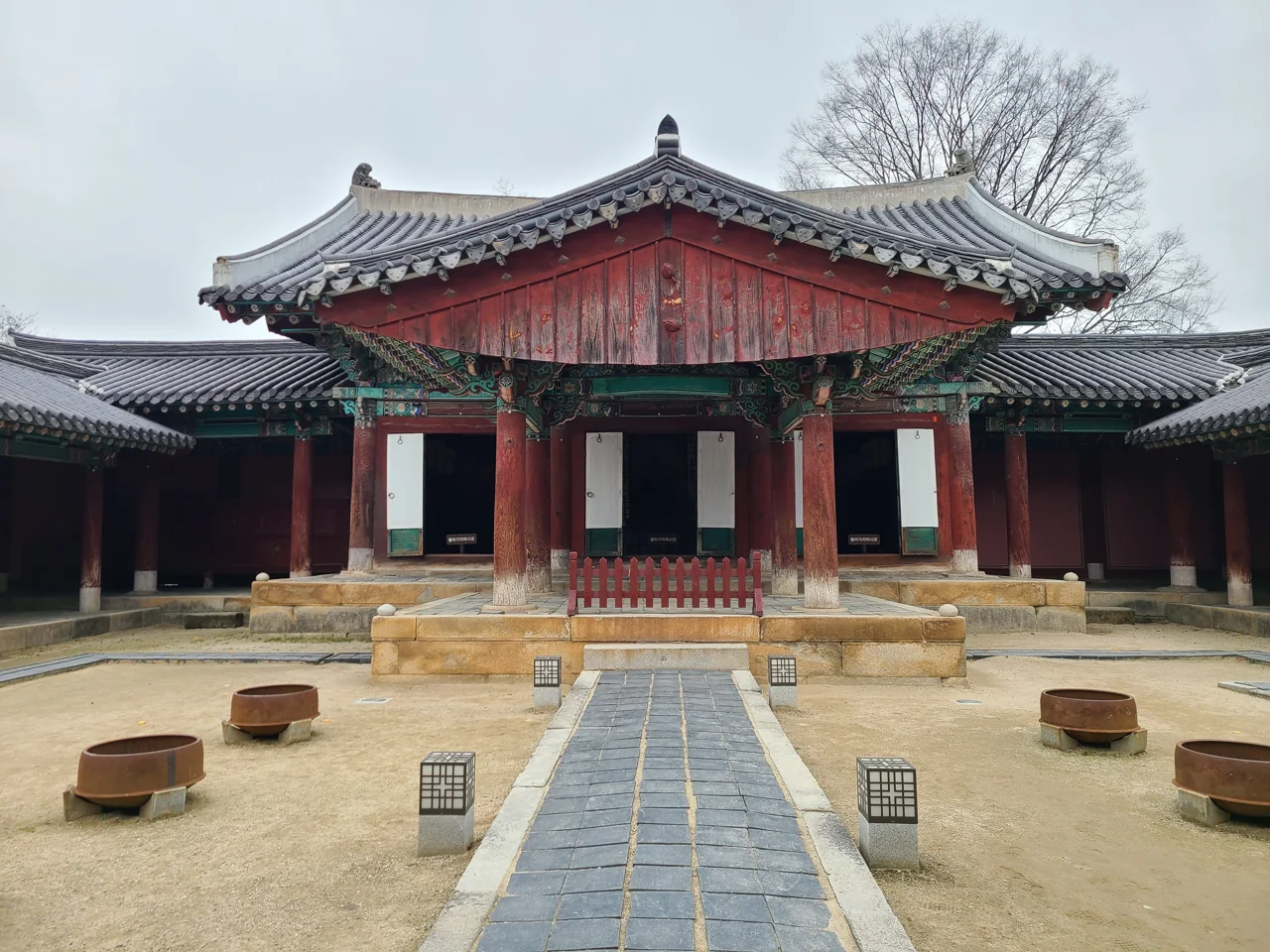
GyeonggijeonMap houses the portrait of Yi Seong-gye, the general who founded the Joseon dynasty in 1392. The shrine was built in 1410 and rebuilt in 1614 after the Japanese invasions destroyed the original.
Jeonju holds only two National Treasures, and one of them is that portrait. It hangs in the Royal Portrait Museum inside the grounds. Your Gyeonggijeon ticket covers the portrait museum and the archive building as well. There is nothing further to pay once you are inside.
Opening hours change four times a year
| Period | Open | Last entry |
|---|---|---|
| March to May | 09:00–19:00 | 18:00 |
| June to August | 09:00–20:00 | 19:00 |
| September to October | 09:00–19:00 | 18:00 |
| November to February | 09:00–18:00 | 17:00 |
Last entry is a full hour before closing in every period. If you are aiming for late afternoon light, work back from the entry cut-off rather than the closing time.
Admission
| Visitor | Individual | Group |
|---|---|---|
| Adult | 3,000 won | 2,500 won |
| Youth and military | 2,000 won | 1,500 won |
| Child | 1,000 won | 500 won |
Residents of Jeonju and neighbouring Wanju pay a separate, much lower rate, which is why you will see two price columns on the board.
The last Wednesday of every month is free under Korea’s nationwide Culture Day scheme. The fourth Saturday of the month is half price. That Saturday discount is a date, not a dress code. A lot of English-language pages describe it as a hanbok discount; the city’s own notice ties it to the day.
Inside the grounds
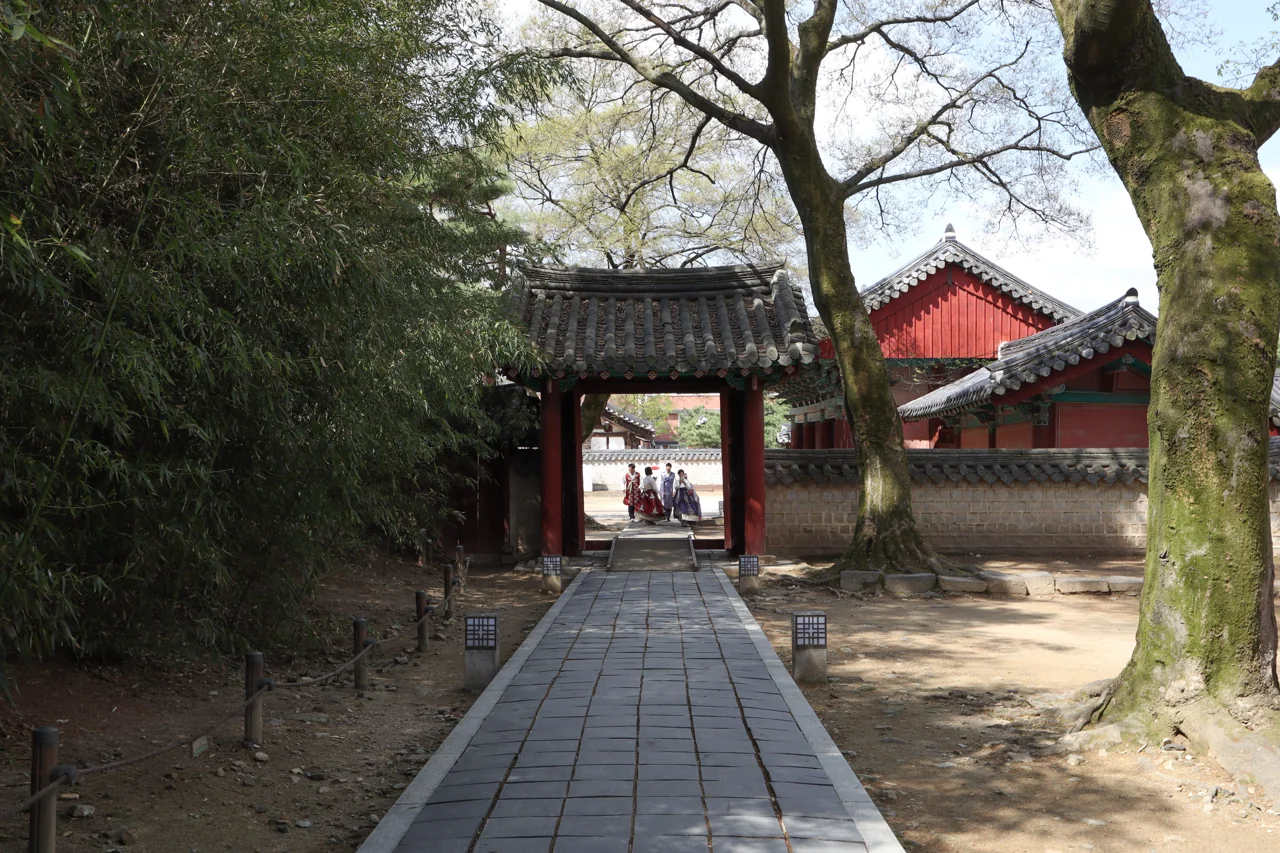
From the main gate you pass a red spirit gate and two inner gates before reaching the hall where the portrait hangs. East of it stands the archive that once held the annals of the Joseon dynasty. North is Jogyeongmyo, a shrine built in 1771 for the founder’s earliest ancestor.
The two things most people photograph are not the hall at all. They are the bamboo grove inside the walls and the stone-walled lane running along the outside, both of which have appeared in a long list of television dramas. The lane costs nothing to walk.
6. Jeondong Catholic Church and Pungnammun gate
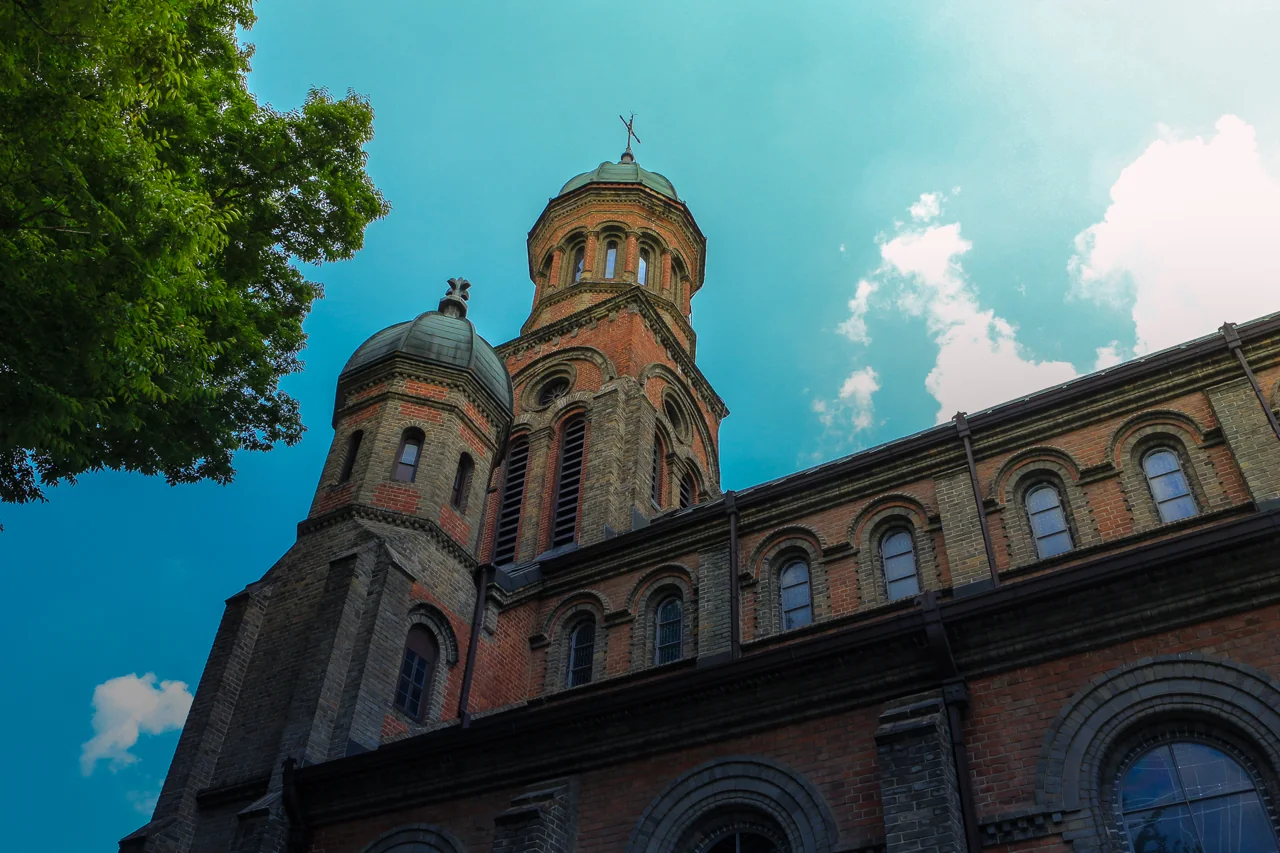
Jeondong Catholic ChurchMap stands directly across the road from Gyeonggijeon’s main gate. It is a Historic Site, and the first Romanesque building raised in Korea’s southwestern provinces.
The site matters more than the architecture. Two Catholic converts were executed here in 1791, making this the country’s first Christian martyrdom ground. The church was built on the spot much later, in brick, by a French missionary.
Entry is free. Services take priority over sightseeing, so the interior is closed to visitors during Mass.
Pungnammun
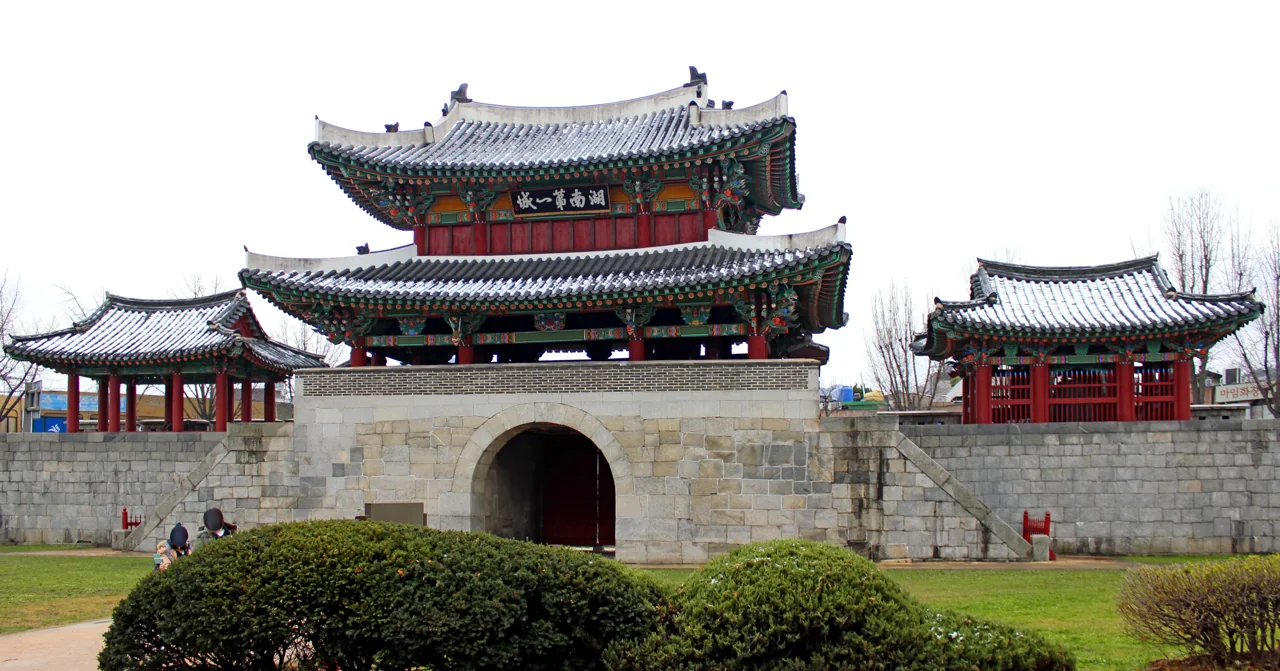
Five minutes further, towards the market, is PungnammunMap. This was the south gate of Jeonju’s city wall, and it is the only one of the four gates still standing. It carries Treasure designation.
The present structure dates from a rebuild after a fire in the reign of King Yeongjo, and the name has stuck ever since. The market beyond it was historically called the “outside-the-south-gate market” for the obvious reason. A bell-ringing ceremony is held here on the last night of the year.
The gate now sits on a traffic island, which makes it easier to photograph than to approach. Crossings are on the market side.
7. Jeonju Hyanggyo closes on Mondays
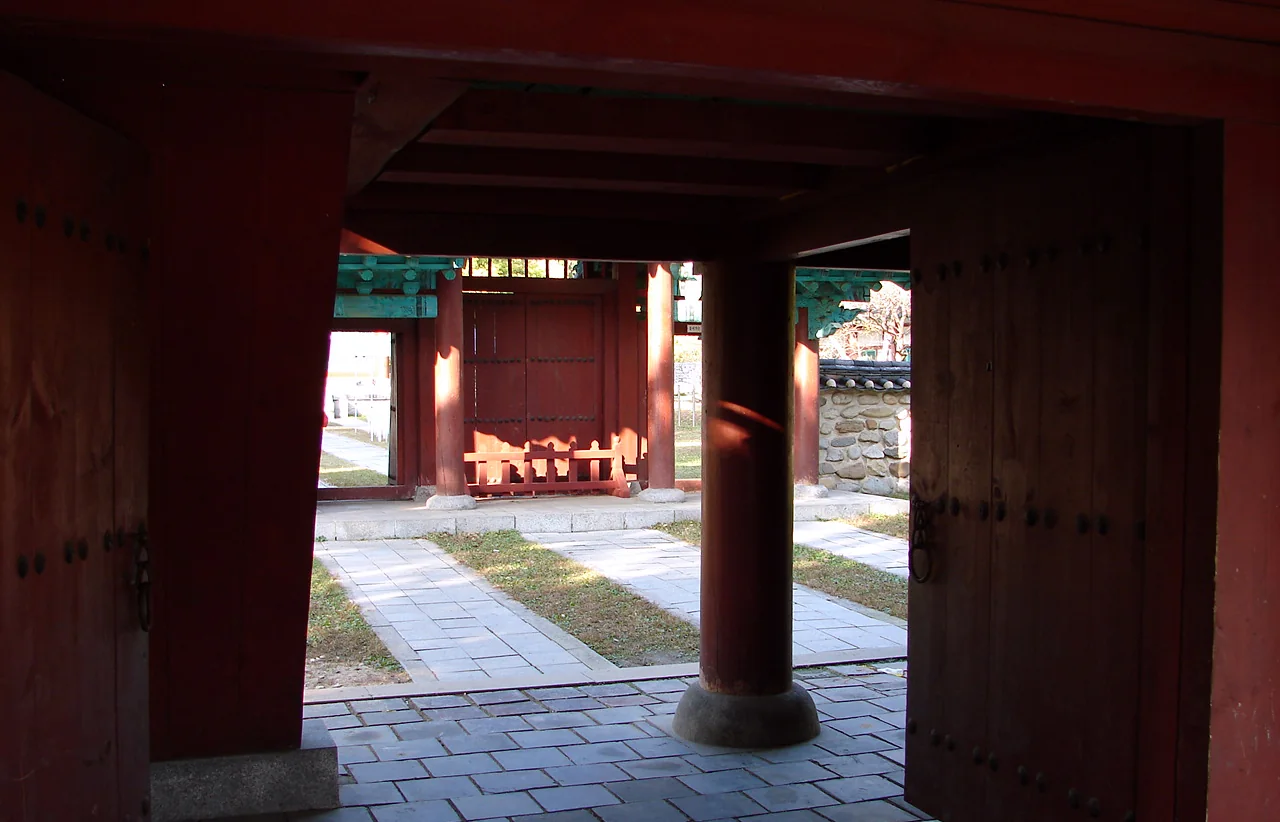
Jeonju HyanggyoMap is the Confucian school at the eastern edge of the village, and it is free to enter. The complex is a Historic Site and its main hall carries a separate national registration.
Watch the closing day. It shuts every Monday, and when a Monday is a public holiday it closes the following day instead. Most of the village stays open on Mondays, so this one is easy to walk into and find locked.
| Period | Hours |
|---|---|
| March to October | 09:00–18:00 |
| November to February | 10:00–17:00 |
The ginkgo trees
Several large ginkgos stand in the courtyards, and the two or three weeks when they turn yellow are the busiest of the school’s year. Outside that window it is among the calmest places in the village.
What is next door
Hakindang, a large private hanok that is both a listed sight and a guesthouse, is on the same lane. So is the Jeonju Traditional Culture Centre, housed in a restored gentry house. Doing all three together takes about an hour.
8. Omokdae, Imokdae and the mural village
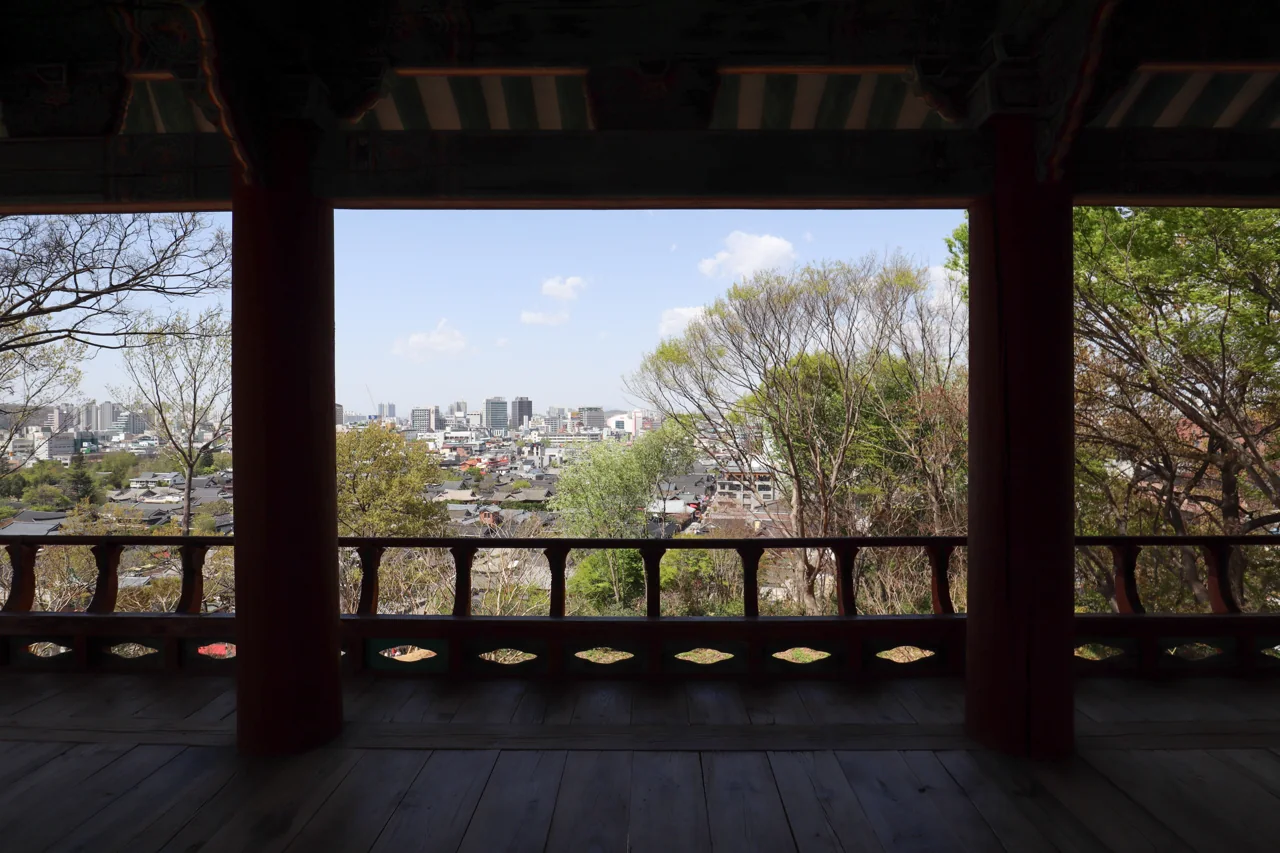
Almost every wide shot of the Hanok Village is taken from OmokdaeMap, a pavilion on the ridge at the eastern end of Taejo-ro. It is free, it is open at night, and it is where the tiled roofs stack up into the view you have already seen.
The story attached to it is that Yi Seong-gye held a victory banquet here after defeating Japanese raiders, before he became king. Across a footbridge is Imokdae, held to be where his ancestors lived.
You go up by a flight of stairs. It is steep enough to notice in summer.
Jaman Mural Village
Carry on past Imokdae and you reach Jaman Mural VillageMap, a cluster of small houses on the hillside with painted walls. It connects to the Hanok Village on foot, and the free weekend shuttle bus also passes through it.
This is another neighbourhood where people live. The lanes are narrow and stepped, which makes early morning or late afternoon far more comfortable than the middle of the day.
Seunggwangjae
On Choemyeonghui-gil inside the village is Seunggwangjae, a house occupied by a descendant of Emperor Gojong. It is a stop on one of the free guided walks rather than a ticketed sight, and it makes more sense with the commentary than without it.
9. Hanbyeokdang, the stream and the old rail tunnel
HanbyeokdangMap is a pavilion set on a rock above the Jeonjucheon stream, about ten minutes’ walk from the village towards Namcheongyo bridge. It is nationally registered and free.
Beside it is Hanbyeokgul, a tunnel cut for the Jeolla railway line. Trains no longer run through it and people walk it instead. The framed view out of the tunnel mouth is a standing photographic set-up.
Namcheongyo and Cheongyeonru
Namcheongyo crosses the stream with a pavilion, Cheongyeonru, built on top of it. It is lit after dark. This is the bridge you take to walk from the Hanok Village into the Seohak-dong art quarter.
Walking the stream
Jeonjucheon has a maintained path along both banks. From Hanbyeokdang you can follow the water down towards Nambu Market, which is flatter and quieter than retracing the main street. Cycle lanes run alongside for much of it.
10. Jeolla Gamyeong and Pungpaejigwan, with a free guide
Fifteen minutes west of the village is the old downtown, and in it Jeolla GamyeongMap, the reconstructed provincial government seat from which the whole Jeolla region was administered in the Joseon period.
Guided tours here are free and run about an hour, with a maximum of twenty people. There is no tour on Lunar New Year’s Day or Chuseok. The city notes that operation can change at the guide’s discretion, so confirming on arrival is worth the thirty seconds.
Pungpaejigwan
A few minutes on is PungpaejigwanMap, also called the Jeonju Gaeksa. It is a Treasure, and it was the building where officials performed rites towards the distant king.
“Pungpae” refers to the home region of a dynasty’s founder. Jeonju was the ancestral seat of the Yi family, so its guest house got the name. The calligraphy on the building is attributed to Zhu Zhifan, a Ming envoy who passed through.
Why come out here
The old downtown is where Jeonju’s evening happens. Gaekridan-gil starts at Pungpaejigwan’s doorstep. Seeing the two monuments in daylight and eating here afterwards is the natural order.
11. Free guided walks, and which ones run in English
The city runs eight free walking tours that need no booking at all. You turn up at the meeting point at the listed time. Each runs about an hour with a licensed guide.
The part that is easy to miss: only two of the eight have foreign-language commentary.
| Tour | Languages and times | Meeting point |
|---|---|---|
| Gyeonggijeon history tour | Korean, English, Chinese, Japanese at 11:00 and 14:00; Korean only at 10:00, 15:00, 16:00 | Inside Gyeonggijeon’s main gate |
| Hanok Village back-lanes tour | Korean, English, Chinese, Japanese at 15:00; Korean and English at 11:00 | In front of the Gyeonggijeon ticket office |
| Hyanggyo scholars’ path | Korean at 10:00 | Taejo-ro rest area |
| Taejo Yi Seong-gye road | Korean at 14:00 | Taejo-ro rest area |
The remaining four are the Jeolla Gamyeong tour, the old city wall route, the Gyeonggijeon-to-Gamyeong walk and a heritage and art village walk, all in Korean.
What the two English tours cover
The Gyeonggijeon tour stays inside the shrine: the spirit gate, the inner gates, the portrait hall, the archive and the royal placenta chamber. You need a Gyeonggijeon ticket to join it.
The back-lanes tour is the more useful one if you have limited time, because it covers ground you would otherwise walk past: Jeondong Catholic Church, the fan museum and the Choi Myeong-hui literary house, a 600-year-old ginkgo, Seunggwangjae and the hanji papermaking workshop. It is the fastest way to learn which lanes are worth returning to on your own.
12. Nambu Market, from four in the morning
Nambu MarketMap is immediately outside Pungnammun, five minutes’ walk from the Hanok Village. Jeonju has had a market since 1473, and this is the one that inherited the site.
The dawn market
Along the stream and around the old grain bridge, an informal market of stalls sets up from about 4am until ten in the morning and then disappears. Vegetables and fruit come in from surrounding farms, along with produce brought up from the wholesale markets.
There are doughnuts frying and noodles going as well. If you have stayed overnight in Jeonju, this is a better breakfast than anything the village offers at that hour.
The youth mall
Upstairs, empty stalls were handed to young traders and turned into a warren of small shops and cafés. Opening hours are entirely individual, so a daytime visit finds a fair number of shutters down.
The night market
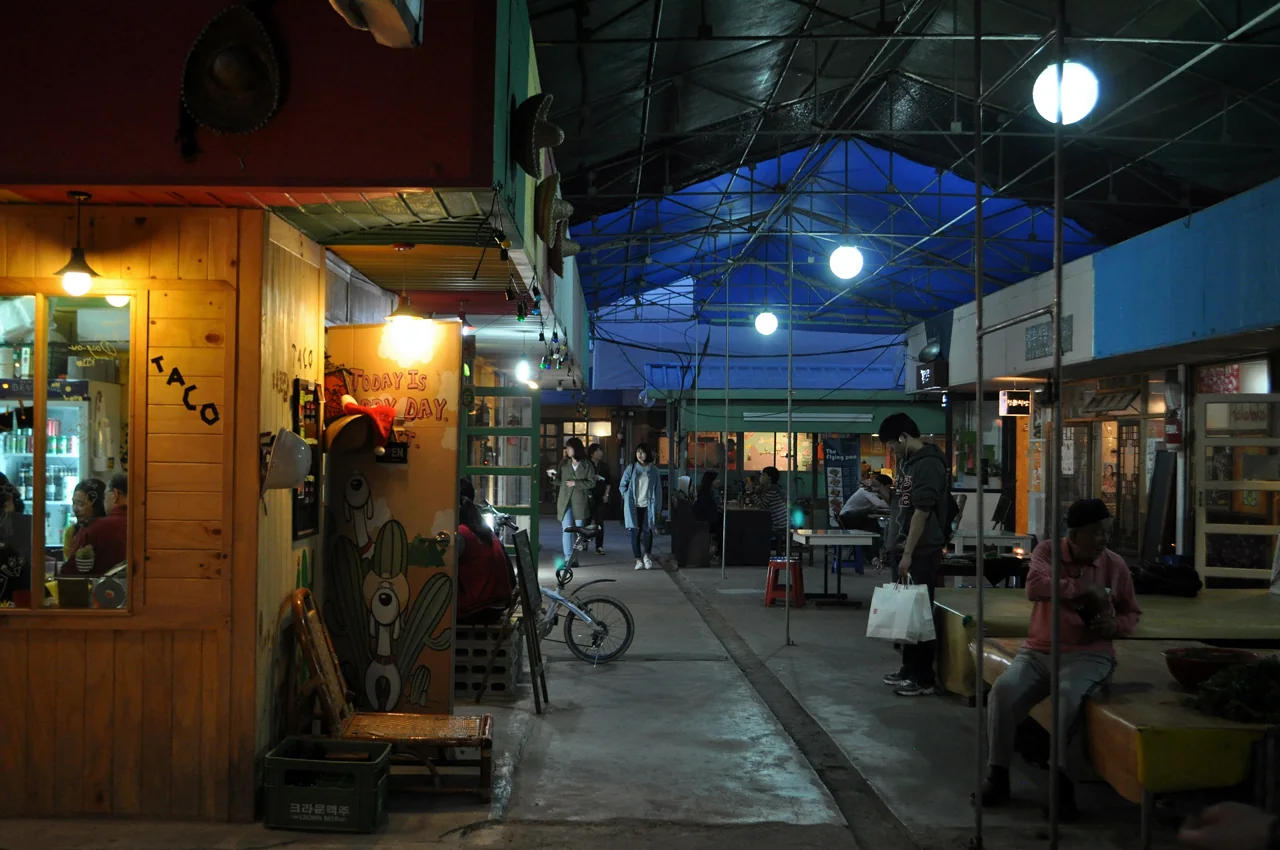
The same building runs a night market with food stalls set up along the aisles. It is on the way back to the Hanok Village from the old downtown, which makes it an easy late stop rather than a destination.
The rooftop
There is a roof garden above the market looking over the stream, used for community radio broadcasts and cooking classes. It is signposted from inside and almost always empty.
The other markets
Jeonju has three more traditional markets: Sinjungang near Gaekridan-gil, with a late-night food strip attached, plus Moraenae and Seobu, which are neighbourhood markets rather than visitor ones. Nambu is the only one that belongs on an itinerary.
13. Bean sprout soup, blood sausage and the drink that goes with them
Jeonju’s market breakfast is kongnamul gukbap, a rice and bean sprout soup. The local method is not to boil it. Rice and blanched sprouts are dipped repeatedly into hot broth until they come up to temperature, a technique called toryeom, so the bowl arrives hot but not scalding.
A raw egg with a drop of sesame oil arrives on the side. You can stir it into the soup or eat it on its own. Toasted seaweed comes with it, for dipping.
Several stalls in the market roast and sell seaweed on the spot. The pairing is said to have come from shoppers eating soup on their way home and sharing out the seaweed they had just bought.
Moju
The drink ordered with it is moju: makgeolli simmered with medicinal herbs until most of the alcohol has cooked off. It is sweet, warm and spiced, and it is a normal thing to have at breakfast here.
Pi-sundae
Korean blood sausage is usually filled with glass noodles. Jeonju fills it with blood instead, which makes it softer and much richer. It is eaten with garlic chives and a sweet chilli dipping sauce rather than salt.
Market fried chicken
There is a long-running chicken shop in the market using only Korean-raised birds, on Pungnammun 2-gil, open daily from 8am to 9pm. Fried chicken, sweet-and-crisp dakgangjeong and boneless fried chicken feet are the staples.
14. Bibimbap: where to eat the dish the city is named for
Jeonju bibimbap uses more than thirty ingredients. The rice is cooked in beef bone broth rather than water, topped with the local bean sprouts and with hwangpomuk, a yellow mung bean jelly. The chilli paste and soy sauce are traditionally fermented.
The city names specific restaurants in its own materials, which is a useful starting point in a place with hundreds of options.
| Restaurant | Why it is listed |
|---|---|
| Gajok Hoegwan | Opened in 1979 by Kim Nyeon-im, designated Jeonju’s first master of local cuisine; now in its third generation |
| Gogung | Fifty years on bibimbap alone, served as a set with grilled beef and tteokgalbi |
| Gapgi Hoegwan | Medicinal bibimbap, with the rice cooked using eighteen herbs, and a raw beef version |
| Giwa | Inside the Hanok Village, with hanok views through full-height windows |
| Kkotdamjip | Near the village; also serves lotus-leaf rice and bamboo rice |
Expect mid-to-upper prices. Most of these serve bibimbap as part of a spread with many side dishes rather than as a single bowl, which is where the cost comes from.
It is not only bibimbap
Mul-jjajang is a Jeonju speciality: a Korean-Chinese noodle dish made without the usual dark bean paste, served in a light sauce. You will struggle to find it elsewhere in the country.
Jeonju-style gimbap and full hanjeongsik banquet meals are the city’s other two calling cards. Our guide to Korean food sets these in the wider context.
15. Makgeolli is ordered by the kettle
Drinking makgeolli in Jeonju works differently from the rest of the country. You order a kettle, and a full table of food arrives with it. Order a second kettle and a fresh round of dishes appears. A single house may put out more than ten different dishes.
The practical consequence is that this does not work for one person. Two people ordering one kettle will not finish the food. Groups of four upward are what the format is built for.
The four alleys
| Alley | Notes |
|---|---|
| Samcheon-dong | The original, listed as Jeonju Future Heritage. Around twenty houses along a 200-metre lane |
| Seosin-dong | In the newer part of town |
| Gyeongwon-dong | Old downtown, walkable from Gaekridan-gil |
| Inhu-dong and Ua-dong | Towards the train station |
If you are staying in the Hanok Village, Gyeongwon-dong is the one you can walk to. Samcheon-dong needs a taxi or a bus, and it is the one worth the trip.
What you are drinking
Jeonju makgeolli is counted among Korea’s best known. Houses also pour versions infused with banana, chestnut or black soybean, so you can order by flavour rather than by brand.
16. Gaekridan-gil, the street that came back
Gaekridan-gilMap runs through the old downtown near the former royal guest house. The name splices gaeksa, that guest house, onto Gyeongnidan-gil, a well-known Seoul street.
In the 1970s and 1980s this was Jeonju’s entertainment district. From around 1990 the commercial centre moved out to the newer districts and the university area, and the streets emptied. In 2016 a redevelopment designation that had frozen the area for more than a decade was lifted, and small-scale young businesses moved in. Cafés, restaurants and independent shops followed.
The pedestrianised stretch used for street events is 190 metres, so walking the length of it takes no time at all.
What else is here
The Film Street is next door, with the cinemas that host the Jeonju International Film Festival. Pungpaejigwan is a block away. Sinjungang Market sits to the north with its late-night food strip, and Nambu Market is downhill to the south.
The Hanok Village is the daytime neighbourhood; this is the evening one. Many visitors who only day-trip never see it, which is the main argument for staying the night.
17. Cheotmajung-gil, if you arrive by train
Trains arrive at Jeonju Station, which is not in the old quarter. The 850-metre stretch from the station forecourt to the Myeongjugol junction is Cheotmajung-gilMap. The name is pure Korean, with no Chinese characters behind it; it means something like “the road that greets you first”.
It began as a pavement repair scheme and was redirected in 2015 into a Korea Forest Service urban woodland project. The roadway was narrowed and a strip of zelkova trees planted down the middle, with a shallow reflecting pool that children paddle in during summer.
The travellers’ library
Beside the road is the Cheotmajung-gil Travellers’ Library. It is free and opens Tuesday to Sunday, 9am to 9pm, closed Mondays and public holidays. It takes up to thirty people at a time and does not admit animals. The car park opposite is free.
If your return train leaves at an awkward hour, this is where to spend the gap rather than sitting in the station.
Saturdays
A flea market and street performances run along the road every Saturday.
Getting from the station to the village
The Hanok Village is a bus ride from the station, not a walk. City buses run frequently and a taxi is inexpensive. Budget fifteen to twenty minutes either way.
18. Art villages and a converted factory
Palbok Art FactoryMap sits in an industrial estate in the north of the city. A disused cassette tape factory was kept as it stood and the interior turned into galleries and studios. It needs a bus from the centre.
Nearby is the Palbok-dong fringe tree railway, a freight line lined on both sides with fringe trees. The white blossom in May is what draws people out here.
Seohak-dong Art Village
Seohak-dong Art VillageMap is immediately across Namcheongyo bridge from the Hanok Village. Studios, small galleries and bookshops have moved into an ageing residential grid. The National Intangible Heritage Centre is in the same neighbourhood.
Seonosong and Dongmun
Seonosong Art Village is in the old downtown; the Dongmun art street runs on from Gaekridan-gil. The Dongmun second-hand book library is on that street, free, closed Mondays.
None of these four has a set sight to tick off. You walk the streets and go into whatever is open. They suit a second or third day rather than a first.
Saekjang Rice Mill
Out on the city’s edge, an old rice mill has been kept and converted, opening daily from 11am to 9pm. It is far enough out that it only makes sense with a car.
19. Deokjin Park and the lotus season
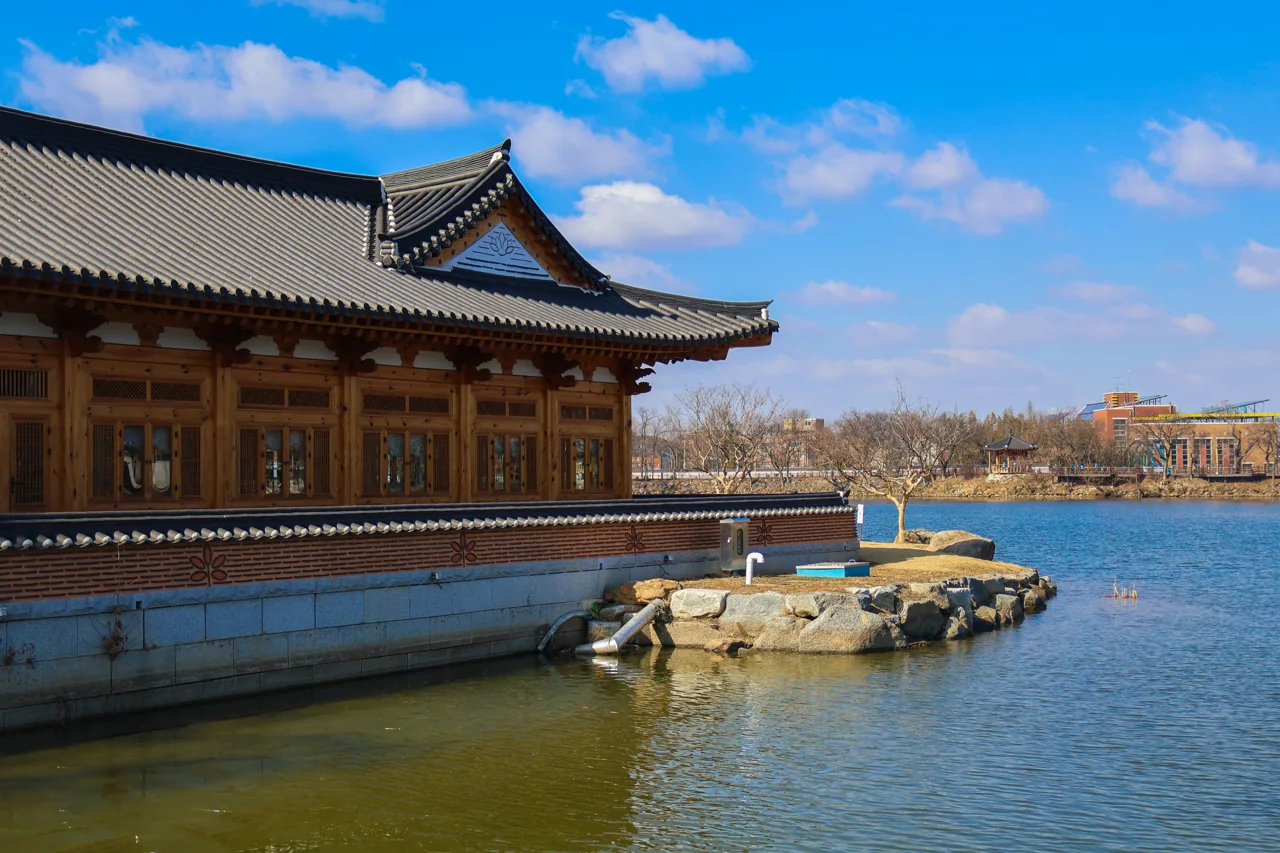
Deokjin ParkMap is the second most visited place in the city after the Hanok Village, and it is free. A large pond takes up most of it, crossed by a bridge and a boardwalk.
The lotus flowers open in July and August, and that is when the park justifies the bus ride out. Outside those two months it is a pleasant but ordinary urban park.
Yeonhwajeong Library
A library sits at the water’s edge inside the park, with windows facing the pond. It is free, open 10am to 7pm, closed Mondays.
The bibimbap festival happens here
Every year in early October the Jeonju Bibimbap Festival takes over the park and its surroundings for three days. The whole park becomes a festival site during that window, so a quiet walk is not on offer.
20. The zoo, Dreamland and the arboretum
Jeonju ZooMap is in the north of the city with a small amusement park, Dreamland, attached to it, which makes it the obvious half day with children.
| Visitor | Individual | Group (20+) |
|---|---|---|
| Adult (19–64) | 3,000 won | 2,100 won |
| Youth (13–18) | 2,000 won | 1,400 won |
| Child (5–12) | 1,000 won | 700 won |
The zoo opens daily, all year: 9am to 7pm from March to October and to 6pm from November to February. The ticket office shuts an hour before the gates do.
Dreamland runs on different hours: weekdays 10am to 6pm, weekends and holidays to 6.30pm, with both pulled forward an hour in winter.
The arboretum
Jeonju ArboretumMap is run by the Korea Expressway Corporation, created to restore land disturbed by motorway construction, and it is free.
It is large enough that a full circuit takes around two hours. It needs a bus from the centre, and it appears on the fixed tour-taxi routes for that reason.
21. Water, parks and where the flowers are
Jeonju has a series of places whose only purpose is walking. They fill a third day, or an afternoon when the monuments are done.
- Ajung Lake: a circuit path with a lakeside library beside it
- Gijije: a reservoir with a maintained loop
- Sebyeong Park: a residential park, almost always empty
- Osongje: another reservoir in the north
- Matnae Lake: south of the centre
- Baekseok Park and Baengno Park: quiet local greens
Wansan flower hill
Wansan flower hillMap is on the slope of Wansan Chilbong. In April, double cherry blossom and azaleas come out together, and that fortnight is the only time it is busy. The climb up is steep.
Jeonjucheon runs below it, so it pairs with a walk along the stream.
Jeongyesa
A small temple sits on the same hillside, on Oechilbong 1-gil. If you have walked up for the blossom, it is on the way.
22. Fortress walls, hills and a martyrs’ site
Two mountain fortresses ring the city. Both mean a climb and roughly half a day each.
Namgo Fortress, in the south, is a Historic Site, with Namgosa temple inside the walls. Donggo Fortress, to the east, is understood to be the palace site of Later Baekje, the tenth-century kingdom that made Jeonju its capital, with Donggosa temple alongside.
Chimyeongjasan
ChimyeongjasanMap is a Catholic site on the slopes of Seungam mountain where martyrs are buried. Visitors come for the view over the city as much as the shrine. It is across the stream from the Hanok Village and reachable on foot.
Girinbong and Geonjisan
Girinbong overlooks the centre from the south; Geonjisan rises at the northern edge of the city and is known as Jeonju’s guardian mountain, with a small forest library on it. Both are local hills rather than attractions.
Jogyeongdan
Inside Geonjisan is Jogyeongdan, held to be the burial ground of the founding ancestor of the Jeonju Yi clan. Almost nobody goes.
Jeonju Jungang Catholic Church
Back in the old downtown, on Paldal-ro, stands a second listed church, more than seventy years old and nationally registered. It gets a fraction of Jeondong’s crowds and is a short walk from Gaekridan-gil.
23. Museums, craft centres and a rainy afternoon
Jeonju has a scatter of small museums built around single crafts: paper, fans, rice wine, calligraphy, pansori singing. Most are inside the Hanok Village or along the stream, so they chain together on foot.
| Where | Notes |
|---|---|
| Jeonju National Museum | Free. 10:00–18:00, last entry 17:30. Closed 1 January and on Lunar New Year’s Day and Chuseok |
| National Intangible Heritage Centre | In Seohak-dong; the national institution for intangible heritage |
| Royal Portrait Museum | Inside Gyeonggijeon, covered by the Gyeonggijeon ticket |
| Hanok Village History Museum | Guided sessions Saturdays and Sundays at 14:00 and 15:00, about 30 minutes |
| Traditional Wine Museum | On Hanji-gil |
| Fan Culture Centre | On Gyeonggijeon-gil |
| Hanji Museum | North of the city, on Palbok-ro |
| Wanpanbon Culture Centre | Devoted to the woodblock books printed in Jeonju |
| Jeonju Daesaseupcheong | The home of the city’s national pansori competition |
| Donghak Revolution Memorial Hall | On Eunhaeng-ro. Free, closed Mondays |
| Gangam Calligraphy Museum | On the stream road |
| Gyodong Art Centre | 10:00–19:00 in summer, to 18:00 in winter. Closed Mondays |
At the Hanok Village Scholars’ Culture Centre you can put on scholar’s robes and traditional shoes for free. It takes about thirty minutes, opens 10am to 6pm and closes Mondays.
Performances
The Sori Arts Centre in the north stages pansori and other performances. The Korea Traditional Culture Centre in the west gathers food, paper and craft under one roof with hands-on sessions.
Football is at Jeonju World Cup Stadium, home of Jeonbuk Hyundai Motors, which fills that end of the city on match days.
Libraries as sights
Jeonju markets its libraries as attractions, and several are genuinely worth the detour: a poetry library in the woods, the lakeside library in Deokjin Park, a travellers’ library in the old downtown and one inside the Hanok Village. All free.
24. With children
The Hanok Village is a walking exercise and small children tire of it quickly. Putting one indoor stop in the middle of the day solves most of that.
| Where | Price | Notes |
|---|---|---|
| Children’s Creativity Centre | 3,000 won; free under 36 months | Three fixed sessions: 10:20, 13:30, 15:40. Closed Mondays |
| Hanok Village rail bike | 25,000 won for two, 38,000 for four | 10:00–18:00, last departure 17:30 |
| Zoo and Dreamland | 1,000 won for a child | Half a day, in the north of the city |
| Nature Ecology Centre | Free | Below Chimyeongjasan |
| Maruda play centre | Free | On Eunhaeng-ro in the village; weekends are booked on the door |
| Children’s Museum | Free | Inside the national museum. Weekdays 10:00–17:30 |
The creativity centre only admits visitors at its three session times, so arriving between them means waiting.
Hanbok with children
Rental shops line the village and most carry child sizes. Hourly rates are the norm. A rented hanbok also gets free or reduced entry at several sites around the country, though at Gyeonggijeon the monthly discount is tied to the date rather than to what you are wearing.
25. City buses, transfers and whether a pass pays
Jeonju has no subway. Buses and taxis are how the city moves.
| Fare | Cash | Card |
|---|---|---|
| Adult | 1,700 won | 1,650 won |
| Youth | 1,350 won | 1,300 won |
| Child | 850 won | 800 won |
| Village bus | 500 won | |
Tap out when you get off
Tapping the card again as you leave gives you one free transfer within 40 minutes. Where a village bus is part of the chain you get two, so village bus to city bus to city bus works.
If you do not tap out, the transfer is lost and your next boarding can be charged a penalty. Board at the front door, leave by the rear one.
Which card
Any standard Korean transit card works, including the T-money travel cards sold at the airport. Top-ups are cash only, in won. Plain transit cards cost 3,000 to 5,000 won at any convenience store and double as a payment card in those shops.
Does the day pass pay?
| Pass | Price |
|---|---|
| 1 day | 6,000 won |
| 2 days | 11,000 won |
| 30 days | 52,000 won |
At 1,650 won a ride, the one-day pass only pays from the fifth journey onwards. A visitor walking the Hanok Village does not need it.
The physical card costs 3,000 won and is sold at GS25 convenience stores in Jeonju and Wanju, cash only. The mobile version is an Android app requiring NFC and is not available on iPhone. Credit loaded onto either is non-refundable, and the pass is not valid outside Jeonju.
26. Parking, and the free shuttle almost nobody mentions
If you have hired a car, parking at the Hanok Village looks like the hard part. It is not, because the answer is fixed.
| Car park | Capacity | Price |
|---|---|---|
| Public car park 4 | 630+ | Free |
| Public car park 1 | 290+ | 1,200 won for 30 min, then 600 won per 15 min |
| Public car park 2 | 170+ | Same |
| Public car park 3 | 70+ | Same |
| Girin-ro street parking | 130+ | 1,000 won for 30 min, then 500 won per 15 min |
| Nambu Market riverside | 260+ | First 30 min free, then 200 won per 10 min |
The largest car park is the free one. Car park 4 holds more vehicles than car parks 1, 2 and 3 combined, and a full day there costs nothing. The paid ones cap at 14,400 won a day.
And a free bus runs from it
A free shuttle links car park 4 to the Taejo-ro stop by way of Jaman Mural Village, every day of the year.
- Weekdays: sixteen departures, every 30 minutes from 10:20 to 11:50 and again from 13:00 to 18:30
- Weekends and holidays: up to four buses running continuously from 10:00 to 18:30
The gap in the middle of weekdays is worth noting; there is no midday service. Check the board before you walk back.
The market riverside car park gives you the first half hour free, which covers a bowl of soup and nothing more.
27. Bikes and the tour taxi
The city runs a public bike scheme called Kkotsingi, a coined Korean name with no Chinese characters behind it. You can return a bike to any docking station, not only the one you took it from.
A standard bike is 1,000 won for the day. Electric bikes add 1,000 won per hour and fat bikes 1,000 won per two hours. Hire is through the app or by paying at the stand.
| Period | Hours |
|---|---|
| April–May, September–October | 09:00–18:00 |
| June–August | 09:00–19:00 |
| November–March | 10:00–17:00 |
There is no hire on Mondays or public holidays. The fleet runs to 404 bikes, including tandems and children’s sizes as well as singles.
A cycle path follows Jeonjucheon. The stretch from the Hanok Village past Hanbyeokdang and down the stream is flat the whole way.
The tour taxi
Drivers act as guides on fixed or free-form routes. It runs year-round and picks up wherever you ask.
- 3 hours: 50,000 won
- 5 hours: 80,000 won
- Each additional hour: 20,000 won
Parking charges, admissions and activity fees are separate. Booking is by phone in advance. The standard routes start at the train station and run through Deokjin Park, the zoo, the arboretum and the hanji museum before finishing at the Hanok Village.
For three or four people wanting to reach the northern sights, this costs less than the time lost changing buses.
28. Where to stay
The first decision is whether you want to sleep in a hanok. Everything else follows from it.
Hanok stays
More than a hundred properties are registered with the city, and the Hanok Village alone counts over two hundred places to stay when unregistered rooms are included. The city’s own listings name Hakindang, Dongnagwon and Pungnamheon among the traditional houses.
Hakindang is listed both as a place to stay and as one of the city’s sights, on Hyanggyo-gil.
Hanok rooms vary enormously house to house. Confirm before booking whether the bathroom is inside the room, whether you sleep on a bed or on a floor mattress, and how the heating works in winter. Older houses differ most on all of it.
Hotels
If sleeping in a hanok is not the point, ordinary hotels in the newer districts or near Gaekridan-gil are easier: parking, a bed, a proper shower.
Which neighbourhood
- Inside the Hanok Village: you get the early morning and late evening village. Daytime is crowded
- Gaekridan-gil and the old downtown: best for evenings, fifteen minutes’ walk from the village
- Near the station: only if your train times demand it; you will bus in each day
29. Festivals worth planning around, or avoiding
Two events dominate the city’s calendar, and both push accommodation prices up.
Jeonju Bibimbap Festival
Three days in early October, centred on Deokjin Park. The programme is built around making and eating the dish, with cooking demonstrations and market stalls.
Jeonju International Film Festival
Ten days from late April into early May. The cinemas are on the Film Street beside Gaekridan-gil, so the crowd during this week is in the old downtown rather than the Hanok Village. Screenings sell out in advance.
After dark
The city runs several evening programmes. One takes small groups into Gyeonggijeon after closing for a short play and commentary. Others include a night tour of the village, a moonlight drinking event and an evening banquet programme.
Dates shift year to year. Confirm with the city tourism office before building an evening around one.
30. Luggage, information centres and getting help in English
Arriving by train and walking straight into the village with a suitcase is a mistake the lanes will punish. There are lockers.
| Centre | Lockers | Price |
|---|---|---|
| Gyeonggijeon Travellers’ Lounge | 17, ground floor | Free |
| Jeonju Tourist Information Centre | 54, basement | 500 won, refunded |
| Hanok Village Information Centre | 23, behind the building | 500 won, refunded |
The free lockers are the ones at the Gyeonggijeon lounge, but there are only seventeen, so at weekends they go early. The 500 won lockers return the coin when you collect, so nothing is actually paid.
All three allow one use per day over 24 hours. The centres open daily 9am to 6pm with a break from noon to 1pm. Retrieve your bag while the centre is staffed.
Interpretation
The main centre, the Hanok Village centre and the Gyeonggijeon lounge all offer English, Chinese and Japanese interpretation. A fourth desk, the Gosa-dong Travellers’ Lounge inside the film production centre, offers English and Spanish.
The national tourism helpline on 1330 answers in English, Japanese, Chinese, Russian, Vietnamese, Thai, Malay and Indonesian, around the clock, and also runs a text chat in four languages.
Accessibility
Wheelchairs and pushchairs are lent at three of the four centres. The main information centre has braille signage, an audio amplifier and a tactile map kiosk.
31. How many days, and in what order
One day
Start at Gyeonggijeon, cross to Jeondong Catholic Church, walk down to Pungnammun and eat in Nambu Market. Spend the afternoon on the Confucian school and Omokdae. Eat dinner in Gaekridan-gil before the last train.
Buy the Gyeonggijeon ticket first thing; it covers the portrait museum and the archive. If the Confucian school is on your list, do not come on a Monday.
Two days
Day one as above. Start day two at the dawn market, then Jeolla Gamyeong and Pungpaejigwan with the free guided tour, then the old downtown on foot. Finish in the Samcheon-dong makgeolli alley.
Three days
Day three goes north: Deokjin Park, the zoo and the arboretum cluster in the same district, with Palbok Art Factory and the fringe tree railway in the same direction. Use the tour taxi or the day pass; this is the day the buses add up.
Half a day
Gyeonggijeon, the church, the gate and the market. All four connect on foot and fit inside two hours. Our Korea itinerary guide shows how Jeonju slots between other cities.
Where Jeonju fits
Jeonju works as a stop between Seoul and the south rather than a destination on its own. It is a common pairing with Gyeongju for travellers doing a heritage route, though the two sit on opposite sides of the country and the connection is not fast.
32. What has changed, and what older pages get wrong
A fair amount of the English writing about Jeonju is out of date or was wrong to begin with.
The transfer window is 40 minutes, not 30
The city’s own tourism site states a 30-minute window with up to two free transfers. The city’s fare notice states 40 minutes and one transfer, with a second only when a village bus is involved.
The fare notice is the one to trust. In practice you are very unlikely to need the second transfer anyway.
The Gyeonggijeon discount is a date, not a costume
English pages regularly describe the fourth-Saturday half-price entry as a discount for visitors in hanbok. The city’s notice attaches it to the day of the month.
Bus fares went up
An adult card fare is 1,650 won. Older pages still quote the previous figure. Village buses stayed at 500 won.
The transit pass app is Android only
The Jeonju pass has a mobile version on Google Play requiring NFC. There is no iPhone version, so iPhone users need the plastic card from a GS25.
One museum may be shut
The Choi Myeong-hui Literary House is temporarily closed, which the city states on its own listing. When open it is free, from 10am to 6pm. It appears on the back-lanes guided walk, so if it is the reason you are joining, call ahead.
🧭All-Korea essentials123
Frequently asked questions
See the full Korea travel guide
Images: Photographs via Wikimedia Commons: Mobius6 (CC BY-SA 4.0), Sadopaul (CC BY-SA 4.0), JeyiLim (CC BY-SA 4.0), Steve46814 (CC BY-SA 3.0), Tmannya (CC BY-SA 3.0), Douglas Paul Perkins (CC BY 3.0), LandAndTree (CC BY-SA 4.0), Minseong Kim (CC BY-SA 4.0).