
Tongdosa Day Trip from Busan: The Hall With No Buddha
An hour out of Busan on one bus, and how much of this mountain you actually see comes down to whether you are driving.
| Getting there | A single Yangsan city bus, the number 12, links most northern Line 1 stations in Busan with the terminal at the temple gate |
|---|---|
| What it costs | Admission was abolished in May 2023, so the only thing most visitors pay for now is parking |
| Hours | The grounds open 08:30 to 17:30 and the museum runs 09:30 to 17:00, shut every Monday |
| Arriving by bus | You walk the last stretch in, twenty minutes of it under pines on a path that won a national forest award |
| The catch | This is a whole mountain of scattered halls, so the day is really about deciding what to leave out |
1. The main hall has no Buddha statue in it
2. Three ways here from Busan, and the one nobody mentions
3. The last stretch is on foot, and it is the best part of the day
4. Car or no car: the decision the whole trip turns on
5. Free to walk in, paid to drive in
6. Opening hours, and how long the place really takes
7. The Seongbo Museum, and the Monday problem
8. Seventeen hermitages, and which of them you can actually reach
9. When to go, season by season
10. Three ways to spend the day
11. If a day is not enough: the templestay
12. What else fits in the day, and one thing that does not
13. Tongdosa or Beomeosa, and the subway that will not help
A day out of the city, an hour on one bus, and a temple that is put together differently from the ones downtown. Part of our complete Busan Travel Guide.
1. The main hall has no Buddha statue in it
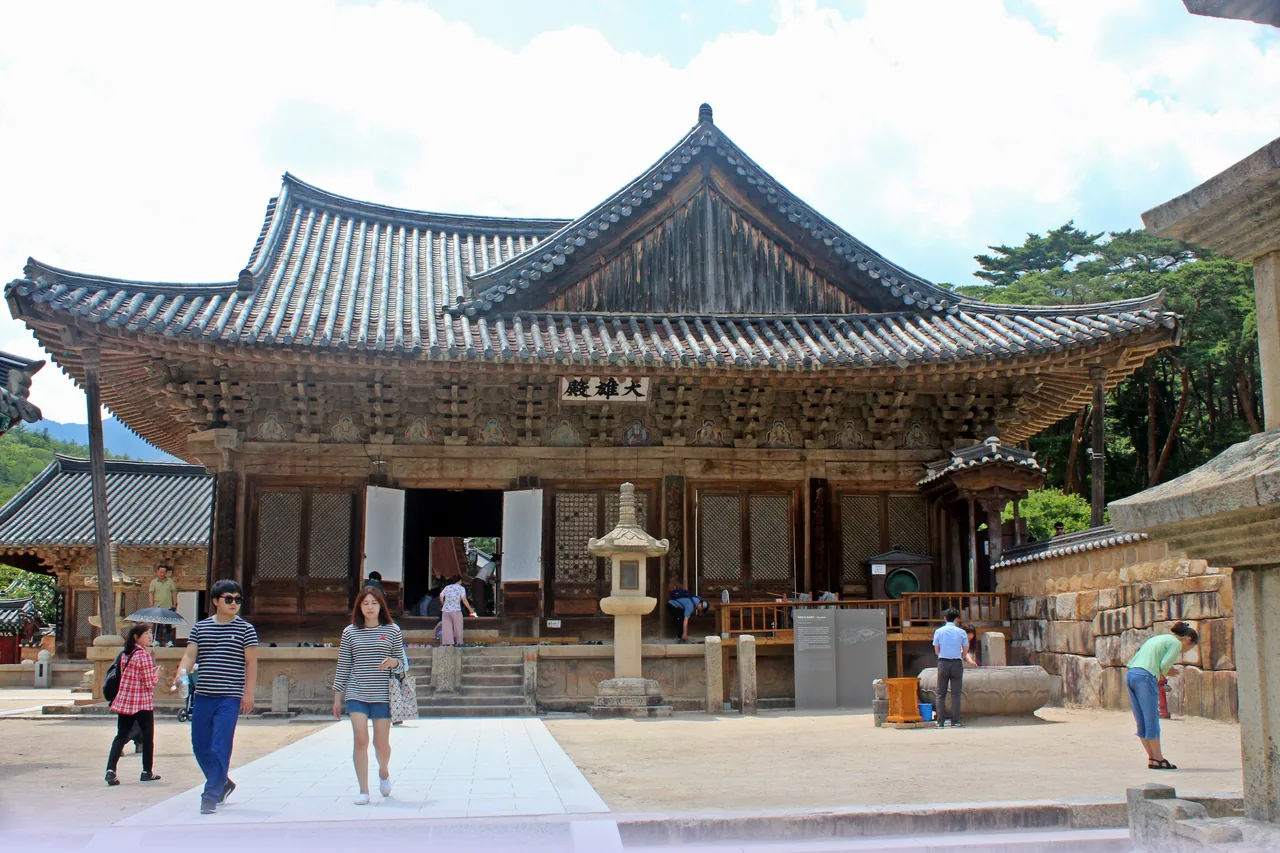
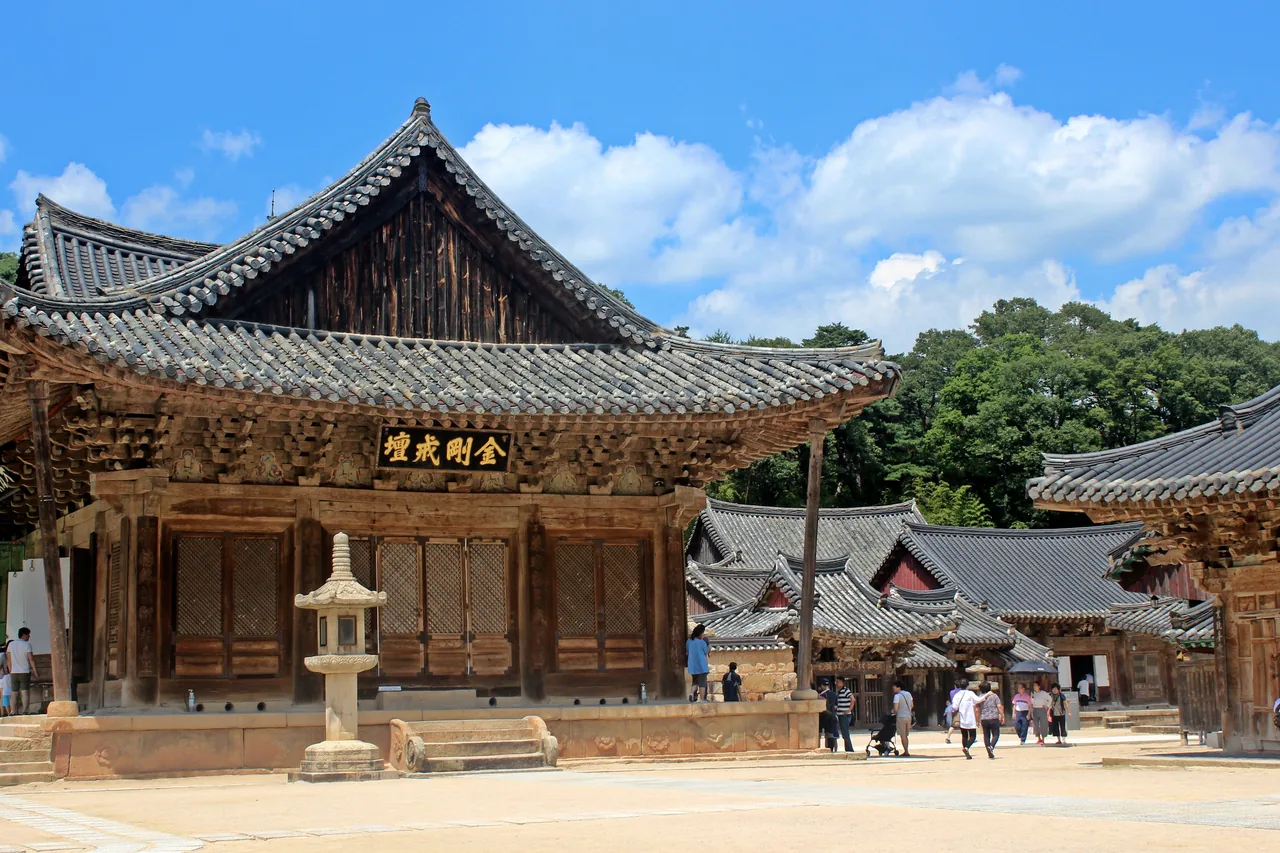
Walk into the main hall at TongdosaMap and there is no Buddha statue waiting on the altar, and that absence is the entire idea. Behind the hall stands the Geumgang Gyedan, a stone platform holding relics of the historical Buddha. The relics are what the hall faces, so where you would expect a gilded figure there is a latticed window instead, and through it the platform out in the open air.
That one fact changes what you are doing all afternoon. At most temples you stand in front of a statue; here you stand inside a building and look through it at something outside. Visitors who do not know this tend to leave describing “a big temple with a lot of buildings”, which is the easiest way to waste the journey.
The rest of the story runs the same way. The monk Jajang founded the temple in 646, in the reign of Queen Seondeok of Silla, around relics he had brought back with him. Hall and platform are listed together as a single item, National Treasure No. 290, designated on 1 January 1997. Look up as you walk around the outside of the hall: every face carries a different name board, and the one facing the platform reads Geumgang Gyedan.
| Temple | Which of the Three Jewels | What it holds |
|---|---|---|
| Tongdosa | The Buddha | Relics of the Buddha himself, which is why the altar needs no statue |
| Haeinsa | The Dharma | The teachings, carved on the Tripitaka woodblocks |
| Songgwangsa | The Sangha | The community of monks |
Korean Buddhism gives these three temples a collective name, the Three Jewel Temples, and Tongdosa is the one that carries the Buddha. In 2018 UNESCO inscribed seven Korean mountain monasteries as World Heritage under the title Sansa, Buddhist Mountain Monasteries in Korea, and this is one of the seven. None of that asks anything of you as a visitor. It simply explains why the buildings are arranged the way they are.
2. Three ways here from Busan, and the one nobody mentions
The most useful route is an ordinary city bus, the Yangsan number 12, which you can pick up at almost any Line 1 station in the north of Busan. Nearly every guide sends you to the intercity coach terminal instead. That is the faster option, but it means riding Line 1 to the very end before you start, and for a lot of people the bus is simply easier.
| Route | Where you get on | What it is like |
|---|---|---|
| Yangsan city bus 12 | Myeongnyun, Oncheonjang, Pusan National University, Geumjeong-gu Office, Guseo, Dusil, Namsan and Beomeosa stations | Change from Line 1 wherever suits you. It swings through central Yangsan on the way, so it is cheap and slow, around an hour |
| Intercity coach | Busan Central Bus Terminal at Nopo, the northern end of Line 1 | The quick one, in the region of half an hour, with a reserved seat |
| KTX | Ulsan (Tongdosa) station, then local bus 13 to Sinpyeong, about 30 minutes, or roughly 25 by taxi | For coming straight from Seoul or elsewhere rather than from Busan |
Both buses finish at Sinpyeong terminalMap, a short walk from the temple gate. Here is the published timetable for the number 12, from Yangsan City itself.
| Days | From Sinpyeong terminal | From Busan (Myeongnyun) |
|---|---|---|
| Monday to Friday | 05:20 to 21:40 | 05:10 to 22:10 |
| Saturday and public holidays | 05:20 to 21:40 | 05:10 to 22:10 |
The city’s own note is worth repeating: the Myeongnyun departure times are a guide only, because that is the turnaround point and traffic moves it. Check live arrivals on the day.
Tap a transit card for the city bus, exactly as you would at home in Busan, and see our guide to getting around Busan if you have not sorted a card yet. For the coach, book through Bustago or TmoneyGO. One small thing that trips people up: the temple’s own website still calls the Nopo terminal by its old name, Dongbu Intercity Bus Terminal. It is the same place, now signed as Busan Central Bus Terminal.
3. The last stretch is on foot, and it is the best part of the day
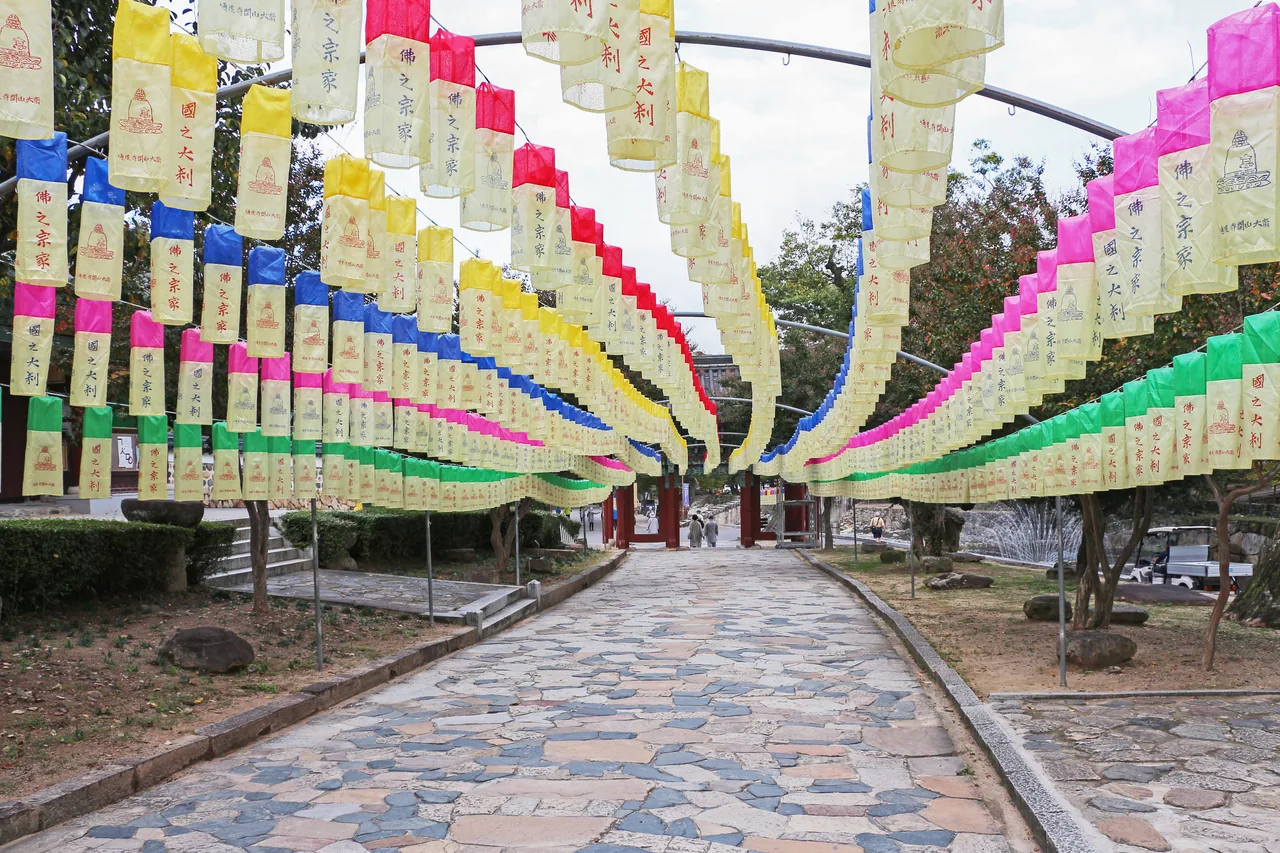
Coming by bus means walking in, roughly two kilometres each way, and that walk is an award-winning attraction rather than a chore to be got through. From the terminal it is five to ten minutes on foot to the sanmun, the temple’s outer gate. From the gate you keep going, and the going is the point.
The path in is Mupung-hansongnoMap, an avenue of pines between one and two hundred years old, and it takes around twenty minutes at a normal pace. In 2018 it took the top prize, the Life Award, at the eighteenth national Beautiful Forest competition. The name translates roughly as the road where a cool wind sets the pines dancing, which sounds like marketing until you are standing in it on a hot afternoon.
Two practical consequences follow. First, budget for the walk in your timings, both directions, because it is not a two-minute hop from a car park. Second, if you drive in you slide past all of this on tarmac with the windows up, which is a genuine loss and the reason the next section is not a formality.
4. Car or no car: the decision the whole trip turns on
Tongdosa is not one temple but a mountain carrying a main compound and seventeen hermitages, so the question that shapes your day is whether you have a car. The site’s own map makes this plain: the car parks come in three separate places. One sits at the gate, numbers one and two sit in front of the main compound and the museum, and the third is further up, on the side where the hermitages are.
That third car park is the whole difference. It is the only realistic base for reaching the western cluster of hermitages, and it is not somewhere you stroll to after a day on your feet.
| Without a car | With a car | |
|---|---|---|
| How you arrive | Bus 12 or the coach to Sinpyeong, then walk in | Through the gate to car park one or two, or up to car park three |
| The pine avenue | You walk it, twice | You drive past it |
| Hermitages | One at most, and realistically none | Two or three, working out of car park three |
| Time it fills | Half a day | A full day, if you want one |
| What you pay | Bus fares only | One parking charge covers the day |
🔴 Nobody sees all of this in a day. Any itinerary that promises the main compound, the museum and a run of hermitages between breakfast and the last bus has not looked at the map. Decide in advance which half you are giving up, and the day works.
Without a car the shape is simple and good: gate, pine avenue, main compound, museum, then back out the way you came. With a car you trade the walk for range. Neither is the better trip. They are different trips.
5. Free to walk in, paid to drive in
Admission has been free since 4 May 2023, which means that if you arrive by car the parking charge is now the de facto entry ticket. These are the temple’s official figures.
| Item | Charge |
|---|---|
| Admission | Free, since 4 May 2023 |
| Parking, light car | 3,000 won |
| Parking, standard car and small van under 17 seats | 6,000 won |
| Parking, large vehicle of 17 seats or more | 15,000 won |
Parking is waived for holders of a national or Tongdosa temple membership card with the current year’s dues paid, and for blue badge holders; a badge that does not carry parking rights gets a half charge instead.
🔴 A lot of what you will read online still quotes 2,000 or 3,500 won for parking. Those are the old rates. Because the temple scrapped the entrance fee and shifted the money to the car park, out-of-date numbers survive here longer than usual, so trust the table above.
The honest summary is not “Tongdosa is free”. It is: walk in and it costs nothing, drive in and you pay at the barrier. Which is one more reason to look hard at the car question before you go.
6. Opening hours, and how long the place really takes
The grounds are open 08:30 to 17:30, and it is that closing time, not the last bus, that ends your day. The gap between the two is wide enough to catch people out, so plan against the temple’s hours and treat the bus timetable as a comfortable backstop.
| What | When |
|---|---|
| Temple grounds | 08:30 to 17:30 |
| Early entry for the dawn service | From 04:00, for those taking part |
| Seongbo Museum | 09:30 to 17:00, Tuesday to Sunday |
| Last bus 12 from Sinpyeong | 21:40 |
Without a car, half a day is the honest figure: the walk in, an unhurried hour or two around the main compound, the museum, then the walk back. Leave Busan mid-morning and you are back in the city for dinner. Trying to stretch that to a full day only works if you are driving.
Behaviour inside is straightforward and mostly obvious. Take your shoes off at the door of a hall, keep your voice down, walk round the edge rather than through the middle if a service is in progress, and do not photograph people at prayer. Our notes on Korean travel etiquette cover the rest. This is a working monastery with monks living in it, not a museum piece, which is much of its appeal.
7. The Seongbo Museum, and the Monday problem
The museum is free, it is the best indoor hour on the site, and it closes every Monday while the temple around it stays open. That mismatch is the single most common way a Tongdosa plan goes wrong.
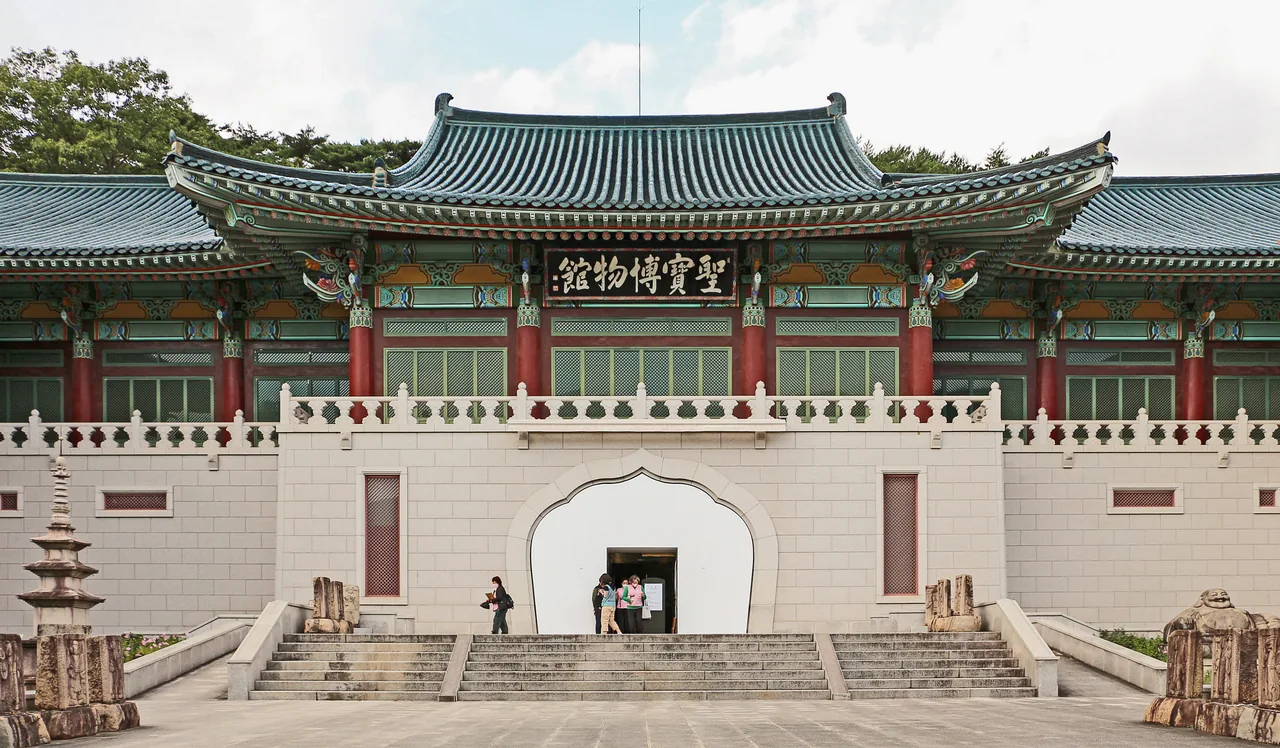
Tongdosa Seongbo MuseumMap opened in 1987 and specialises in Buddhist painting, above all gwaebul: enormous hanging scrolls, unrolled outdoors for major ceremonies because no ordinary room is tall enough to take them. Its holdings of temple painting are among the largest in the country. Opening is 09:30 to 17:00, Tuesday to Sunday, admission free, and the number is 055-382-1001.
If your only free day is a Monday, go anyway; just swap the museum for something else in advance rather than discovering the door shut. A hermitage if you are driving, or the pine avenue at a slower pace, fills the gap perfectly well.
8. Seventeen hermitages, and which of them you can actually reach
Seventeen hermitages are spread around the mountain like spokes on a wheel, and on foot you will reach one of them at best. Each is a small working community in its own right rather than an outbuilding of the main temple, which is why they are scattered so widely.
| Where, relative to the main compound | Hermitages | How you get there |
|---|---|---|
| West, above car park three | SeounamMap, Ongnyeonam, Baengnyeonam, Samyeongam | The cluster a car opens up, and the usual choice for two or three in an afternoon |
| North | JajangamMap, Seochukam, Geumsuam | Drive, then walk up the last part |
| North-east | Geungnakam, Baegunam, Biroam, Banyaam | The most widely spread group of all |
| East | Chukseoam | On its own, out towards the edge |
| Between the compound and the hermitages | Sudoam, Anyangam, Chwiunam, Botaam | The nearest of them to the main buildings |
| South, below the museum | Gwaneumam | The one a walker might manage |
The temple’s map shows where the hermitages are but publishes no distances, and there is no shuttle between them. Plan in terms of short drives and a walk up at the end of each, not in metres.
What is worth understanding is that a hermitage is not a smaller version of the main compound. They sit at their own heights on the mountain, each with its own small set of buildings, and they are quiet in a way the main courtyard on a Saturday is not. If you are driving, pick two and take your time, rather than ticking off four.
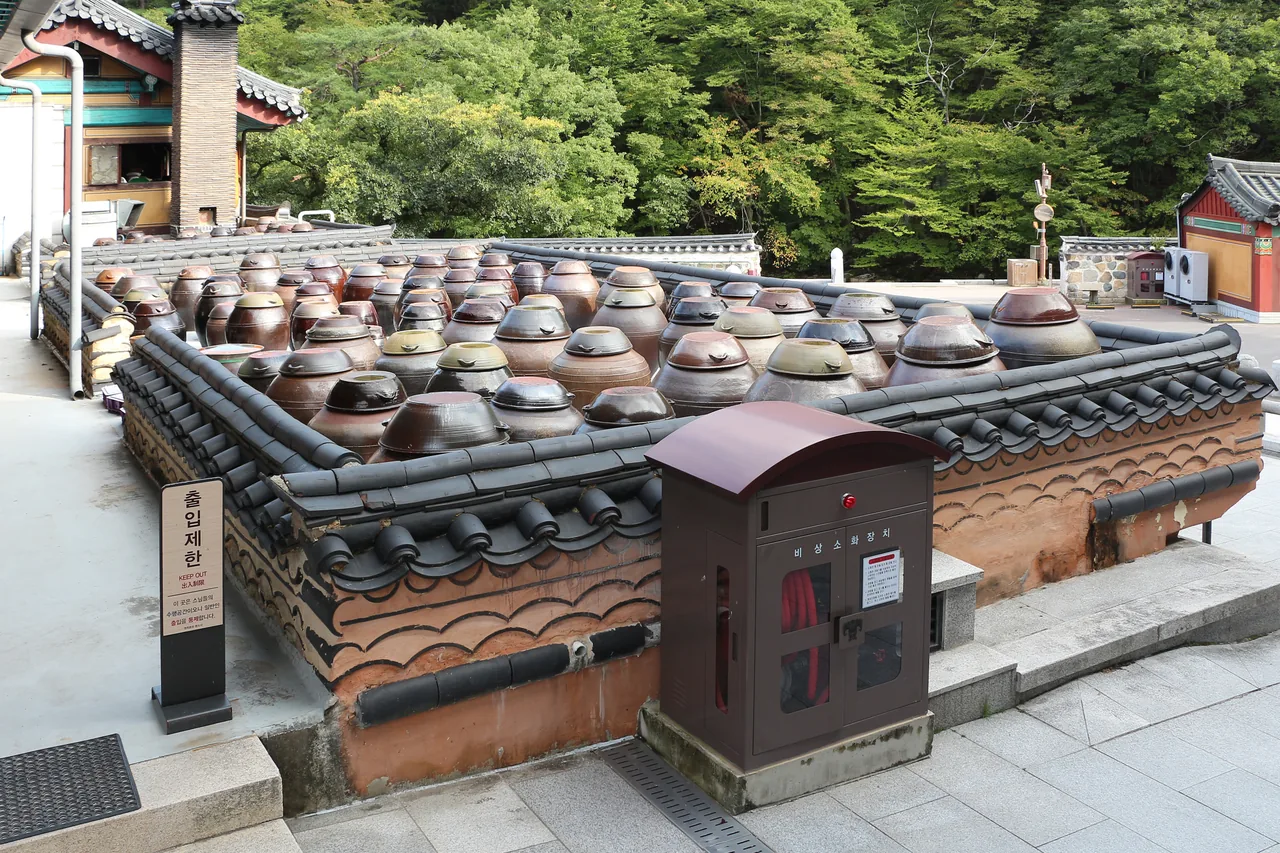
9. When to go, season by season
Late February to early March is the one window worth building a date around, when the temple’s old red plum flowers. The tree is called Jajangmae after the founding monk, and when it opens the courtyard fills with photographers and tripods.
| When | What you get |
|---|---|
| Late February to early March | Jajangmae, the red plum. Cold, quiet grounds and a crowd around one tree |
| Spring | The pine avenue at its best, with water in the stream beside it |
| Summer | The valley. Being up in the hills, it runs noticeably cooler than central Busan |
| Autumn | Maple colour right through the compound, and the walk in doubles as the view |
| Winter | The fewest people of the year, and the option of arriving at 04:00 for the dawn service |
A warning about the plum tree, because it is the thing people travel for. Flowering shifts by a week or two from year to year with the weather, and sources disagree about the tree’s age, so treat late February to early March as a window rather than a date, and check before you commit a specific day to it.
Summer deserves a word too. The temperature difference between the valley and the city is real, and a mountain temple is a sound answer to a Busan August afternoon, which is the kind of thing that only occurs to you once you are already sweating on the seafront.
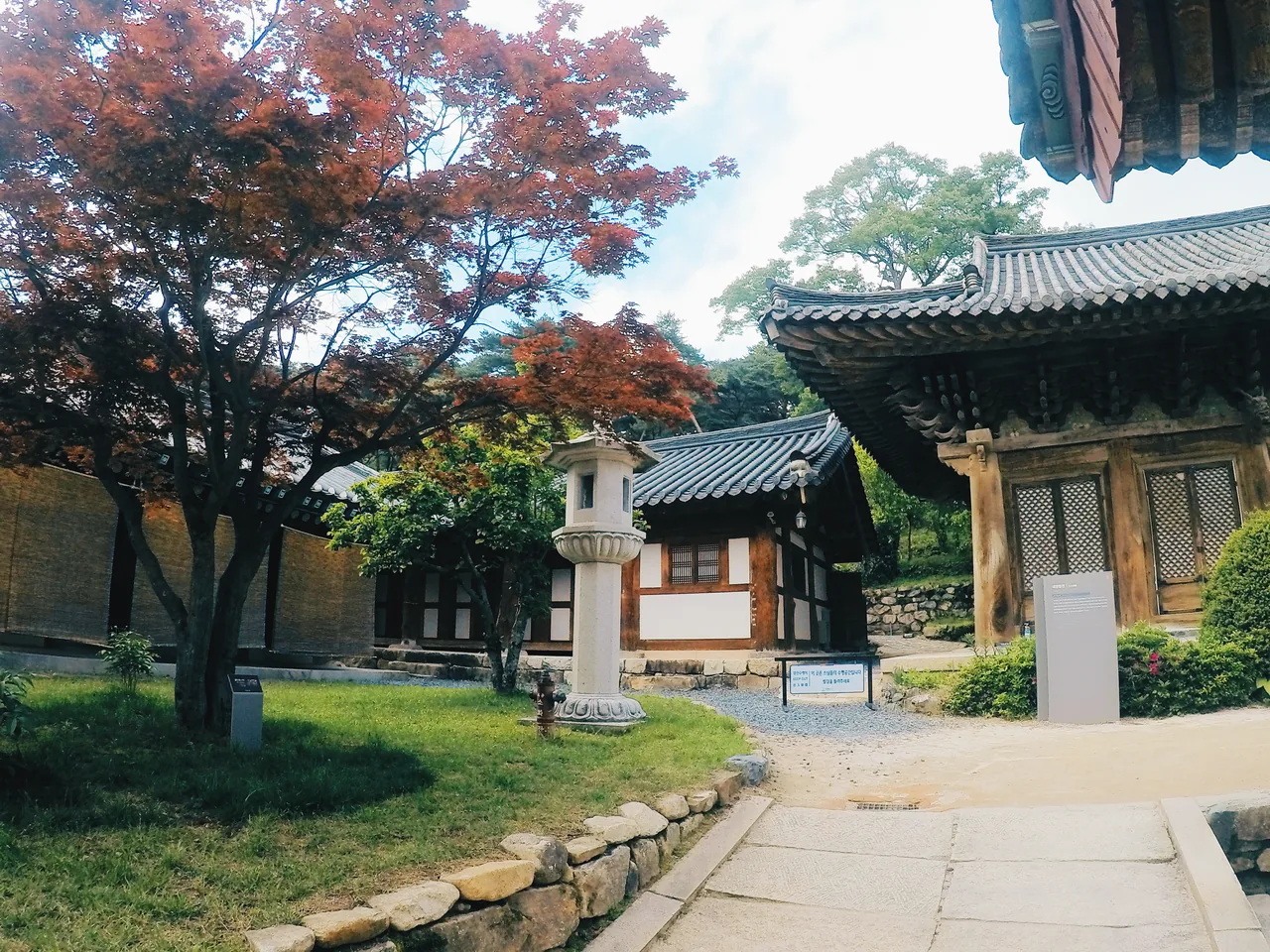
10. Three ways to spend the day
Pick one of these three before you leave, because the whole day is settled the moment you pick up a car key or head for the bus stop.
Line 1 to whichever station suits, bus 12 to Sinpyeong terminal, walk to the gate, then in along the pine avenue. Main compound, then the Seongbo Museum, then retrace your steps to the terminal for the bus back. 🔴 The temple closes at 17:30 long before the last bus at 21:40, so the gate, not the timetable, is your deadline.
Through the gate, straight up to car park three, then two or three hermitages in the western cluster at a slow pace. Come back down to the main compound and finish at the museum. One parking charge covers the whole day, and you can move in whatever order the weather suggests.
The museum is shut, so build the day without it. Drivers put a hermitage in its place; on foot, walk the pine avenue at half speed, sit in the compound for longer than feels necessary, and go back out through the trees in the late afternoon light.
If the temple turns out to be a half-day rather than a whole one, that is not a failure of planning. It is what a bus trip to Tongdosa is. Pair it with a slow evening back in the city, or save the day for one of the longer runs out, like Gyeongju, where the sights genuinely do fill a whole day.
11. If a day is not enough: the templestay
Tongdosa runs an overnight templestay in its rest-and-relax format, one night only, at 100,000 won for a room sleeping one or two. It is the rest programme rather than a packed schedule, so the day is largely yours between fixed points.
| Stage | Time |
|---|---|
| Day one, arrival | 14:00 |
| Evening meal | 17:00 to 18:25 |
| Day two, dawn service | 04:30 to 05:10 |
| Breakfast | 06:00 to 07:00 |
| Departure | 10:00 |
Book at least three days ahead; the day before and the day itself are not accepted, and dates are only released when the temple has no ceremony of its own on. It takes guests from primary-school age up to 70, with over-70s needing a companion and under-18s a parent. Cancel five days out and you get everything back, 70 per cent at three to four days, half at two days, and nothing after that. Enquiries go to 055-384-7085 or templestay@tongdosa.or.kr.
There is also a group experience programme once or twice a month, taking in services, temple meals, communal work, meditation, the 108 prostrations and a hermitage circuit. The price is not published, so ask when you enquire rather than budgeting from a figure you found elsewhere.
For most people, though, this stays a day trip and the bed stays in Busan. That is usually the right call: your things are already unpacked, and the evening back in the city is part of the appeal.
12. What else fits in the day, and one thing that does not
Start with the thing to strike off: Tongdo Fantasia, the theme park still printed on plenty of Yangsan itineraries, has not opened since March 2020. It is shut, not seasonally closed. The owner has been putting the site forward for a national regeneration scheme, so it is land awaiting redevelopment rather than a day out, and it is worth knowing before somebody builds an afternoon around it.
🔴 This one is unusually sticky because the park is still marked on the temple’s own hermitage map and still appears in “one day in Yangsan” posts written years after it closed. If a plan you are reading includes it, that plan has not been checked recently.
Two things nearby are genuinely open.
Another temple on the same bus, with a stop called Naewonsa-ipgu on the number 12 route. It dropped its admission charge at the same time Tongdosa did. Easy to bolt on precisely because it needs no new transport.
A two-stage fall of about 20 metres on the slopes of Cheonseongsan, counted among Yangsan’s eight scenic spots, two or three minutes’ walk from its car park. Best after rain. This one is for drivers.
Water levels decide whether Hongryong FallsMap is worth the detour, so save it for a day that follows a decent spell of rain. In a dry spell, put the time into a second hermitage instead.
13. Tongdosa or Beomeosa, and the subway that will not help
These two are not rivals: Beomeosa is the mountain temple you reach on the Busan subway, and Tongdosa is the one you leave the city for. Most people staying a few days end up doing both, in that order, and the differences are easy to state.
| Tongdosa | Beomeosa | |
|---|---|---|
| Where | Habuk, in Yangsan, outside Busan | On Geumjeongsan, inside the city |
| Getting there | City bus or coach, then a walk in | Line 1 to Beomeosa station, then a short local bus ride |
| Standing | UNESCO World Heritage, one of the Three Jewel Temples, relics in place of a statue | A long-established mountain temple within the metro network, with its own templestay |
| Scale | A main compound plus seventeen hermitages across a mountain | A single compound you can walk in one visit |
| Time to allow | Half a day minimum, a full day if you drive | A half-day from the city centre without leaving Busan |
Neither is the better temple, and our guide to Beomeosa covers that one properly. Choose on what your day has room for: a short hop within the city, or a proper trip out. And if the honest answer that week is neither, our round-up of things to do in Busan sets both temples against the beaches, markets and viewpoints competing for the same afternoon.
No, the new line will not reach the temple
You may read that a subway extension is about to make Yangsan easy. The Yangsan line runs 11.43 km from Nopo to Bukjeong, with new stations at Sasong, Naesong, Yangsan City Hall, Yangsan Jungang, Singi and Bukjeong. As of August 2026 it is not open; it is in trial running, and reported opening dates disagree with one another, so do not plan a trip around a date you have seen quoted.
🔴 More to the point, it will not change how you get to Tongdosa even after it opens. Bukjeong, the end of the line, is central Yangsan, and the temple is out in Habuk, a long way further on. The bus stays the answer. We will update this section once the line is running.
🎡Things to Do48
🍜Food7
🏨Where to Stay3
🚇Getting Around8
🧭Travel Tips14
📌More3
🧭All-Korea essentials47
Frequently asked questions
See the full Busan travel guide →
Images: Daeungjeon (featured image) & the Geumgang Gyedan plaque: 최옥석, CC BY-SA 4.0. Seongbo Museum, temple lanterns & jangdokdae: Bernard Gagnon, CC0. Autumn in the grounds: Jaki4594, CC BY-SA 3.0. All via Wikimedia Commons.