
Geoje Island Guide: All Nine Scenic Spots, Oedo and Jisimdo
Korea’s second largest island, and half of it is a working shipyard town
| What kind of island | A working shipbuilding city, not a resort. The sights are scattered across the whole island |
|---|---|
| Start from the Nine | Geoje City’s nine chosen spots are effectively the shortlist, split between sea, gardens and history |
| What needs a boat | Only Oedo and Jisimdo. Everything else is reachable by road |
| The day of the week matters | The POW park closes Tuesdays, the botanical garden Wednesdays. Check before you fix a date |
| Is one day enough | One day covers one strand. Seeing the Nine properly wants an overnight |
| From Busan | About an hour over the Geoga Bridge, with roughly 40 buses a day from Sasang |
1. Geoje is a working island, not a resort
2. Getting to Geoje from Busan
3. The Nine Scenic Spots, and how to choose among them
4. Oedo Botania, an island one man spent 26 years building
5. Choosing a ferry port for Oedo
6. Haegeumgang and the Cross Cave
7. Jisimdo, the camellia island and Oedo’s opposite
8. Windy Hill and Sinseondae
9. Maemi Castle, built without a plan
10. Geoje Botanical Garden, the answer on a wet day
11. Gonggot and Naedo, a face the island shows only in spring
12. Geoje Panorama Cable Car
13. Two wars in one bay: the POW park and Okpo
14. Beaches: Hakdong’s black pebbles and the rest
15. One day, or one night
16. Cancellations, closing days and what it costs
A day trip from Busan, or an overnight if you want the whole island. Part of our complete Busan Travel Guide.
1. Geoje is a working island, not a resort
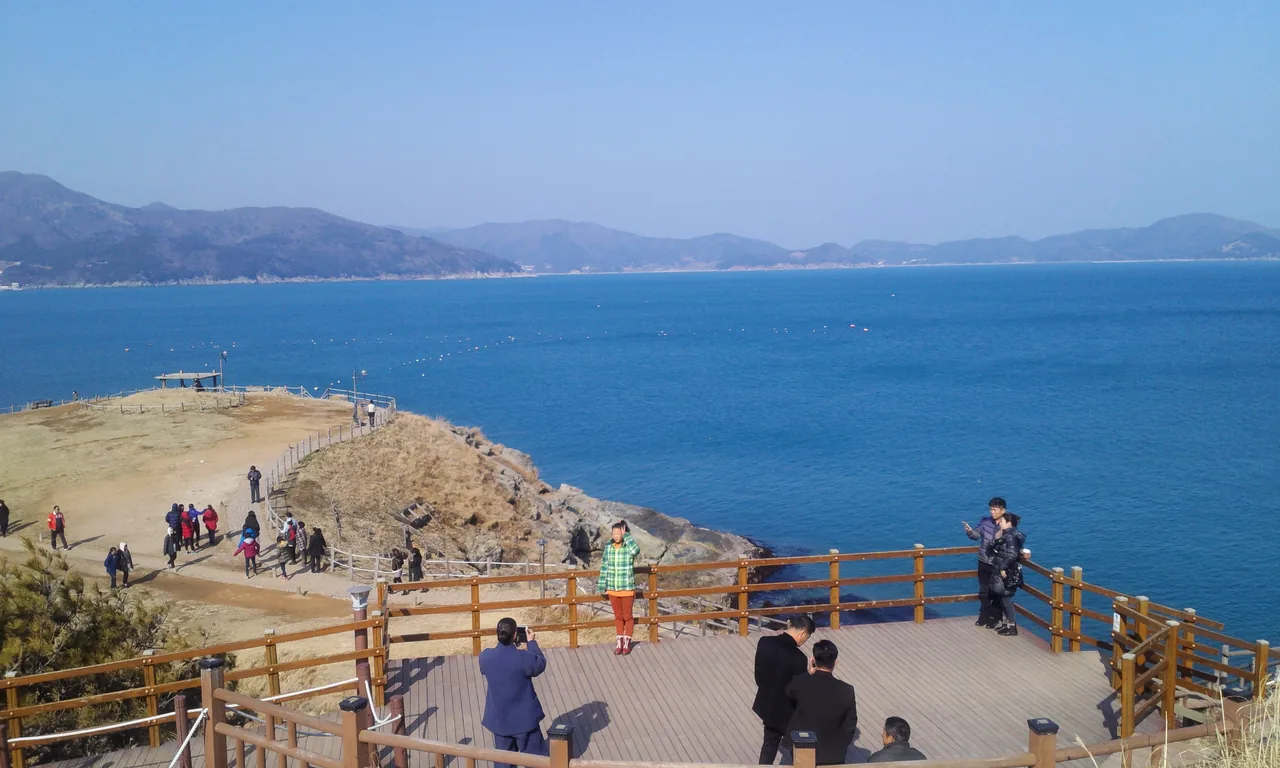
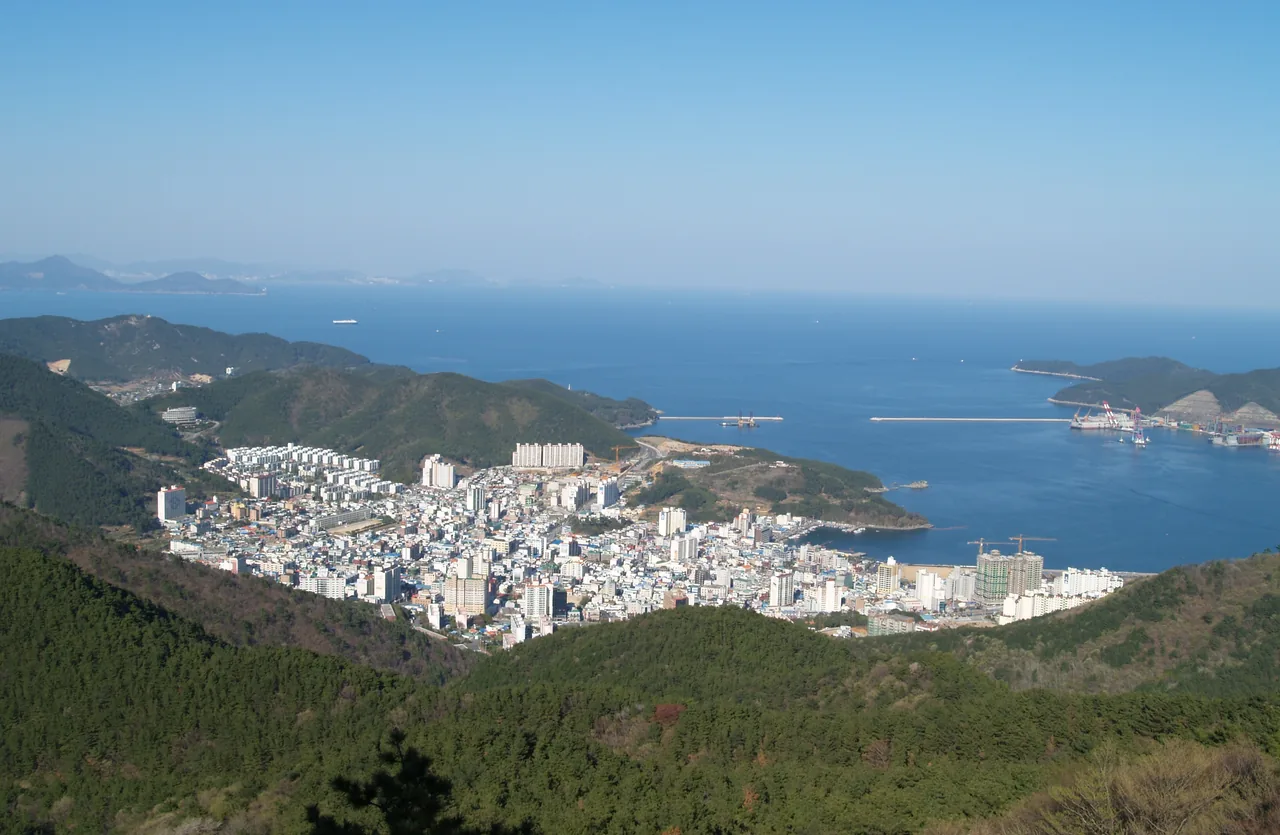
Geoje is the largest Korean island after Jeju, and what pays for it is not tourism but shipbuilding. Ground was broken on the Okpo yard in 1973 across 4.9 million square metres of the bay, Daewoo took it over in 1978 and completed it in 1981. Today two major yards operate here, Hanwha Ocean and Samsung Heavy Industries.
That shapes what you find. Gohyeon and Okpo are ordinary working towns rather than tourist strips, busy on weekday afternoons, with hotels that lean business rather than resort. The southern coast is the opposite: thinly populated, with winding roads and long views. It helps to think of Geoje as two islands, an industrial north and a scenic south, rather than one place you loop around.
The sights are scattered to match. Nothing is clustered, so the first job is to put the Nine Scenic Spots on a map and decide which corner of the island you are actually going to.
2. Getting to Geoje from Busan
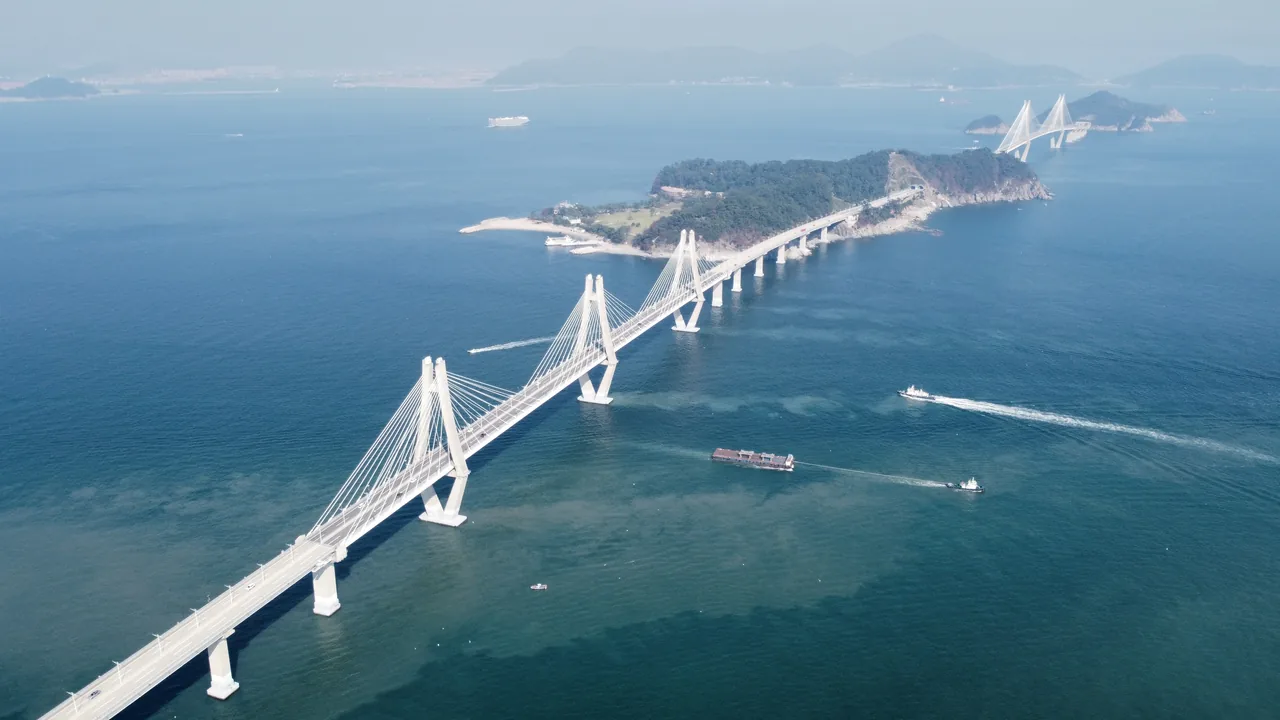
The Geoga Bridge opened in December 2010 and cut a three-hour drive to about one. Intercity buses cross it directly from Busan’s Sasang (West) terminal, running around 40 times a day and operated by Gyeongwon, Sinheung and Daehan.
There are two useful drop-off points. Gohyeon is the main town and the base for the POW park and the botanical garden. Jangseungpo is the harbour where the boats leave, so it is where you want to be if Oedo or Jisimdo is the plan.
Sasang to Jangseungpo, then walk to the ferry terminal. Simplest if an island is the point of the day.
Sasang to Gohyeon for the POW park, the botanical garden and everyday services.
Opens up the southern coast. If you want the Nine, you effectively need wheels.
Day tours from Busan hold the ferry seat for you, which removes the timetable risk.
Fares and timings change, so check them on a booking service such as Bustago or Kobus, and reckon on a little over an hour each way. Local buses on the island are infrequent, so covering the Nine on public transport alone is not realistic.
3. The Nine Scenic Spots, and how to choose among them
In 2024 Geoje City picked nine places and grouped them as the Nine Scenic Spots. Lists like this are often filler, but here the nine genuinely differ from one another, which makes them a usable shortlist rather than a tick-box.
| Strand | Spot | What it is |
|---|---|---|
| Sea and coast | Haegeumgang | Sea-carved rock stacks, seen from a boat |
| Windy Hill and Sinseondae | A windmill headland and a cliff terrace, twenty minutes from the car park | |
| Hakdong black pebble beach | Stones instead of sand. You go for the sound the water makes | |
| Gardens and islands | Oedo Botania | A private garden island reached only by ferry |
| Jisimdo, the camellia island | Fifteen minutes from Jangseungpo. Camellias from winter into spring | |
| Gonggot and Naedo | Spring daffodils on another hand-built terraced smallholding | |
| History and indoors | POW Camp Historic Park | The Korean War. Closed Tuesdays |
| Geoje Botanical Garden | A large glass dome. The answer on a wet day. Closed Wednesdays | |
| Maemi Castle | A sea wall one man stacked by hand. Free |
Treat that table as the map for this guide. With one day, take one strand; with an overnight, combine two. The Okpo Battle Memorial Park and the Panorama Cable Car are not on the official list but have a clear character of their own, so they get their own sections below.
4. Oedo Botania, an island one man spent 26 years building
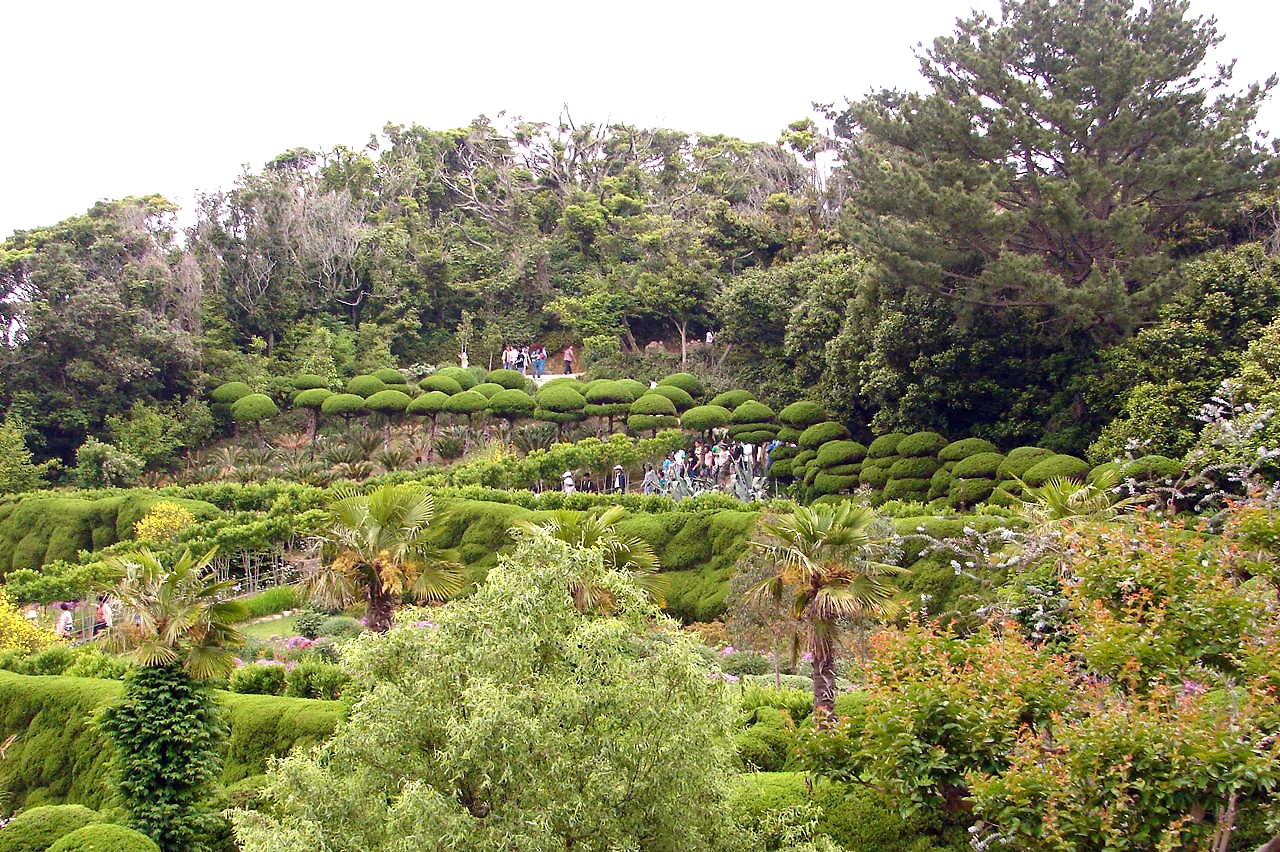
In July 1969 a man named Lee Chang-ho came here to fish, got caught in a typhoon and spent a night on the island. That night turned into a purchase: over the next three years, up to 1973, he bought the whole island. The first plan was a farm, not a garden. He planted 3,000 tangerine trees and 8,000 cypresses as a windbreak, failed repeatedly, and only then turned towards a botanical garden. It opened in 1995, twenty-six years after the first spade went in, took its current name in 2005, and has drawn more than twenty million visitors since.
This stretch of the south coast is mild enough for subtropical planting to survive the winter, so the terraces are dense with palms, cactus beds and camellias, laid out around white Mediterranean-style buildings with the sea on every side.
The history has a practical consequence. Because it is private land, the owner side decides how you come and go. OedoMap has no bridge and no road, so contracted ferries are the only way in, and the boat you arrive on also fixes how long you stay, generally around 90 minutes, or about two hours on the Jangseungpo route. Miss it and there is no later sailing.
| Admission | Fare |
|---|---|
| Adult | 11,000 won |
| Student, military or police | 8,000 won |
| Child, age 2 and over | 5,000 won |
| Geoje residents | Free |
This admission is separate from the boat fare, bought at the ticket office alongside your ticket. It is where most budgets go wrong.
The island is steep and heavily stepped, which is worth knowing if you have a pushchair or anyone who struggles with stairs.
5. Choosing a ferry port for Oedo
Six ports run boats to Oedo, and the gap between cheapest and dearest is around 6,000 won per adult. That sounds like a reason to chase the cheap one, and usually it is not, because the cheap ports are the hard ones to reach. These are Geoje City’s official fares for the Oedo and Haegeumgang route.
| Port | Adult (weekday / weekend) | Child | Who it suits |
|---|---|---|---|
| JangseungpoMap | 20,000 / 22,000 | 12,000 / 14,000 | Arriving from Busan by bus. Largest free car park |
| Jiseopo | 20,000 / 22,000 | 13,000 / 14,000 | Drivers on the east coast |
| Wahyeon | 18,000 / 19,000 | 11,000 / 12,000 | Cheapest of the mainstream ports |
| Gujora | 19,000 / 20,000 | 13,000 / 14,000 | Pairs with Gujora beach and Naedo |
| Haegeumgang | 16,000 / 17,000 | 8,000 / 9,000 | Lowest fare, hardest to reach |
| Dojangpo | 20,000 (flat) | 11,000 | Directly below Windy Hill |
On public transport, sail from Jangseungpo. It costs more than Haegeumgang, but that port sits on the far southern tip and the time and taxi fare to reach it will erase the saving several times over. With a car, Dojangpo is the smart choice: you can walk Windy Hill and board without moving the car.
09:30, 11:00, 12:30, 14:00 and 15:30 for the Oedo landing with the Haegeumgang sail-past.
11:00 and 14:00 cover Haegeumgang and the Cross Cave without landing on Oedo.
About three hours, roughly two of them on the island.
6. Haegeumgang and the Cross Cave
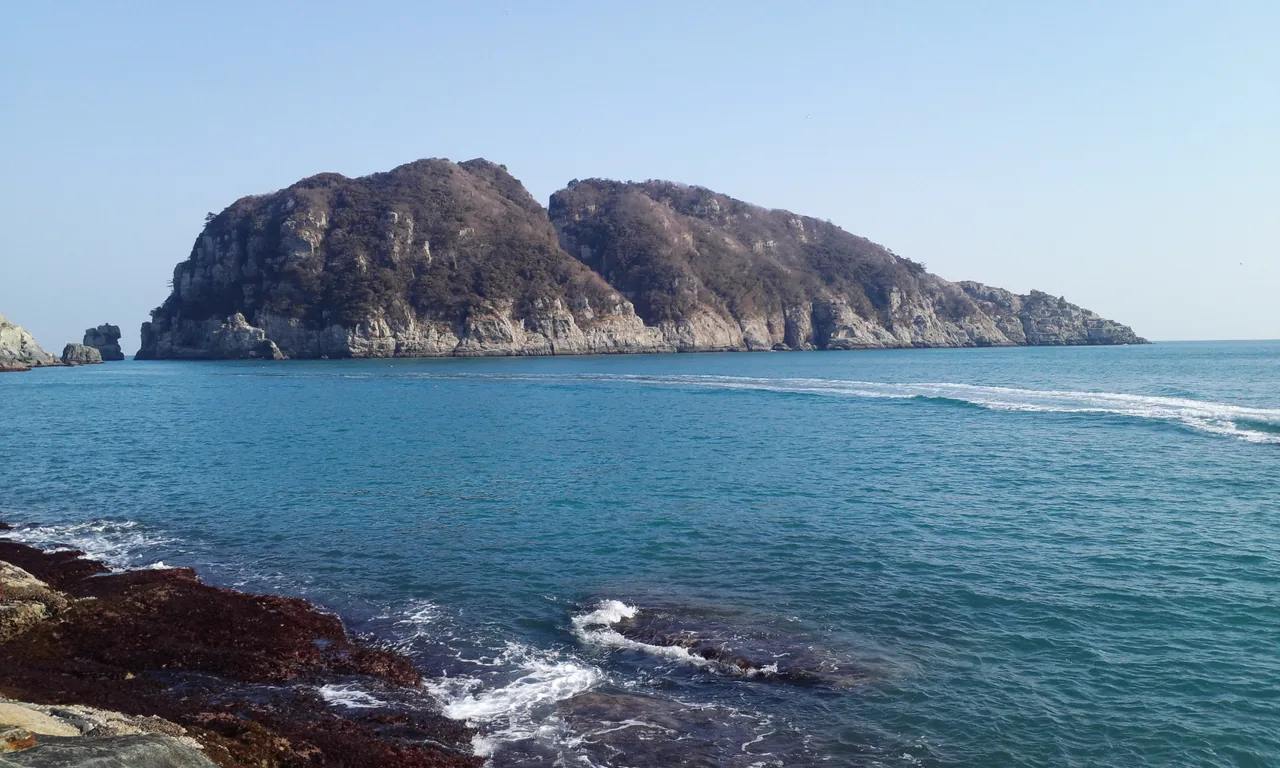
Almost every Oedo sailing loops around HaegeumgangMap, a cluster of sea-carved stacks off the southern tip. The boat circles for ten to twenty minutes before or after the landing, and nobody disembarks.
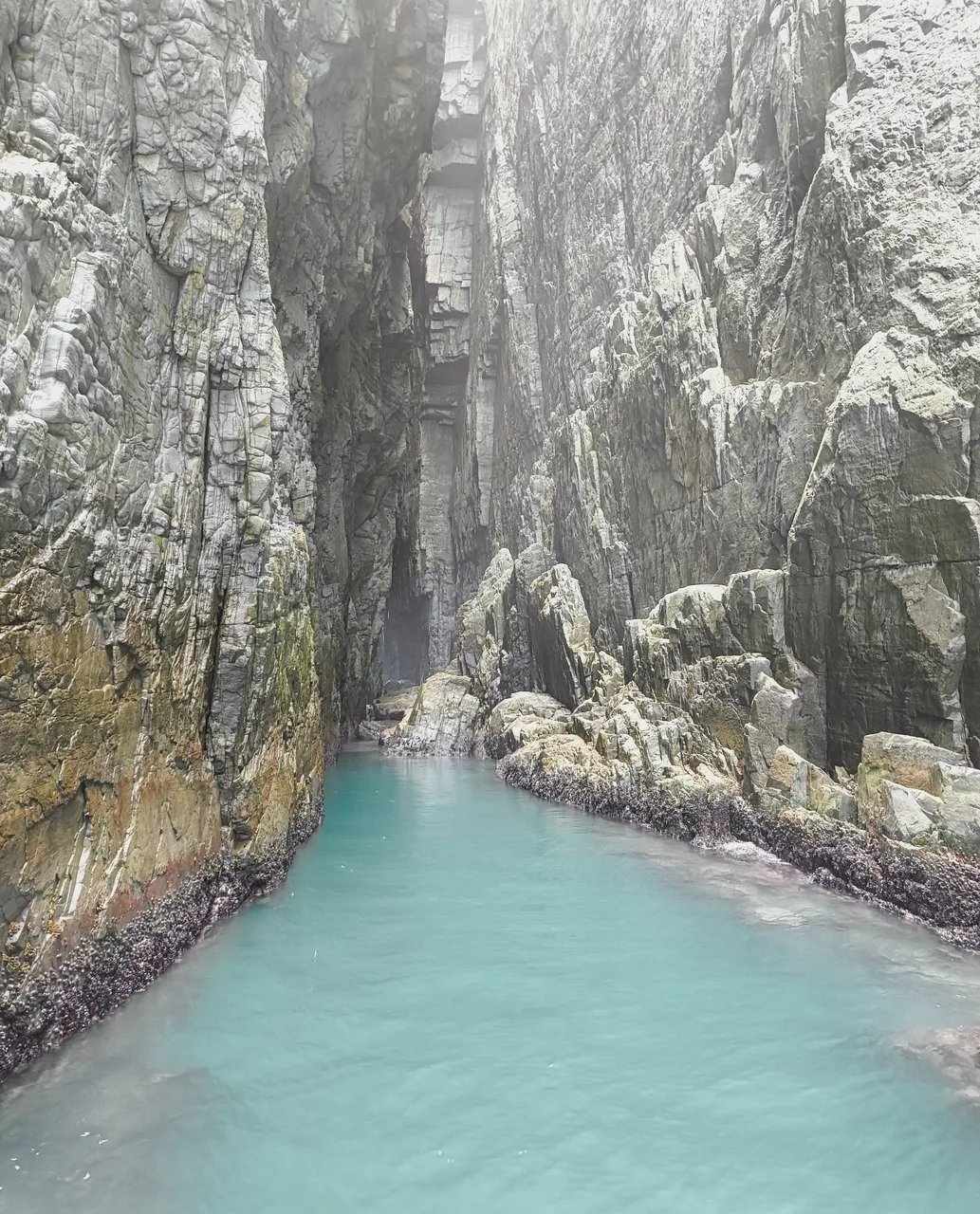
The highlight is the Cross Cave, a fissure that forms a cross when the boat lines up with it. Whether you see it properly depends on the sea. Swell, wind and current decide how close the captain can go, and on rough days the approach is shortened or dropped.
If you want the rocks and not the garden, the 11:00 and 14:00 sailings from Jangseungpo cover Haegeumgang and the Cross Cave alone, and cost less. There is also a viewpoint on land, which is useful when the sea is too rough to sail at all.
7. Jisimdo, the camellia island and Oedo’s opposite
JisimdoMap is fifteen minutes by boat from Jangseungpo, and it is everything Oedo is not. Where Oedo is a designed garden, Jisimdo is woodland left largely alone. Roughly half the island’s vegetation is camellia, flowering from December through to April. If you are on Geoje in winter, this is the island that suits the season.
It is not only a walk among flowers. Japanese colonial-era gun emplacements survive around the island, so a path through camellia tunnels delivers you to concrete bunkers. It is a place where a flower trip turns into a history walk, which makes it good with older children.
Boats leave from the Jisimdo terminal at Jangseungpo, and you should book if you want a particular departure, especially at weekends in camellia season. Check current fares when you book. The island is walked rather than driven, with enough up and down to want proper shoes.

8. Windy Hill and Sinseondae
Windy HillMap is free, and so is the car park. A grassy headland above Dojangpo with a white windmill on top, a short walk from the road, and twenty minutes is enough. In autumn the slope turns silver with pampas grass.
Next to it, Sinseondae is a broad shelf of layered rock with a completely different feel. The two connect on foot from the same car park, which makes this the best value-per-hour stop among the Nine.
Dojangpo’s ferry jetty sits directly below the hill, so this is also the one place where a walk and a boat to Oedo fit together without moving the car.
9. Maemi Castle, built without a plan
Maemi CastleMap is a stone sea wall that one man built by hand over several years, without drawings. Typhoon Maemi destroyed his field in 2003, so he began stacking stone against the water to hold the ground. What grew from that is a curving rampart that is now on the official list of Nine, and the typhoon’s name stuck to it.
Entry and parking are free. It also sits close to the Geoga Bridge, which makes it the natural first stop coming in from Busan rather than a detour you double back for.
10. Geoje Botanical Garden, the answer on a wet day
The Jungle Dome at Geoje Botanical GardenMap is one of the largest single glasshouses in Korea. Tropical trees rise in tiers under the dome, so what the weather is doing outside stops mattering. On a day when the boats are cancelled, this is the most useful ticket on the island.
| Ticket | Individual | Group of 20+ |
|---|---|---|
| Adult | 5,000 won | 4,000 won |
| Teenager | 4,000 won | 3,000 won |
| Child | 3,000 won | 2,000 won |
🔴 Closed every Wednesday. The closing day moved from Monday to Wednesday on 1 July 2026, so an older blog post can send you on a wasted trip. If the Wednesday is a public holiday it closes the next working day instead.
Opening is 09:30 to 18:00 with tickets and entry closing at 17:00; the outdoor garden opens earlier at 09:00. Under-sixes and over-65s are free. The Jungle Tower is booked separately online with limited slots per day, so reserve it in advance if you want to go up.
11. Gonggot and Naedo, a face the island shows only in spring
GonggotMap is another terraced smallholding that one family spent a lifetime planting. The root is the same as Oedo’s, but the experience is not: where Oedo is a managed garden you arrive at by boat, Gonggot is a rough slope you walk down, on stone steps that run a long way from the entrance to the sea.
The signature flower is the daffodil, at its best in April, among some fifty species including camellia, palm, spiraea and fatsia. There is greenery outside flower season, but this is a place that lives by its calendar and is not worth a special trip in deep winter or high summer.
Just offshore, Naedo is a small island reached by boat from Gujora, with a maintained loop trail. If you are already sailing to Oedo from Gujora, the two use the same harbour.
12. Geoje Panorama Cable Car
The cable car runs when the boats do not. The line covers 1.56 km up to Yunseul Station on the Nojasan ridge, and the ride takes roughly nine to ten minutes each way.
45 in total, of which 10 are crystal cabins with glass floors. Each holds up to 10 people.
Summer 09:00 to 20:00, last tickets 19:00. Winter 09:00 to 19:00, last tickets 18:00.
An hour to an hour and a half including the viewpoint at the top.
Generally runs on days that cancel ferries, though high wind or lightning will stop it.
Fares are quoted differently in different places and there are two cabin classes, so check the current price at the ticket office or a booking platform rather than trusting a figure read in advance. Tickets are normally sold as return.
13. Two wars in one bay: the POW park and Okpo
Beyond the sea and the gardens, Geoje holds the ground where two wars passed through, four centuries apart.
Geoje POW Camp Historic Park
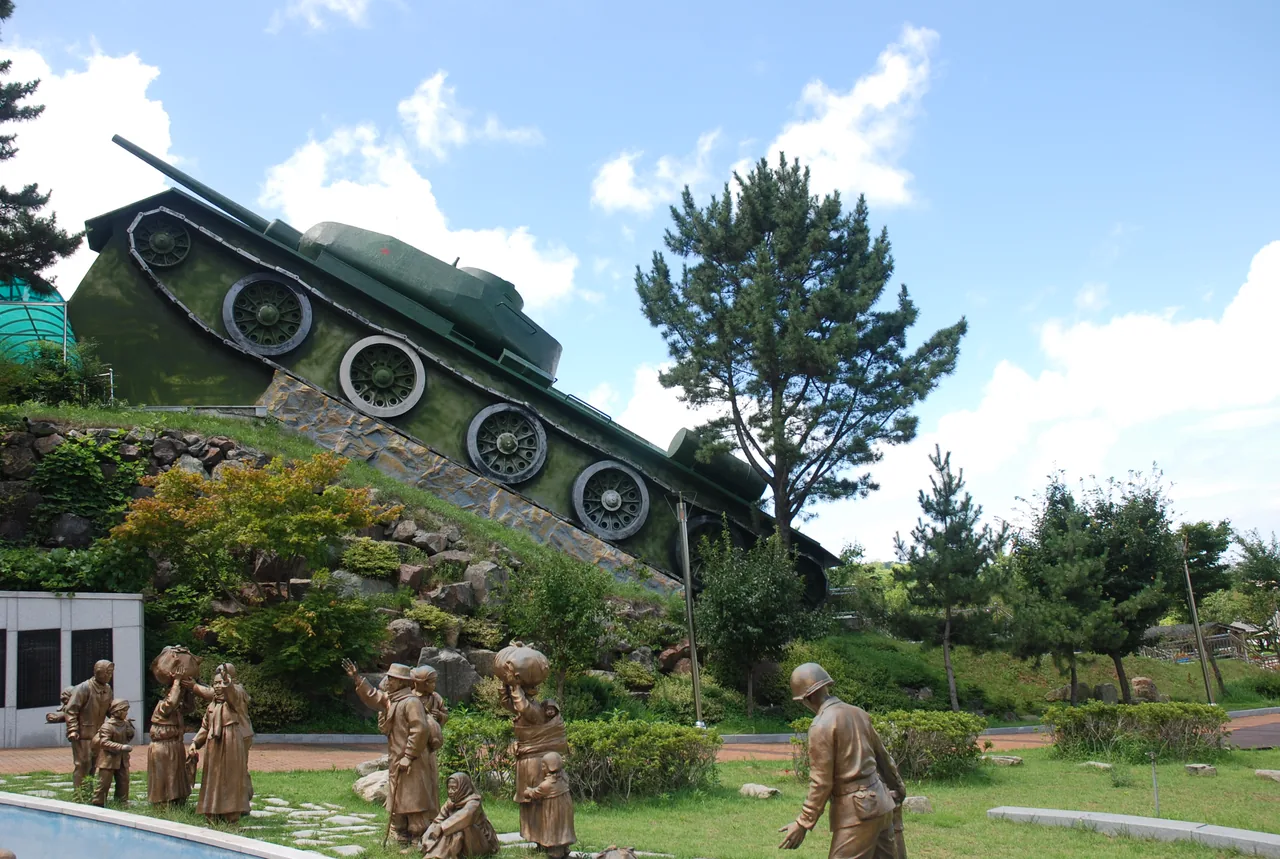
During the Korean War the island held the largest prisoner-of-war camp in the country, at one point around 170,000 people. The site in Gohyeon POW Camp Historic ParkMap is now a historic park covering the camp and the war.
| Ticket | Individual | Group of 20+ |
|---|---|---|
| Adult | 7,000 won | 5,000 won |
| Teen or service member | 5,000 won | 3,500 won |
| Child | 3,000 won | 2,000 won |
🔴 Closed every Tuesday, and the next working day if a holiday falls on one, plus Seollal and Chuseok. Opening is 09:00 to 18:00 with the ticket office closing at 17:00, so last entry is five o’clock.
Inside there are paid extras: a shooting range at 2,000 won, a mirror maze at 3,000 and a VR experience at 4,000. Preschool children and visitors with disabilities enter free.
Okpo Battle Memorial Park
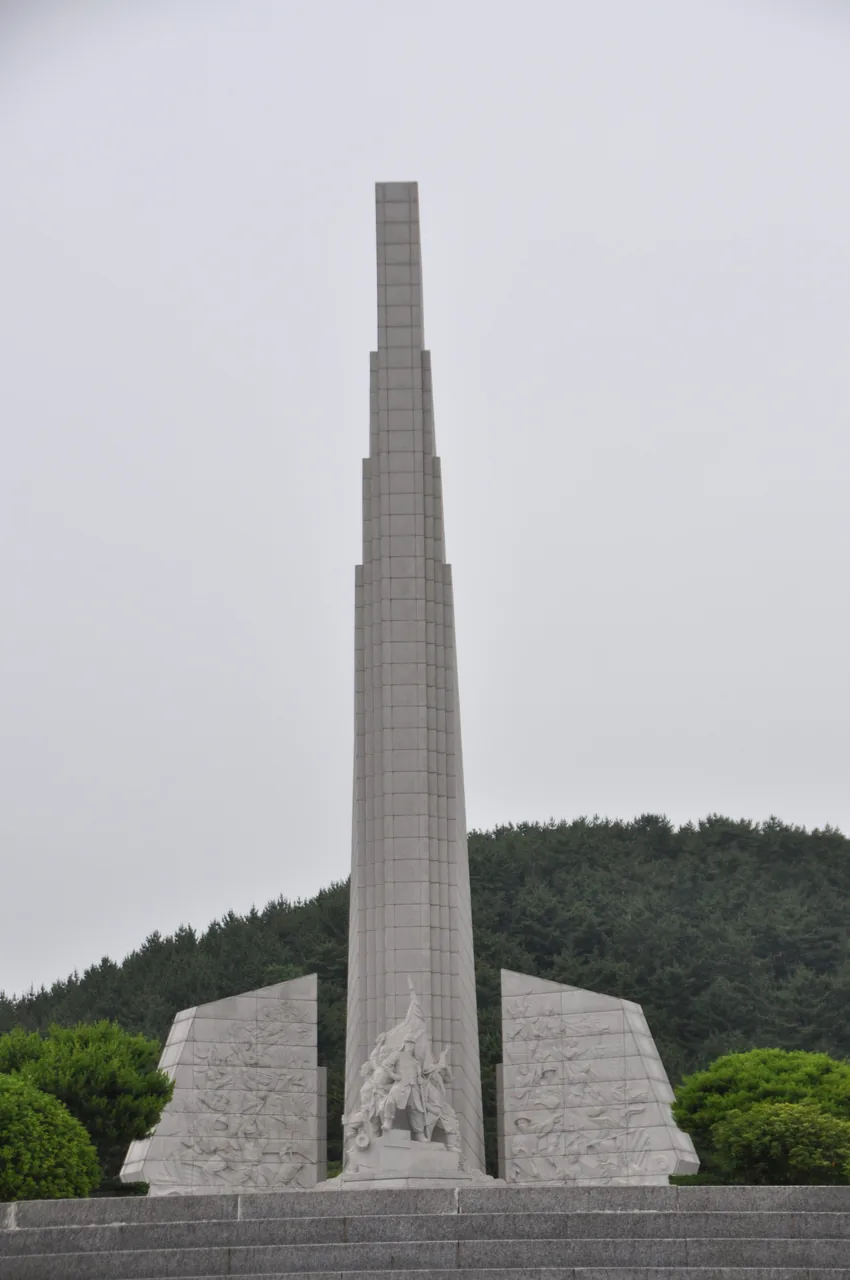
On 7 May 1592 the first Korean victory of the Imjin War was won in the bay off this island. Admiral Yi Sun-sin and Admiral Won Gyun moved together and sank 26 of some 30 Japanese ships. It was the turning point that put the rest of the war on a different footing.
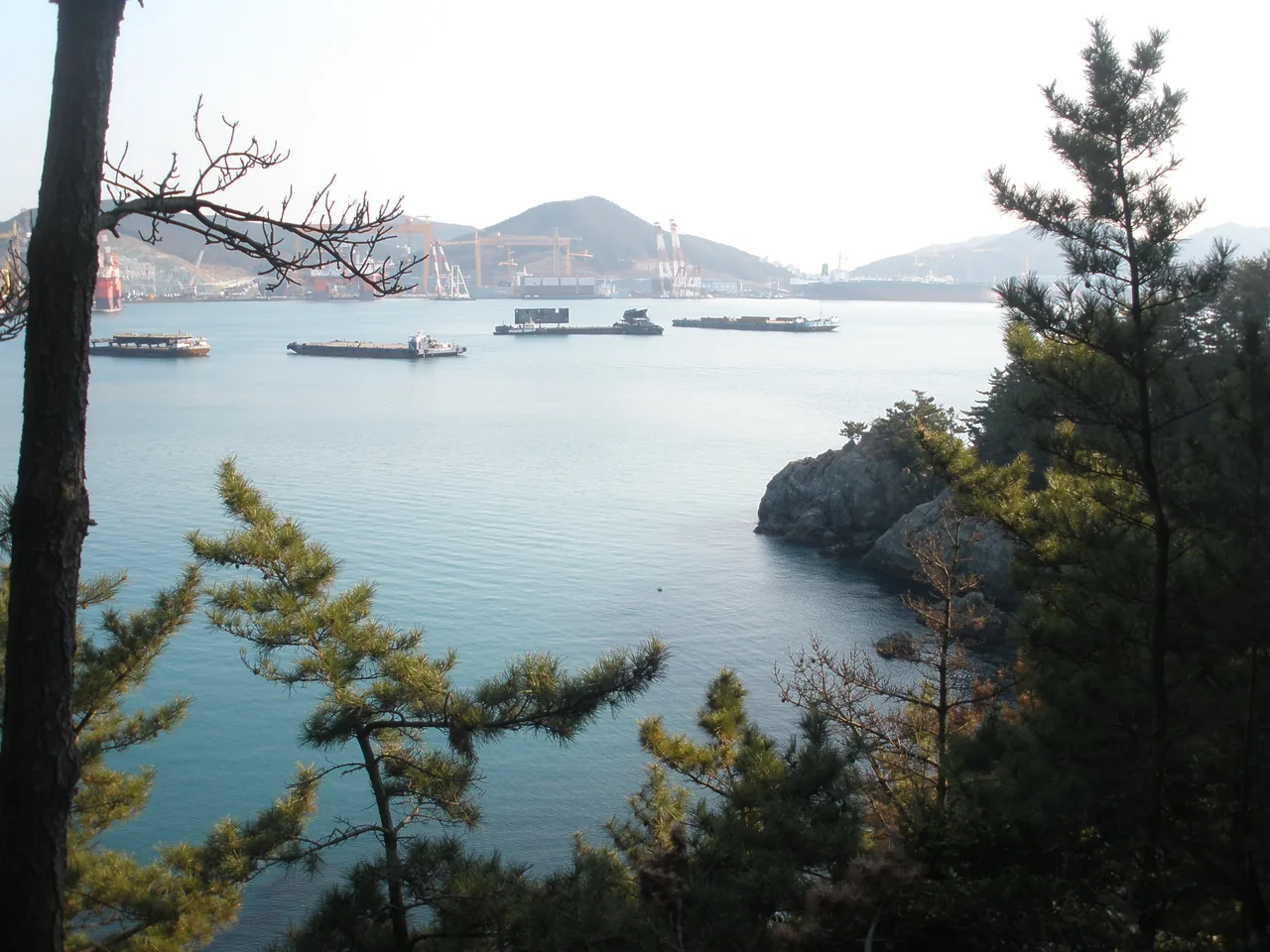
Here is the detail worth carrying with you: that same Okpo bay is where the Hanwha Ocean shipyard stands today. The water where a fleet was broken four centuries ago now launches ships to the rest of the world. Put the two sites in one day and you understand why this island has always faced the sea.
14. Beaches: Hakdong’s black pebbles and the rest
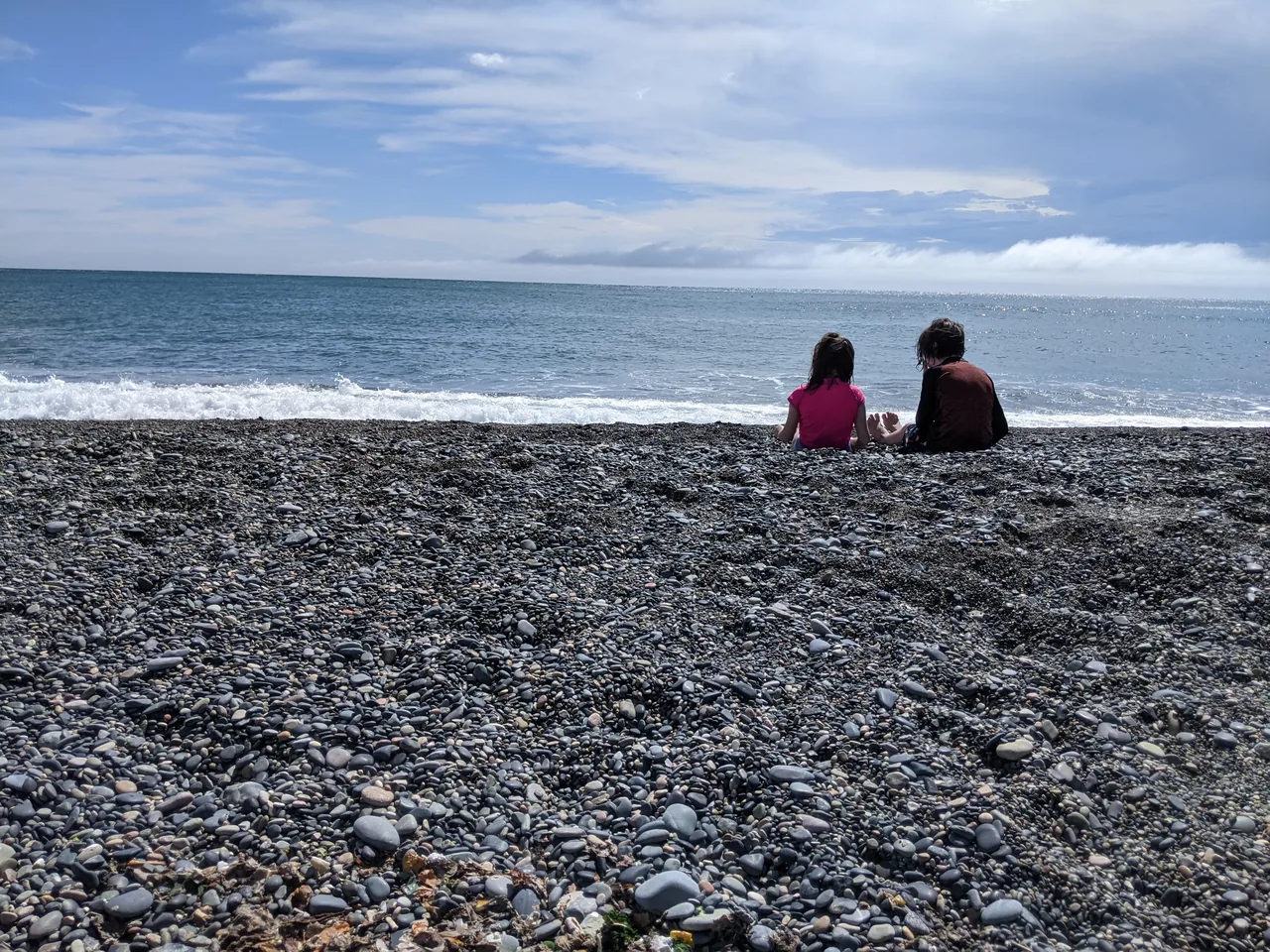
Geoje’s coast is known for pebbles rather than sand, and the flagship is Hakdong black pebble beach HakdongMap, one of the Nine.
Dark rounded stones instead of sand. The noise the water makes dragging back through them is the reason to stand there.
Sandy and sheltered, with a ferry jetty attached, so it pairs with Oedo or Naedo.
Straightforward sand beaches that work for families, busy in the summer peak.
The rock stacks seen from land, useful when the sea is too rough to sail.
Pebble beaches are hard on bare feet, so water shoes help. All of these are free to walk.
15. One day, or one night
Because the sights are spread out, the workable rule is one strand in a day, two strands in a night.
Sasang to Jangseungpo, the 11:00 or 12:30 sailing for the three-hour Oedo and Haegeumgang round trip, then the harbour before the bus back. Fix the sailing before you buy the bus ticket.
Maemi Castle straight off the bridge, then the POW park in Gohyeon, then the botanical garden, finishing at Windy Hill and Sinseondae. None of it depends on the sea. 🔴 The POW park closes Tuesdays and the garden closes Wednesdays.
Day one: Maemi Castle, Okpo Battle Memorial Park, the POW park, sleep in Gohyeon. Day two: Oedo or Jisimdo from Jangseungpo, then Windy Hill and Sinseondae, then Hakdong.
December to April, put Jisimdo’s camellias in. In April, put Gonggot’s daffodils in.
The common mistake is treating the ferry as something you sort out on arrival. Sailings are limited, the last useful Oedo departure from Jangseungpo is 15:30, and a full boat on a summer weekend simply means no island that day.
16. Cancellations, closing days and what it costs
Geoje plans come apart for two reasons: the boat did not sail, or you arrived on the closing day.
POW Camp Historic Park closed.
Geoje Botanical Garden closed. The day changed in July 2026.
Sailings change with the sea state. The Jangseungpo operator sends a text and answers on 1688-8788, daily 09:00 to 17:00.
A morning departure leaves the day usable if it is cancelled. A 15:30 booking does not.
What a day costs, per adult
| Item | Cost |
|---|---|
| Ferry from Jangseungpo, weekday | 20,000 won |
| Oedo admission | 11,000 won |
| POW Camp Historic Park | 7,000 won |
| Geoje Botanical Garden | 5,000 won |
| Bus, cable car, Jisimdo boat | Check current fares when booking |
Eating
Geoje is oyster and cod country. Oepo harbour is known for cod, with winter as its season, and myeongge bibimbap, rice mixed with sea squirt, is the dish most associated with the island. Prices and openings vary too much to name individual restaurants here.
For a single day, keep your base in Busan. For an overnight, Gohyeon is the practical choice for services and transport, bearing in mind this is a shipyard town where weekday rooms behave differently from a resort.
🎡Things to Do48
🍜Food7
🏨Where to Stay3
🚇Getting Around8
🧭Travel Tips14
📌More3
🧭All-Korea essentials45
Frequently asked questions
See the full Busan travel guide →
Images: Windy Hill (featured image) & Haegeumgang: Choi2451, CC BY-SA 4.0. Busan-Geoje Bridge: Glabb, public domain. Geoje coast: Paul Evans, public domain. Oedo Botania: Steve46814, CC BY-SA 3.0. Haegeumgang sea cave: Pranay chakraborty 2001, CC BY 4.0. Jisimdo: Y7h, CC BY-SA 3.0. Okpo bay: Towel401, CC BY-SA 3.0. Okpo Battle Memorial: WaffenSS, CC BY-SA 3.0. Geoje POW Camp: Kang Byeong Kee, CC BY-SA 3.0. Pebble beach: Heather Carreiro, CC BY-SA 4.0. All via Wikimedia Commons.