
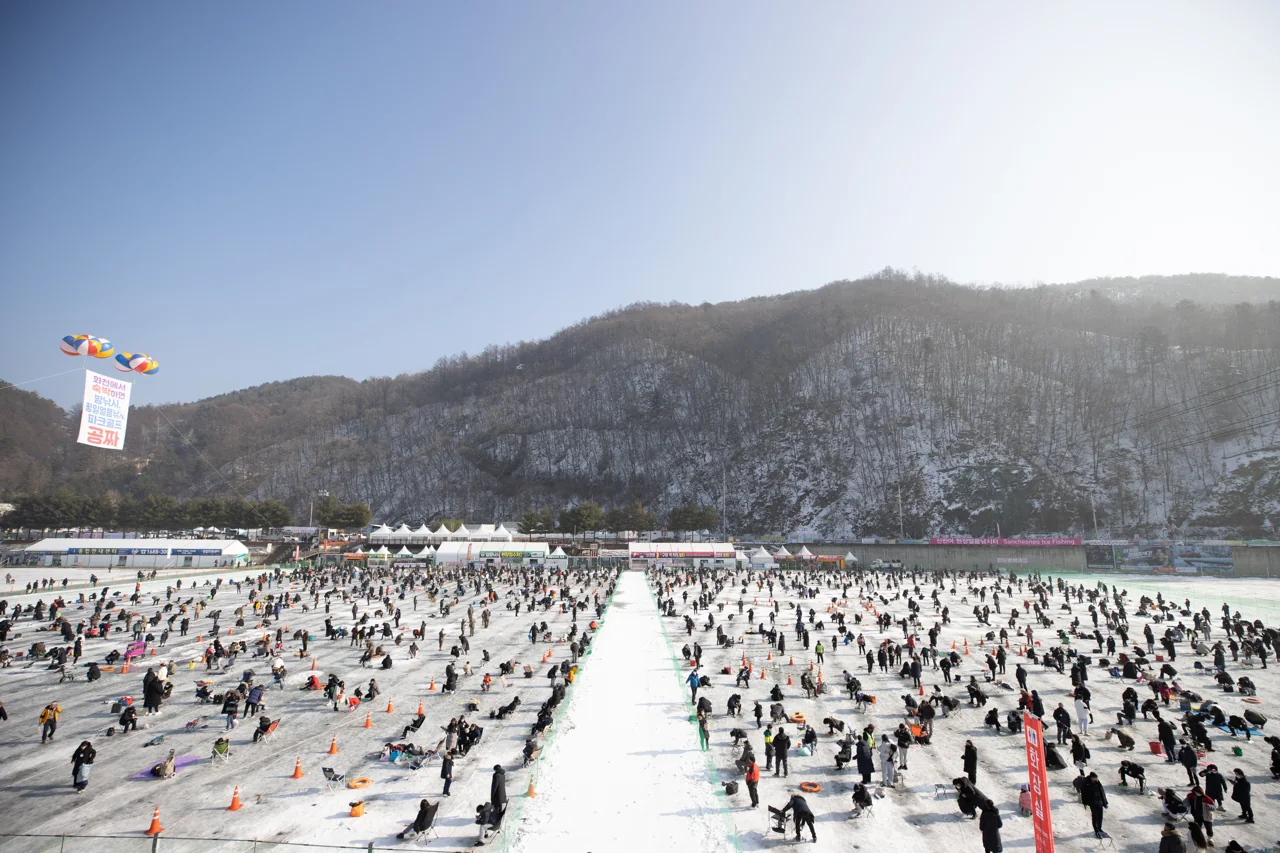
Korea in January: Weather by Region, What to Wear, Ice Fishing Festivals, Skiing and Winter Food
How cold each region gets, where to find snow, the ice fishing festivals, ski slopes, New Year sunrises, winter food and what to pack.
| How cold? | It is the coldest month of the year everywhere in this guide, with Seoul below freezing most nights while Busan and Jeju stay milder. |
|---|---|
| Snow? | Most cities in this guide see snow more often than in any other month, but for the best chance of snow on the ground, go to the ski resorts and mountains. |
| What’s on? | Ice fishing festivals on frozen rivers in Gangwon Province, usually all running by the second week, plus skiing and New Year sunrise events. |
| Crowds? | In the last two years of data, January had the fewest foreign visitors, though Lunar New Year falls in late January in some years. |
| What to wear? | A thick padded coat, hat, gloves and non-slip shoes for Seoul and the mountains, and a medium-weight coat for Busan and Jeju. |
| Entry? | Check the official K-ETA website before you fly, because the exemption for Americans is announced through December 31, and the following year is announced separately. |
1. Korea in January at a glance
2. How cold it gets, region by region
3. Where you can see snow in January
4. Ice fishing festivals on frozen rivers
5. Ice trekking, snow sculptures and Nami Island
6. Skiing in January: which slopes are open
7. Snowy mountain hikes and the Deogyusan gondola
8. New Year’s Day and the first sunrise
9. Seoul in January: lights, skating and warm indoor stops
10. Busan, the south coast and Gyeongju
11. Jeju in January
12. What to eat in January
13. Crowds, holidays and winter sales
14. Entry rules and getting around in January
15. What to wear and pack for the cold
16. Should you go to Korea in January?
1. Korea in January at a glance
January is the coldest month of the year in every Korean city covered in this guide, and in most of them it is also one of the driest. Rivers in Gangwon Province, in the northeast, usually freeze thick enough for ice fishing festivals, many ski resorts open their highest slopes, and markets fill up with winter seafood and strawberries.
Korea in January in brief
- The coldest month everywhere in this guide. Seoul drops below freezing most nights, while Busan and Jeju stay milder.
- Most cities in this guide get snow more often in January than in any other month, but snow on the ground is most likely in the mountains and at the ski resorts.
- Ice fishing festivals on frozen rivers open between late December and the second week of January, as long as the ice is thick enough.
- Many ski resorts open their advanced and summit slopes one after another through the month.
- In season: yellowtail, snow crab, oysters and the peak of the winter strawberry harvest.
- The month with the fewest foreign visitors in the last two years of data. Last time, department store New Year sales started on January 2.
What a January trip is good for
Most of the things that make a January trip different happen outdoors in the cold. You can sit over a hole in the ice and fish for trout, walk along a frozen river, ride a gondola up to trees covered in frost, or ski the upper runs as they open. Back in the city, you warm up with hot street snacks, a bowl of oyster soup or a strawberry dessert.
You do need to be ready for the cold. Seoul and the mountains call for proper winter clothing, and the days are short, with the sun setting before dinner. The south coast and Jeju are milder, so it’s easy to pair a few days in Seoul with somewhere warmer.
What first-time visitors often mix up
Many people picture Korea in January as snowy and lit up for the holidays. Last season, some of Seoul’s winter light displays ended in the first week of January, some ran to mid-month and a few lasted to the end of the month. The big snow sculpture festivals start at the very end of January or in February. Lunar New Year, Korea’s big winter holiday, only falls in January in some years. Each of these is covered in its own section below.
If you’re still choosing between months, our guide to the best time to visit Korea compares the seasons side by side.
Because it gets dark early and the evenings are cold, it helps to stay within a few minutes’ walk of a subway station in Seoul. You spend less time outside at night, and the subway connects you to the train stations and bus terminals you’ll use for day trips to the festivals and ski resorts.
2. How cold it gets, region by region
January is the coldest month of the year at every weather station used for this guide, based on the Korea Meteorological Administration’s long-term climate averages. Seoul is a little colder than in December, and the cold eases slightly in February.
The table below shows rounded daytime highs and nighttime lows, so you can compare regions quickly. Treat them as typical values. A cold snap can push nights well below these numbers, and a mild spell can do the opposite.
| Region | Day / night (approx.) | What that means for your trip |
|---|---|---|
| Seoul and Incheon | 2°C (36°F) / -5°C (23°F) | Below freezing almost every night of the month, and the air is dry. |
| Gangwon mountains (Pyeongchang, Daegwallyeong) | -2°C (28°F) / -12°C (10°F) | Even the average daytime high stays below freezing. The big Pyeongchang ski resorts are here, and severe cold spells are common. |
| East coast (Gangneung, Sokcho) | 5°C (41°F) / -3°C (27°F) | Milder than Seoul, with much drier air. |
| Gyeongju and Daegu | 6°C (43°F) / -3 to -5°C (27 to 23°F) | Warmer than Seoul by day, but nights in Gyeongju get about as cold as in Seoul. Few rainy days and plenty of clear days. |
| Jeonju | 5°C (41°F) / -4°C (25°F) | Often cloudy, with snow a little more often than in Seoul. |
| Busan and Yeosu (south coast) | 7 to 8°C (about 45°F) / around 0°C (32°F) | The mildest of the mainland cities in this guide, with many clear days. Nights often reach freezing. |
| Jeju City (north side of Jeju) | 9°C (48°F) / 4°C (39°F) | Mild, but January is its least sunny month of the year, with frequent rain or snow. |
| Seogwipo (south side of Jeju) | 11°C (52°F) / 4°C (39°F) | More than twice the sunshine of Jeju City. The mildest of all the cities in this guide. |
Dry air, and wind that makes it feel colder
In most places in this guide, January is the driest or second-driest month of the year, and the air is very dry both outdoors and in heated rooms, so dry skin and chapped lips are common.
Wind makes the biggest difference to how cold it feels. In Gangneung, Yeosu and Jeju City, January is one of the windiest months of the year, and on a windy day the cold feels much sharper than the temperature suggests. In Seoul or on the coast, a hat and scarf matter more than an extra sweater.
Cold wave advisories
The Korea Meteorological Administration issues a cold wave advisory when very cold mornings are forecast to continue for two days or more, among other conditions. You can follow current warnings and forecasts on the KMA weather site.
On an advisory day, plan museums, markets and cafes for the early morning and evening, and keep long outdoor walks for the middle of the day.
3. Where you can see snow in January
In Seoul, Incheon, Daegu, Jeonju, Busan and Jeju City, January brings more snowy days than any other month, going by the long-term weather records. Even so, Seoul only gets snow on about a week’s worth of days across the whole month, so don’t count on snow staying on the ground for days at a time.
Snow in the cities
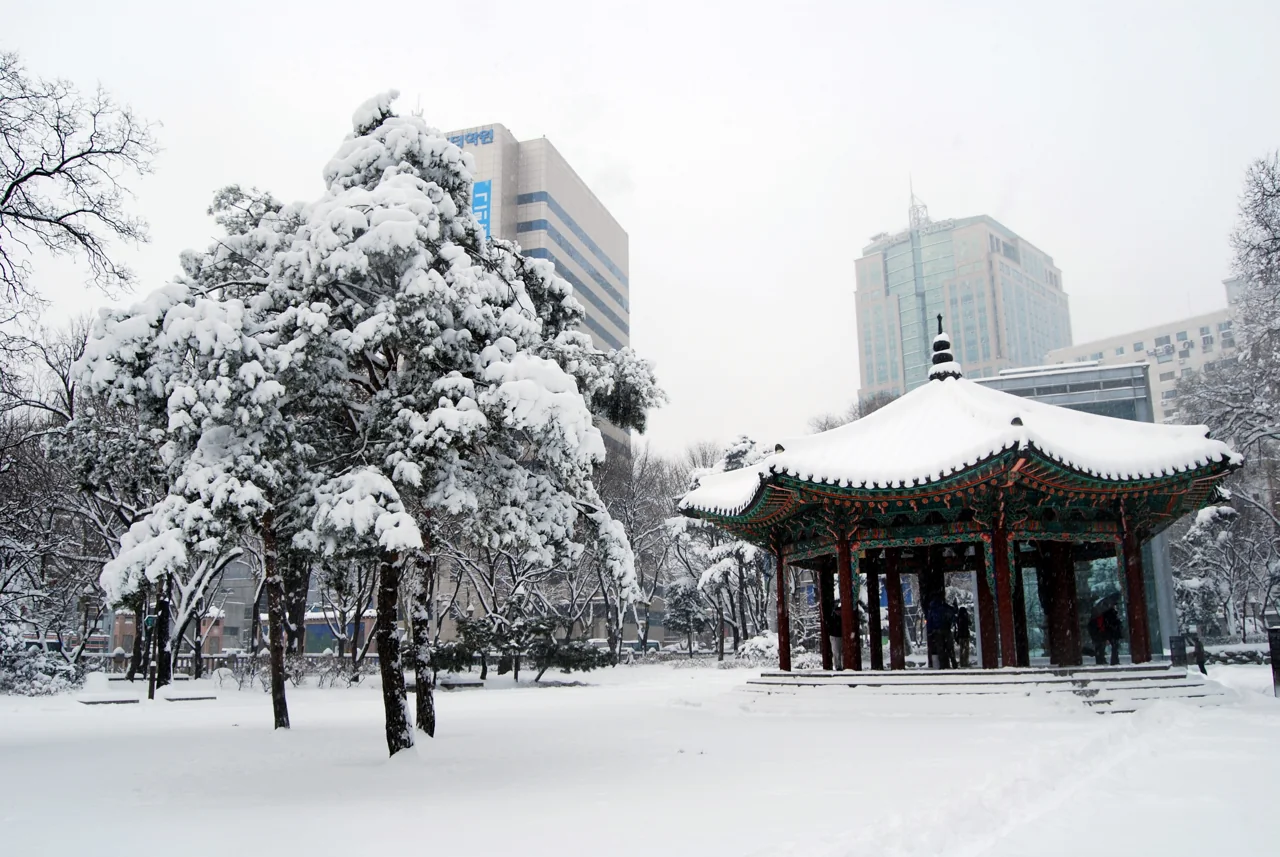
Snow in Seoul is something you might get lucky with, and it’s hard to plan a trip around. Heavy snow does fall on some days and turns the palaces and parks white, but you can just as easily spend a week in the city without seeing any snow at all.
In Busan, even January brings snow on only a day or so in the month, so snow there is rare. On Jeju, the north side around Jeju City gets about as many snowy days as Seoul. The high ground along the 1100 Road on Hallasan is a popular place to see snow on the island, and the Jeju section below explains when that road closes.
Where your chances of snow are best
For the best chance of snow, go up into the mountains. The ski resorts in Gangwon Province keep snow on their slopes all month, with help from snowmaking. The gondola at Deogyusan in Jeonbuk State takes you up to a snowy ridge without a long climb. The upper part of Hallasan on Jeju is usually covered in snow in winter, and Taebaeksan in Gangwon is known for snowy winter hikes. Each of these has its own section below.
If seeing snow is the main goal of your trip, check the forecast a few days ahead and keep your plans flexible. Moving a day trip to Gangwon or a gondola ride by a day or two is much easier than moving your whole trip.
4. Ice fishing festivals on frozen rivers
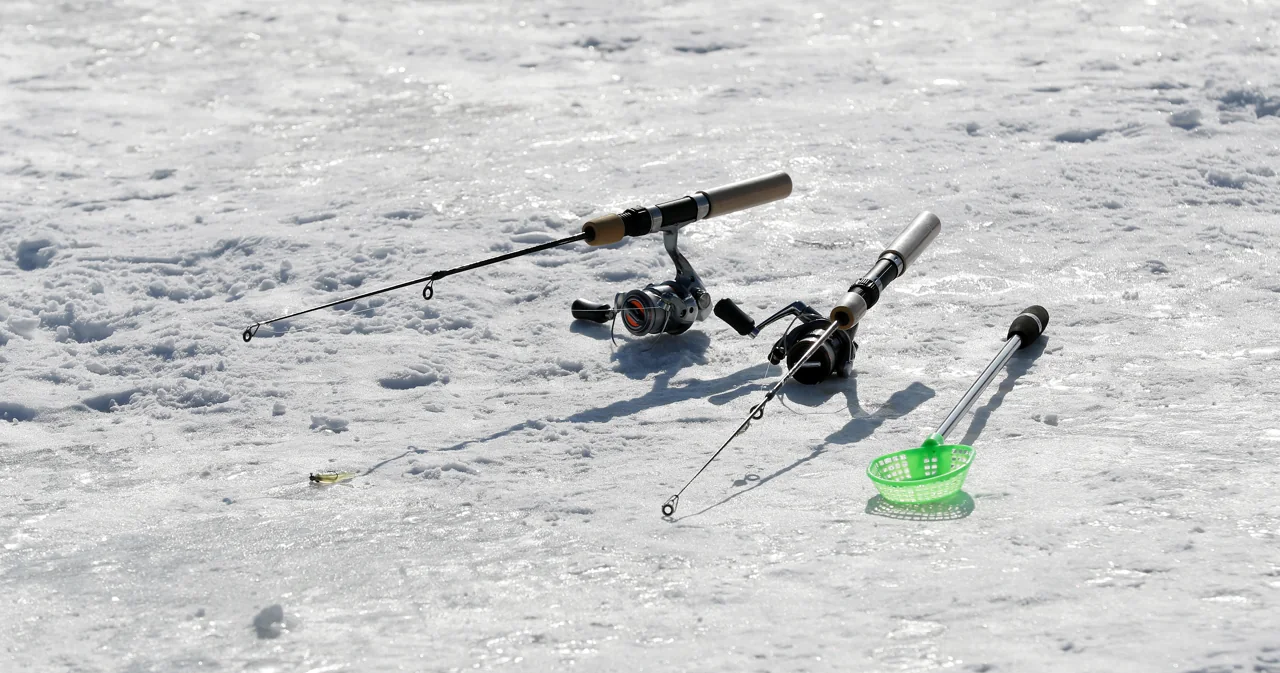
At Korea’s winter ice fishing festivals, you sit over a hole cut into a frozen river and fish with a short rod for trout or sancheoneo, a kind of mountain trout. Most festivals have grilling areas where you can cook your fish on the spot, and many also run bare-hand fishing in cold water, snow sledding and ice sledding.
The ice has to be thick enough. The festivals open only once the river ice is thick enough to be safe for ice fishing, about 20 cm (8 inches). In warm winters, openings get pushed back or canceled. In one recent season, the Pyeongchang Trout Festival was due to open on January 1 and moved to January 9 because the ice on the Odaecheon stream was too thin. The organizers said it was the first time the opening had ever been delayed. Hwacheon has had a year when it postponed twice and only opened in late January. Check the official site to confirm a festival is open before you travel.
The Inje Smelt Festival has not been held for several recent winters because of the water level at Soyang Dam, so we don’t recommend planning around it.
Hwacheon Sancheoneo Ice Festival
The Hwacheon festival takes place on the frozen Hwacheoncheon streamMap in Hwacheon County, Gangwon Province. The last edition ran from January 10 to February 1. In recent seasons it has opened on a weekend between January 6 and 11 and run for a little over three weeks. The festival has an English website as well as a traditional Chinese one.
Foreign visitors get their own ice fishing area, open for the whole festival from 9 a.m. to 6 p.m. It holds up to 1,300 people at a time and has a rest area for international guests, a Muslim prayer room and its own grills. Show a foreign passport to get the discounted rate, and part of the fee comes back to you as local gift vouchers.
The general walk-up fishing area is open to everyone. Each person can take home up to three fish, and live bait, heaters and tents are not allowed on the ice.
For the bare-hand catch, staff hand you a short-sleeved shirt and shorts, and you step into cold water with three minutes to grab fish with your hands. It’s open to ages 14 and up. Off the ice, there’s an indoor ice sculpture plaza with works by ice sculptors from Harbin in China, and a street of lanterns that lights up at night.
To get there on your own, take an intercity bus from Dong Seoul Bus Terminal to Hwacheon, which takes about three hours. Or ride the ITX-Cheongchun train from Cheongnyangni to Chuncheon (about an hour) and change to a Hwacheon bus at Chuncheon’s bus terminal. A day tour from Seoul that includes transport is the simplest option.
Tip: Go on a weekday if you can. The festival’s own guide says that on weekends, registration for the general fishing area often closes in the morning.
Pyeongchang Trout Festival
This festival is held on the Odaecheon stream in JinbuMap, in Pyeongchang County. It has usually opened between late December and the first week of January, and the last edition ran from January 9 to February 9. The KTX takes about 1 hour 40 minutes from Seoul Station to Jinbu (Odaesan) Station, which makes it one of the easier festivals to reach by train. Fishing from inside a tent on the ice is booked online, and the festival website asks foreign visitors to call +82-33-336-4000 with questions.
Hongcheon River Kkongkkong Festival
Kkongkkong means frozen solid, and this festival is held on the frozen Hongcheon River. The last edition ran from January 9 to 25. It is known for a bare-hand catch of trout raised on ginseng, and foreign passport holders get the discounted rate here too. Details are on the official festival page.
| Festival | Where | Last edition | Good to know |
|---|---|---|---|
| Hwacheon Sancheoneo Ice Festival | Hwacheoncheon stream, Hwacheon | January 10 to February 1 | Separate ice fishing area for foreign visitors, English website |
| Pyeongchang Trout Festival | Odaecheon stream, Jinbu, Pyeongchang | January 9 to February 9 | KTX to Jinbu (Odaesan) Station, tent fishing booked online |
| Hongcheon River Kkongkkong Festival | Hongcheon River, Hongcheon | January 9 to 25 | Bare-hand catch of ginseng-fed trout, foreign passport discount |
5. Ice trekking, snow sculptures and Nami Island
In Cheorwon, in the north of Gangwon Province, a winter trail follows the Hantan River on the ice itself and on floating walkways laid on the water, known as the Mulwitgil, or path on the water. The route runs about 8.5 km (5.3 miles) from Taebong Bridge past Jiktang Falls, Seungil Bridge and GoseokjeongMap to Sundam Valley.
Hantan River Ice Trekking Festival
The ice trekking festival is short. The last edition ran from January 17 to 25, about nine days, so check the dates before you build a day around it. The route is a long walk on ice and floating walkways, so shoes with good grip are a must. Dates and ticket booths are listed on the Cheorwon County tourism page.
Snow sculpture festivals at the end of the month
The Daegwallyeong Snow Festival and the Taebaeksan Snow Festival are known for their large snow sculptures. The Taebaeksan festival runs from the end of January into early February, and the last one ran from January 31 to February 8. The Daegwallyeong festival has started at the end of January in some years and been held in mid-February in others.
If your trip runs into the last days of January, you may be able to catch one of them in some years. Dates are posted each year on the official sites for Daegwallyeong and Taebaeksan, so check before you plan around them.
Nami Island in winter
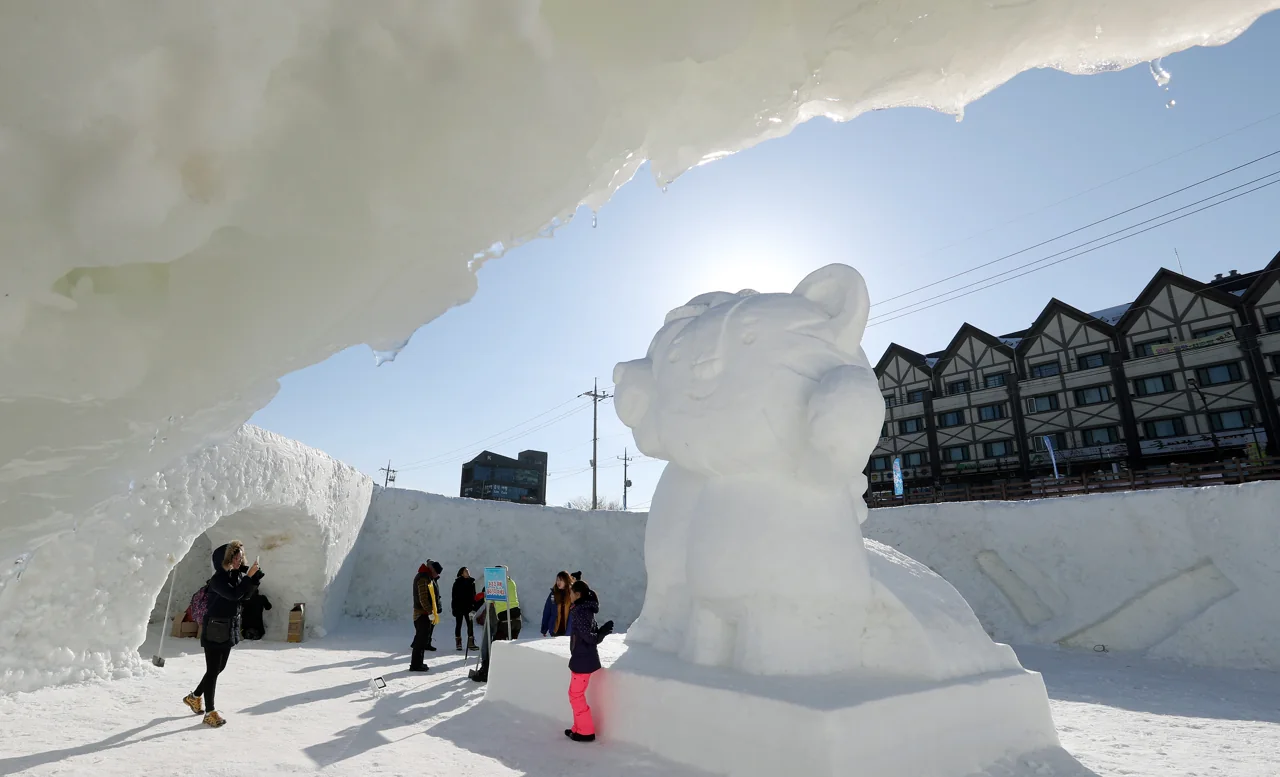
In Chuncheon, an easy day trip from Seoul, Nami IslandMap runs a winter festival across the whole island from December to February. Last season, from mid-January, the island also opened a snow sledding slope that anyone with island admission could use for free, from 10 a.m. to 5 p.m.
The tall metasequoia lane only looks snowy after an actual snowfall. On a day without snow the trees are bare, and it is still a pleasant walk. Event details are on the Nami Island website, and our Nami Island day trip guide explains how to get there from Seoul.
6. Skiing in January: which slopes are open
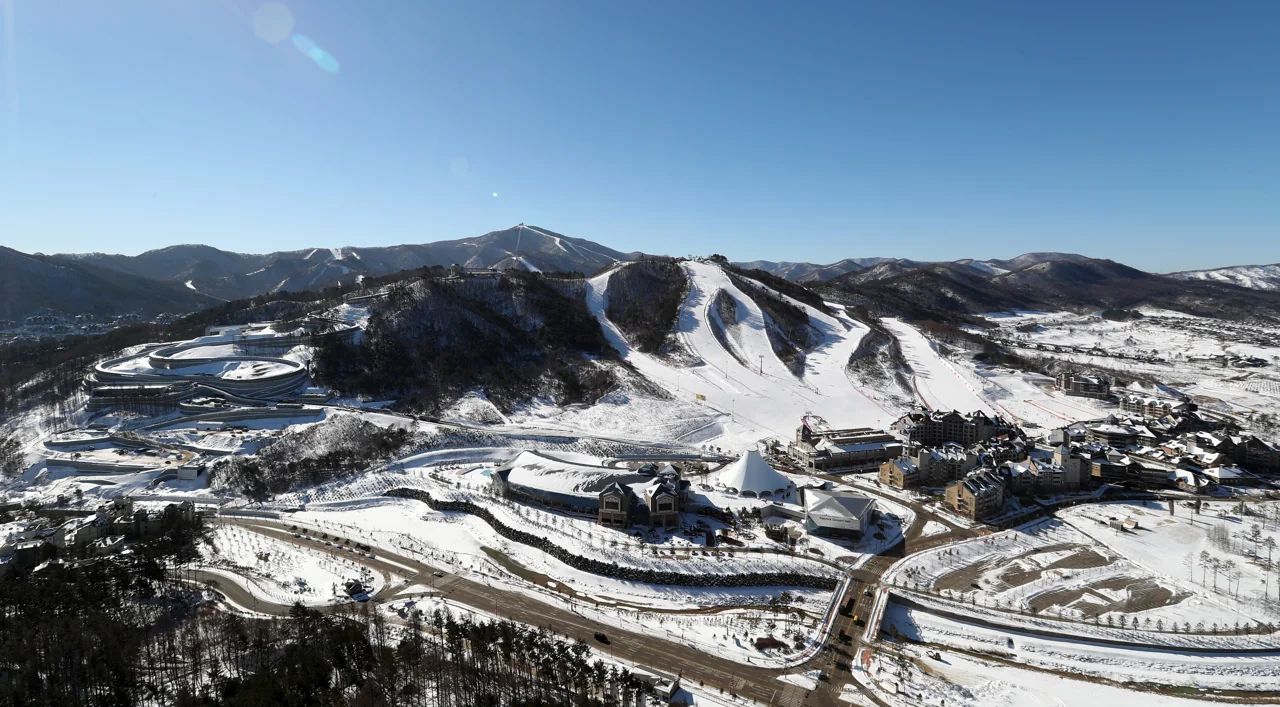
Korea has 13 ski resorts in operation. Most are in Gangwon Province, with Konjiam and Jisan in southern Gyeonggi near Seoul, Muju in Jeonbuk State and one resort in Yangsan in South Gyeongsang.
Upper slopes opening during January
Resorts open their runs in stages, and at many of them the advanced and summit slopes open one after another in January. Last season, High1 planned to open its final advanced slopes in the third week of January. Mona Yongpyong began opening its Rainbow runs at the summit on January 8, one at a time. Muju Deogyusan opened its Silk Road course, more than 6 km (about 4 miles) long, on January 17, and its top expert slopes in the upper Seolcheon area on January 31.
If advanced runs matter to you, the second half of January gives you more of them than New Year’s week. At the other end of the season, the resorts closest to Seoul (Vivaldi Park, Jisan and Konjiam) closed in the first week of March last season, so don’t leave a ski day near Seoul until March.
Resorts near Seoul
Konjiam, in Gwangju in Gyeonggi Province, describes itself as 40 minutes from Gangnam. Jisan is in Icheon, Elysian Gangchon in Chuncheon can be reached on the ITX-Cheongchun train, and Vivaldi ParkMap is in Hongcheon.
Vivaldi Park runs a shuttle for foreign visitors from Hongik University, Dongdaemun History and Culture Park and Konkuk University stations, with another route from Sports Complex Station. It is a paid service with a fare set only for foreign visitors that includes a service fee, and you can get a full refund until 4 p.m. the day before. Seats are booked on the shuttle booking site.
The big resorts in Pyeongchang and Jeongseon
Farther east, Mona Yongpyong, Phoenix and Alpensia ResortMap are in Pyeongchang, and High1 is in Jeongseon. These are the large resorts, a longer trip from Seoul. Mona Yongpyong’s website posts which slopes are open each day.
Many day tours from Seoul bundle transport with ski or snowboard rental and ski clothing, so you don’t need to pack bulky gear for one day on the slopes. Our guide to Korea’s ski resorts compares the resorts in more detail.
7. Snowy mountain hikes and the Deogyusan gondola
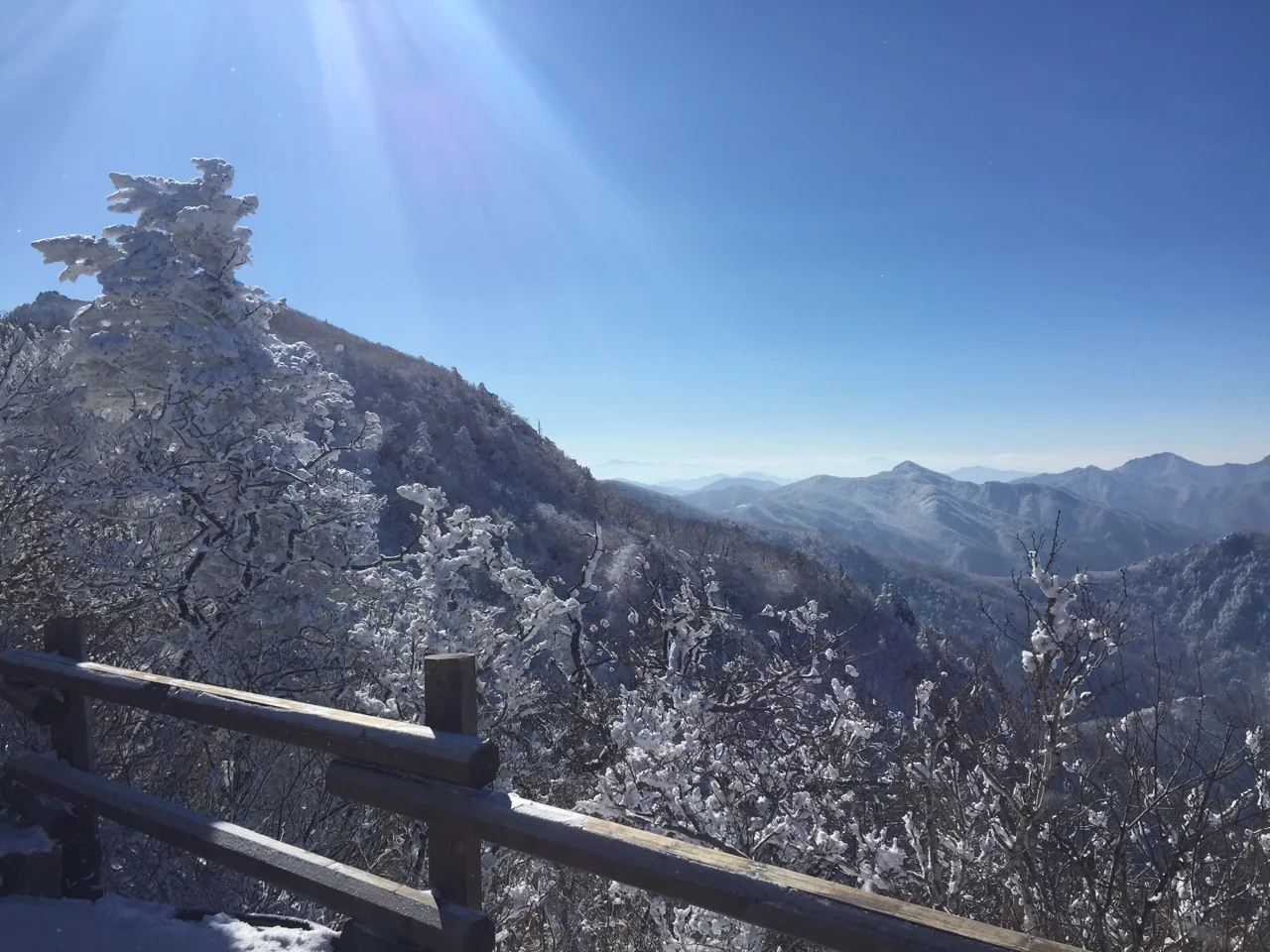
At Muju Deogyusan Resort in Jeonbuk State, a gondola lifts you to Seolcheonbong peakMap at 1,520 meters (about 4,990 feet). From there, Hyangjeokbong, the summit of Deogyusan at 1,614 meters, is about a 20-minute walk.
Deogyusan and its frosted trees
Deogyusan is known for rime frost, called sanggodae in Korean, when the branches of the trees are coated in white ice. It only forms on days when the temperature and humidity are right, so it’s never guaranteed, even on a cold day.
Book the gondola for weekends. From October to February, gondola rides on weekends and public holidays must be reserved in advance, and bookings open at 5 p.m. two weeks before the ride date. On weekdays, you buy tickets on site. On weekdays in winter, the gondola goes up from 9 a.m. to 4 p.m. Check the official site for weekend times. You don’t need a national park trail reservation for this walk in winter, only the gondola booking. The resort’s gondola page has the schedule and booking information.
Hallasan on Jeju
The routes to the summit of Hallasan start at Seongpanak trailheadMap and at Gwaneumsa. Only the upper parts need a reservation, from Jindallaebat shelter upward on the Seongpanak trail and from Samgakbong upward on the Gwaneumsa trail. Reservations for the following month open at 9 a.m. on the first business day of each month.
Winter cutoff times on Hallasan. From October to March, the path toward the summit closes at 11:30 a.m. at the trailheads and at the Jindallaebat and Samgakbong checkpoints, and everyone must start down from the summit by 1:30 p.m. One table on the official site lists noon instead, so plan on 11:30 a.m. and confirm on the day. The Eorimok and Yeongsil trails up to Witse-oreum need no reservation, and hikers must start from those trailheads by noon. When a heavy snow advisory or warning is issued, all trails close. Crampons and warm gear are essential in winter. The Hallasan National Park site has the current rules and the booking page.
Taebaeksan and Seoraksan
On Taebaeksan in Gangwon, winter hikers can set off between 4 a.m. and 3 p.m. The mountain is also where the Taebaeksan Snow Festival takes place, so in some years you can pair a snowy hike with the snow sculptures.
Seoraksan, near Sokcho, has no wildfire prevention trail closures in January. The autumn closures end in mid-December, and the spring ones start in March. Winter does bring set entry hours, such as 4 a.m. to 11 a.m. for the climb from Osaek to Daecheongbong, the park’s highest peak. The Korea National Park Service lists winter entry times by trail, and our Seoraksan guide has more on the park.
8. New Year’s Day and the first sunrise
January 1 is a public holiday in Korea, and when it falls on a Friday or a Monday, it joins the weekend for a three-day break. The big New Year holiday in Korea is Lunar New Year (Seollal), which falls between late January and mid-February depending on the year, so January 1 itself is fairly low-key.
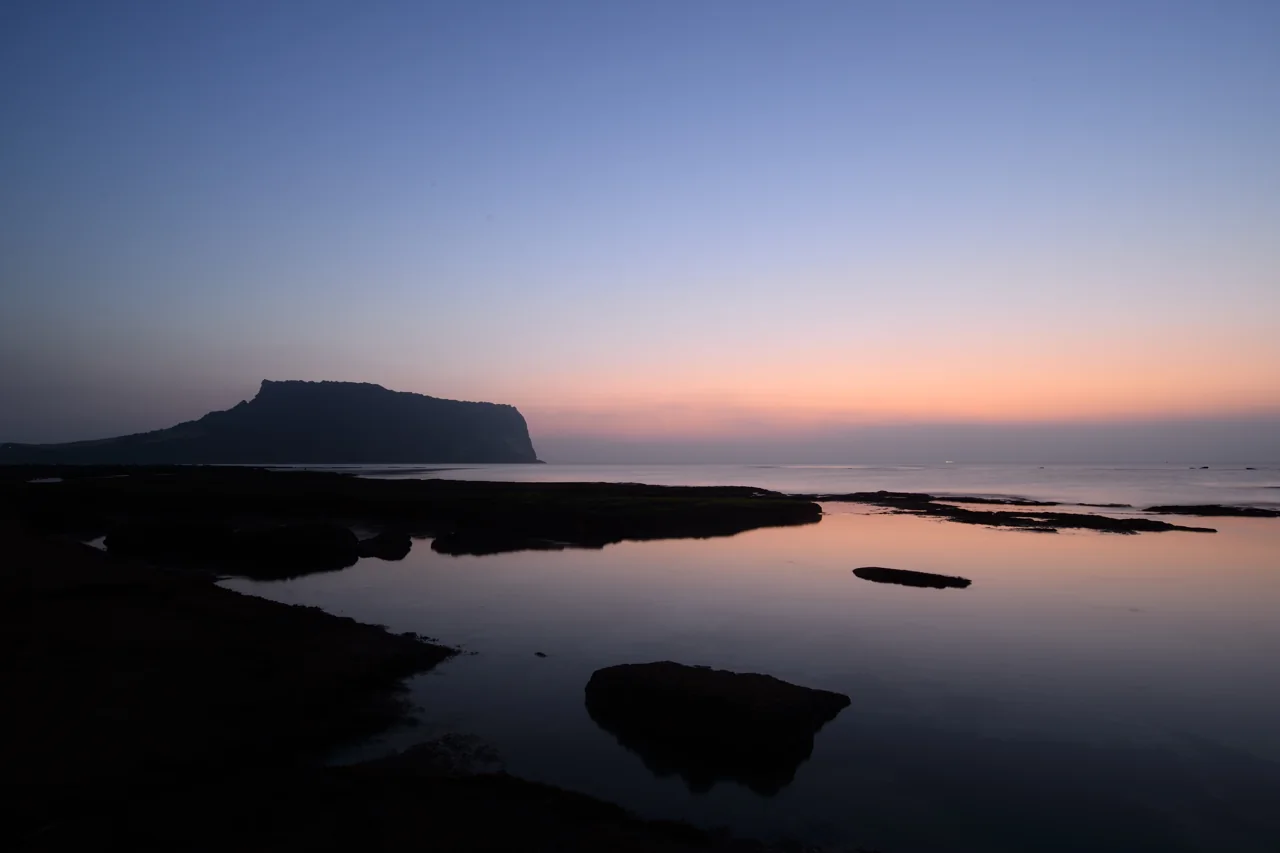
Many Koreans mark the day by watching the first sunrise of the year, and people gather on the east and south coasts before dawn to see it come up over the sea.
Sunrise events on the coast
At Homigot Sunrise SquareMap in Pohang, the Hanminjok Sunrise Festival is held around the Hand of Harmony, a large sculpture of a hand standing in the sea. Last time, there were performances and a media facade show on the night of December 31, and more performances at dawn on January 1.
At GanjeolgotMap in Ulsan, the last event started around 5 a.m. on January 1 with a drone show, fireworks and free bowls of tteokguk, the rice cake soup Koreans eat at New Year.
On Jeju, the Seongsan Sunrise Festival opens Seongsan Ilchulbong for a dawn climb on January 1, but only for people who sign up in advance, first come, first served. Last time there were 500 places and sign-up opened in late December, so keep an eye on the festival website in December.
In Gangneung, the city’s official program at Gyeongpo Beach and Jeongdongjin is a midnight countdown with fireworks on December 31, with nothing scheduled at sunrise. Even so, huge crowds come to both beaches to watch the sun rise on January 1. In Busan, there was no official sunrise event at Haeundae last time, and the city’s December 31 countdown was held at Gwangalli Beach.
Sunrise events are sometimes canceled. In one recent year, the Homigot, Ganjeolgot and Seongsan events were all called off during a national mourning period, and strong wind or high seas can also cancel them. Check the festival or local government website in late December.
What time the sun comes up
The Korea Astronomy and Space Science Institute (KASI) publishes January 1 sunrise times for well-known viewing spots, measured at sea level. They shift by only about a minute from year to year.
| Place | Sunrise on January 1 |
|---|---|
| Ganjeolgot, Ulsan | 7:31 a.m. |
| Homigot, Pohang | 7:32 a.m. |
| Haeundae, Busan | 7:32 a.m. |
| Seongsan Ilchulbong, Jeju | 7:36 a.m. |
| Jeongdongjin, Gangneung | 7:39 a.m. |
| Seoul | 7:47 a.m. |
In Seoul, the sun rises at its latest time of the whole year, 7:47 a.m., until about January 12. Sunset moves from 5:24 p.m. on January 1 to 5:54 p.m. on January 31, half an hour later over the month, and the day grows about 40 minutes longer. You can look up any date in KASI’s sunrise and sunset tables.
9. Seoul in January: lights, skating and warm indoor stops
Seoullite Gwanghwamun, the light show on Gwanghwamun Square, ran until January 4 last season. The city’s other displays ended at different times: some in the first week of January, some in mid-month and a few at the end of the month. The first week is when the most displays are still on, so plan on it if you want to see several of them in one evening.
Winter lights that run into January
Here is when each of the main displays ended last season. The Gwanghwamun Christmas market and Seoullite DDP had already closed on December 31.
| Display | Where | Ended (last season) |
|---|---|---|
| Seoullite Gwanghwamun | Gwanghwamun Square | January 4 |
| Seoul Lantern Festival, Ui-cheon and Ogansugyo sections | Ui-cheon stream and Cheonggyecheon near Ogansugyo Bridge | January 4 |
| Seoul Lantern Festival, extended stretch | Cheonggye Plaza to Samil Bridge | January 18 |
| Christmas market | Lotte World Tower, Jamsil | January 4 |
| Facade video show | Shinsegae Department Store, Myeongdong | January 31 |
The extended stretch of the Seoul Lantern Festival was about 1.1 km (0.7 miles) long and lit up from 6 p.m. Dates for the next edition are on the Seoul festival portal.
The video show on the front of the Shinsegae Department Store main branchMap ran every day from 5 p.m. to midnight last season, from early November until the end of January. You watch it from the street, so it’s free. Visit Korea lists it along with the city’s other winter displays.
Ice skating on Seoul Plaza
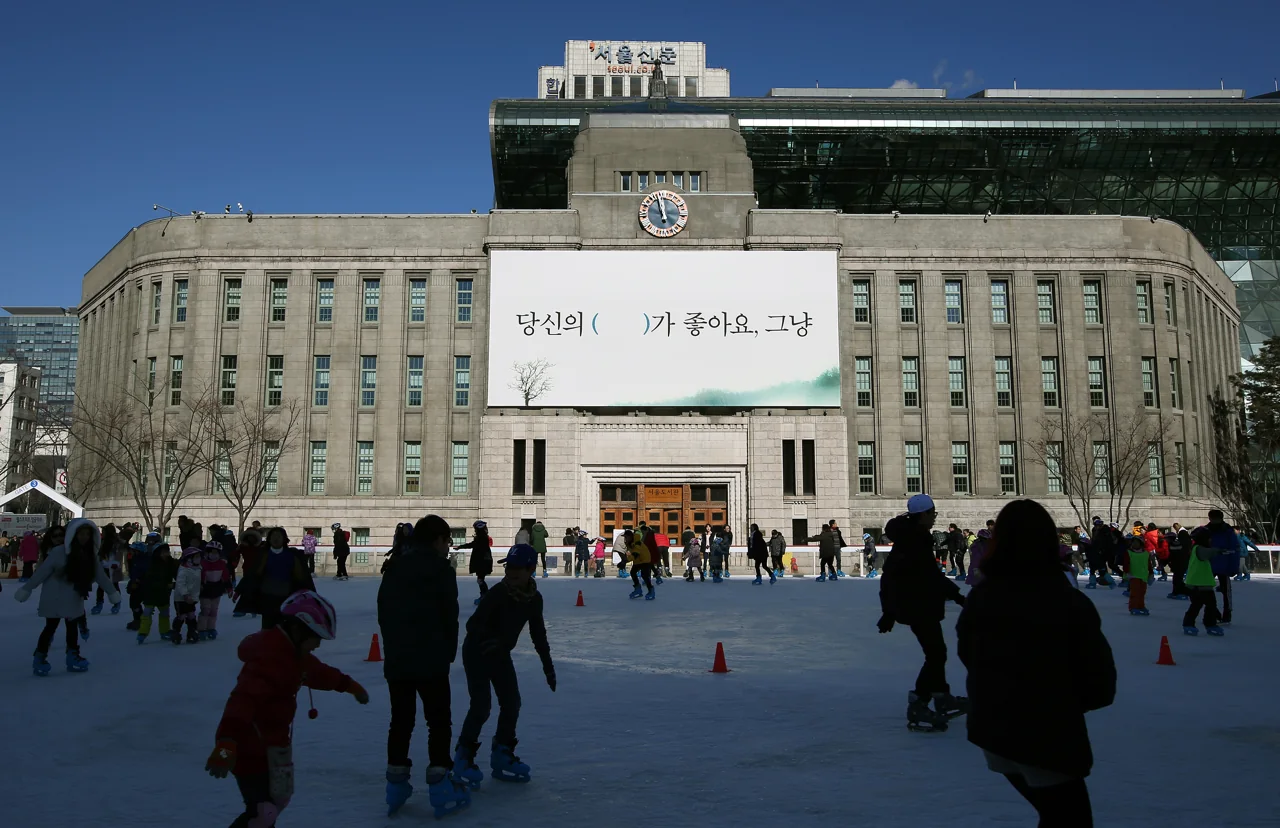
The outdoor rink on Seoul PlazaMap, in front of City Hall, was open throughout January last season, running from December 19 to February 8. An hour on the ice cost 1,000 won, less than a dollar, with skates and a helmet included. It opened at 10 a.m. and closed at 9:30 p.m. from Sunday to Friday, and at 11 p.m. on Saturdays and public holidays. See the Seoul Plaza notice for dates.
Theme parks for cold or snowy days
Lotte World Adventure in Jamsil is a theme park that is mostly indoors, and during its winter season festival, which ran until early March last season, it held parades indoors. That makes it a good backup on a freezing or snowy day. More in our Lotte World guide.
Everland in Yongin had all of its snow sledding courses open in January last season, and sledding ran through February. See our Everland guide for planning a day there.
Warm places to spend a cold afternoon
The National Museum of Korea is an easy place to spend a cold afternoon. Its permanent exhibition is currently free, it stays open until 9 p.m. on Wednesdays and Saturdays, and it is closed on January 1. Check the hours on the museum’s visitor page.
Starfield Library in COEX Mall is free and open from 10:30 a.m. to 10 p.m. A jjimjilbang, a Korean bathhouse with heated rooms, is a popular place for Koreans to warm up in winter. Our guide to indoor things to do in Seoul has more ideas.
10. Busan, the south coast and Gyeongju
The Haeundae Lights Festival fills Haeundae Beach and Gunam-ro with light displays each winter, and last season it ran until January 18, from 6 p.m. to 11 p.m., free of charge.
Winter lights and shows in Busan
The Gwangbok-ro Winter Light Tree Festival lights up Gwangbok-roMap and the streets around it from 5:30 p.m. to 10 p.m., free of charge, and last season it ran until late February. The festival is listed on Visit Busan with its hours.
Over at Gwangalli Beach, the drone light show runs every Saturday in winter (October to February), at 7 p.m. and 9 p.m. There is no special show on January 1 itself.
Busan’s Polar Bear Festival, where swimmers run into the winter sea at Haeundae or Gwangalli, has been held in December, January or February depending on the year. Check the date before you count on it.
Why the south works well in January
Busan and Yeosu are the mildest of the mainland cities in this guide (see the temperature table), so coastal walks are more comfortable here than in Seoul. Our guide to Busan in January covers the city in January in more detail.
Gyeongju after dark
In Gyeongju, Donggung Palace and Wolji PondMap stays open from 9 a.m. to 10 p.m. in winter too, with the last tickets sold at 9:30 p.m. Because the sun sets early in January, you can see the pond and pavilions lit up early in the evening and still have plenty of time for dinner. See our Gyeongju guide for the rest of the city.
11. Jeju in January
On Jeju’s south side, Dongbaek ForestMap in Namwon lists its camellias at their peak from late December through January. Visit Jeju has the details.
Camellias and daffodils
Camellia Hill in Andeok is open from 8:30 a.m. to 6 p.m. from November to February, with last entry at 5 p.m. Both camellia gardens are on the sunnier south side of the island.
At Hallim ParkMap on the west side of Jeju, the park’s own guide lists daffodils as the January flower and plum blossoms as the February one. If plum blossoms are on your list, February is the month for them.
Where to stay for more sun
The south side of Jeju gets far more sunshine in January than the north (see the temperature table), so a hotel around Seogwipo gives you more bright hours. The island is easiest to get around by car, and our Jeju car rental guide covers renting one.
Hallabong and tangerine picking
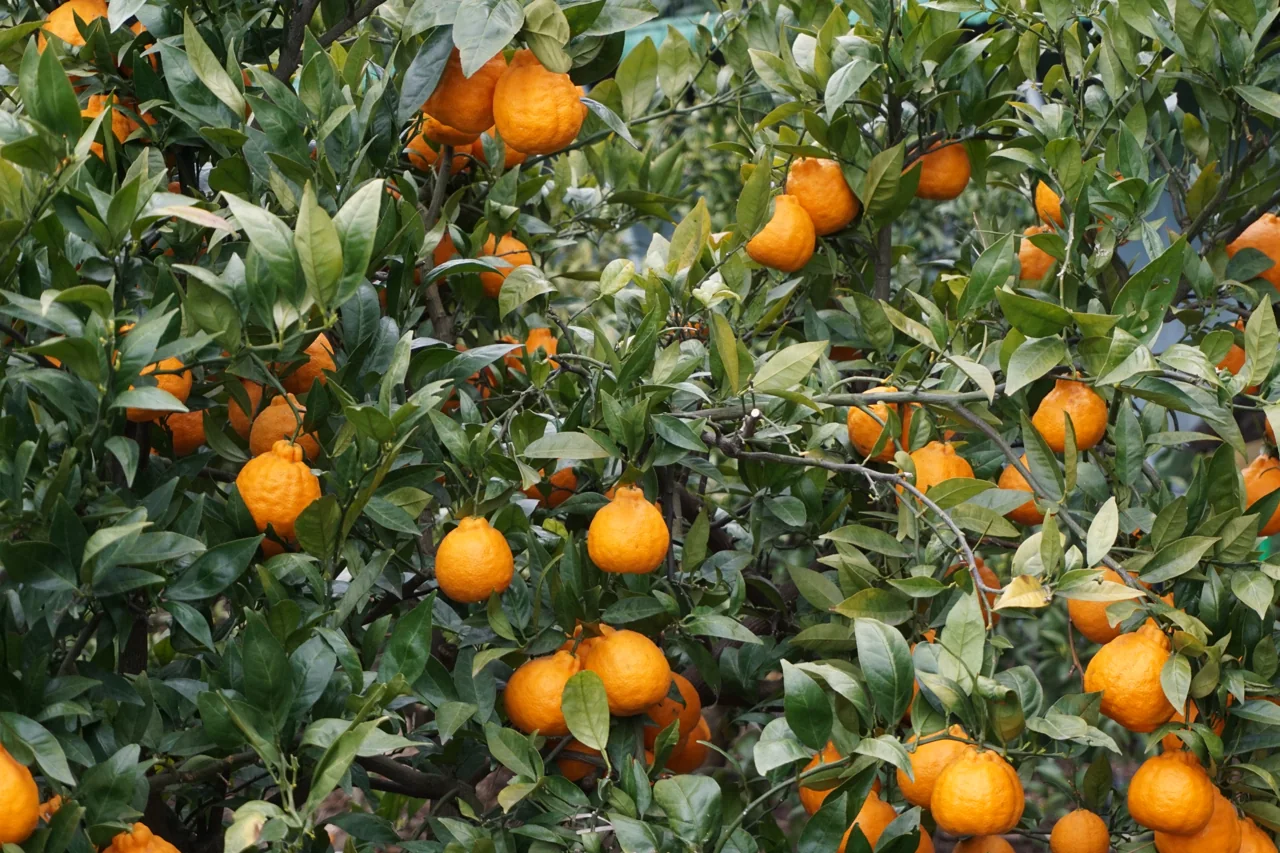
Hallabong is the large Jeju citrus with a bump on top. According to the Jeju Agricultural Research and Extension Services, January is the busy harvest and shipping time for it, ahead of the Lunar New Year gift season.
Tangerine picking on farms usually runs from October to January. Some farms still take visitors in early January, but the outdoor tangerine harvest is mostly finished by mid-January and many farms have stopped by late January, so contact the farm before you go.
Snowy roads and grounded flights
The 1100 Road, which crosses the high ground of Hallasan, often closes or requires snow chains when there is snow or ice. The Jeju Provincial Police Agency posts closures road by road in real time on its traffic control page. Hiking rules for Hallasan are in the mountain section above.
Leave room in your schedule before flying home. In several past Januarys, heavy snow and strong winds grounded large numbers of flights at Jeju Airport, and in one year the airport stopped operating for two days. Try not to fly out of Jeju on the same day as your international flight home. The Aviation Meteorological Office posts how the weather is affecting flights.
For more on the island, see our Jeju travel guide.
12. What to eat in January
Each month, Korea’s Ministry of Oceans and Fisheries names a few seafoods of the month, and its January picks change from year to year. The dishes below are the winter seafood and snacks you are most likely to find on menus and at markets in January.
Bangeo (yellowtail)
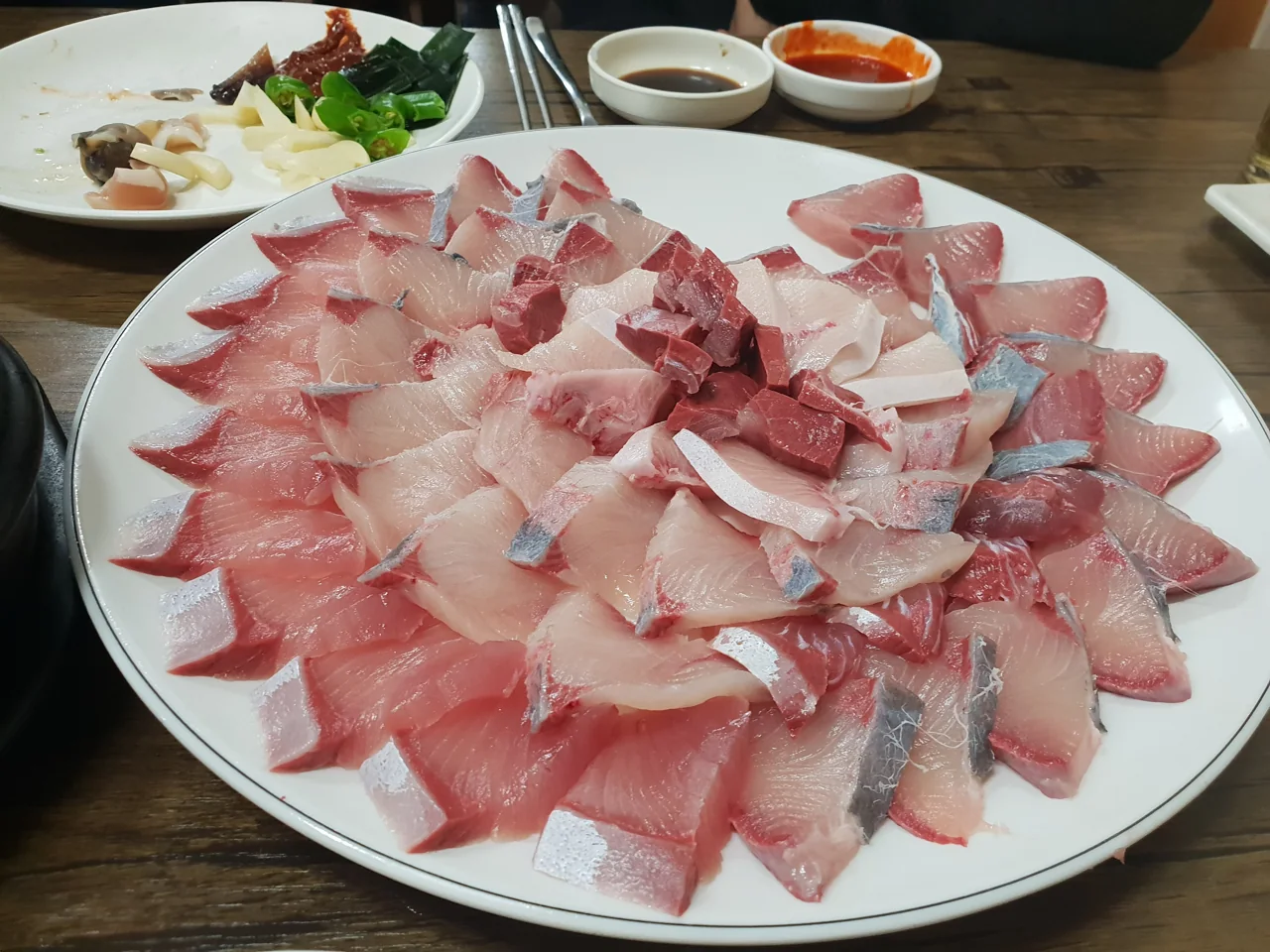
In its January seafood of the month notice, the ministry describes yellowtail as a fish that gains flesh and fat as the weather gets colder, which makes winter the best time to eat it. In another notice, it names December and January as the months when yellowtail tastes best. Both notices are in Korean. In Korea it’s usually eaten as hoe, raw slices cut thick, at raw fish restaurants and fish markets.
Daege (snow crab)
January is within the snow crab season, since fishing is closed from June 1 to November 30. Ganggu Port in Yeongdeok and Hupo Port in Uljin, both on the east coast, are known for snow crab. The snow crab festivals in those towns are held from late February into March, so a January visit gets you the crab season without the festival.
Gwamegi
Gwamegi is Pacific saury, or sometimes herring, that is hung in the cold sea wind over the winter and dried as it freezes and thaws. Guryongpo PortMap in Pohang makes most of Korea’s supply. You wrap a piece in gim (dried laver) or miyeok (sea mustard) with green onion, garlic and chili. It has a strong fishy flavor, and even Koreans are split on whether they like it.
Oysters and maesaengi
Oysters from Tongyeong and Geoje on the south coast are in season in winter. Look for gulgukbap (oyster and rice soup) and guljeon (oyster pancakes). Maesaengi is a very fine, thread-like seaweed, and maesaengi-gulguk, a soup of maesaengi and oysters, is a well-known winter dish. The ministry has picked maesaengi as a January seafood of the month several times.
Kkomak (cockles)
Beolgyo in Boseong County is famous for kkomak, small cockles that the ministry says are at their best in the cold of winter. You’ll find them boiled and seasoned, or mixed into bibimbap. The Beolgyo cockle festival is held in November.
Strawberries and hallabong
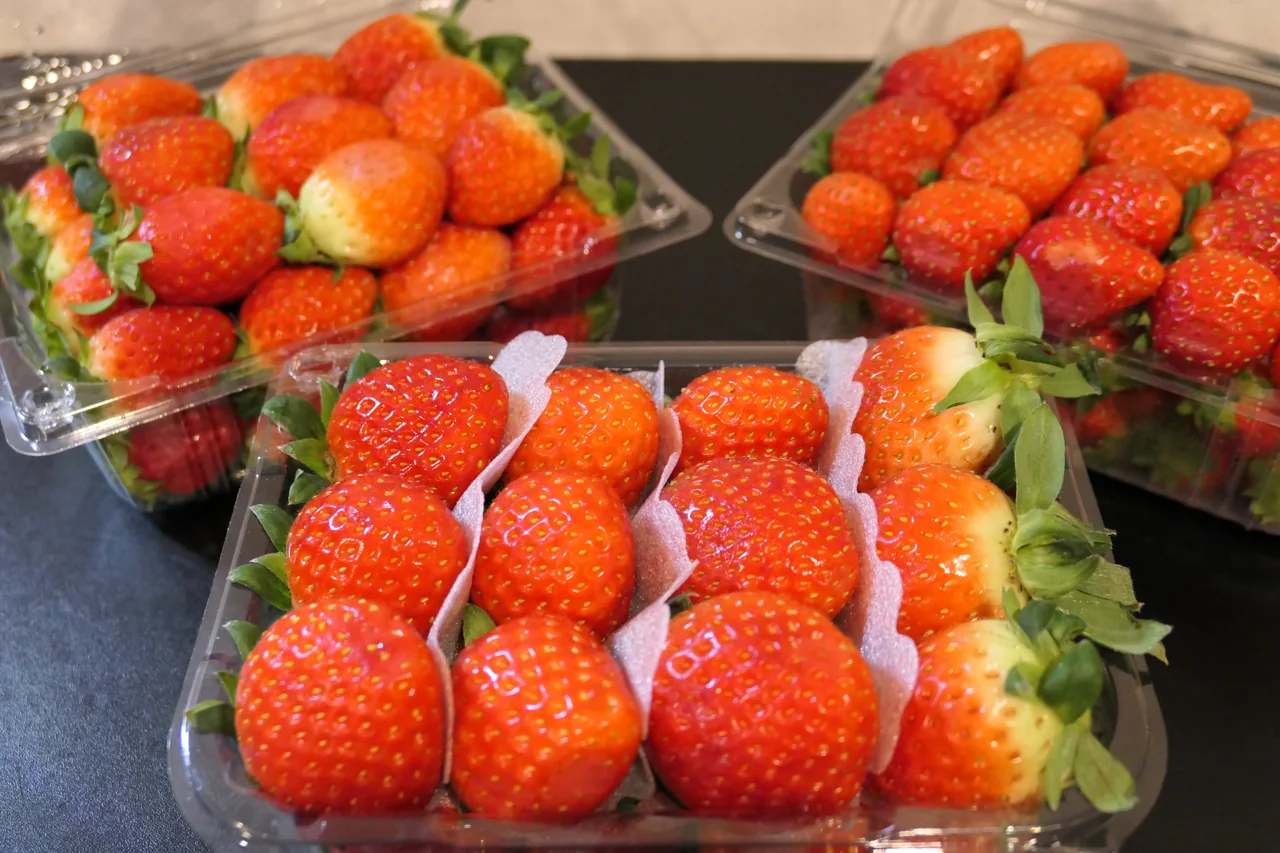
Korea’s winter strawberries are grown in greenhouses, and according to the Rural Development Administration, the most fruit reaches the market from early January to late February. In January, markets, convenience stores and cafes are full of strawberries, from fresh boxes to strawberry drinks and cakes.
Many Seoul hotels run strawberry dessert buffets and afternoon teas every winter, usually from early January to the end of March and at some hotels into April. Dates differ by hotel. Strawberry picking depends on the farm, so check with the farm before booking. The Nonsan Strawberry Festival is held in March. Jeju’s hallabong also turns up at markets and convenience stores on the mainland.
Street snacks
Winter is the season for hot street snacks, sold from carts and small stalls. Look for these:
- Bungeoppang, a fish-shaped pastry filled with red bean paste or custard
- Hotteok, a pan-fried pancake with a brown sugar filling that gets very hot, so bite carefully
- Roasted sweet potatoes
- Eomuk, fish cake on skewers, with hot broth you drink from a paper cup
- Gyeranppang, a small bread with a whole egg baked on top
- Roasted chestnuts
For a wider look at Korean food, see our guide to what to eat in Korea.
13. Crowds, holidays and winter sales
In the last two full years of Korea Tourism Organization data, January had the fewest foreign visitors of any month. For visitors from the United States, it was the quietest or second-quietest month of the year. You can explore the monthly figures on the Korea Tourism Data Lab.
Fewer tourists doesn’t automatically mean cheaper flights or hotels, since those depend on your dates and where you fly from.
When Koreans travel in January
Korean crowds build around New Year’s Day, especially in years when January 1 falls on a Friday or a Monday and makes a three-day weekend. In years when Lunar New Year falls in late January, which happens every few years, the holiday brings heavy traffic as families travel to their hometowns, and many shops and restaurants close for a few days. Look up the Lunar New Year date for the year you’re traveling before you book. The ice fishing festivals also draw big crowds on weekends.
New Year sales
Last time, the big department stores started their New Year sales on January 2, the first business day of the year, and ran them for anywhere from ten days to about two and a half weeks, depending on the store. Check the dates for the store you plan to visit.
The Korea Grand Sale is a winter discount campaign for foreign tourists, with deals on flights, transport, hotels, shopping and activities, plus welcome centers for visitors. The last edition ran from mid-December to late February, and the one before it from mid-January to the end of February, so the dates move each year. Check the Korea Grand Sale website before you go.
14. Entry rules and getting around in January
The United States (including Guam), Canada, the UK, Australia and New Zealand are among 22 countries and territories whose citizens are temporarily exempt from the K-ETA, Korea’s electronic travel authorization.
K-ETA and the e-Arrival Card
The exemption has been announced through December 31, and the decision for the following year is announced separately. Past extensions have been announced in December. If you are arriving in January, check the official K-ETA website before you leave. Travelers aged 17 and under or 65 and over don’t need a K-ETA at all, and citizens of exempt countries can still apply if they want one. Our K-ETA guide explains how to apply.
e-Arrival Card: You can fill in Korea’s arrival card online for free, starting three days before you land. If you hold a valid K-ETA, you don’t need to submit one, and paper arrival cards are still accepted. The form is on the e-Arrival Card site.
Ferries to the islands
According to the Ministry of Oceans and Fisheries, winter brings more high-seas warnings than any other season, so ferries to Korea’s islands are often suspended. The Korea Maritime Transportation Safety Authority (KOMSA) posts a forecast for the next day’s sailings early every afternoon on its ferry status page.
Roads and public transport
Snow and ice can close roads over high ground, such as the 1100 Road on Jeju (see the Jeju section), so if you rent a car, check road conditions each morning. Without a car, trains and buses are the easier way to travel in winter. Our guide to getting around Korea explains the trains, buses and subways.
Fine dust
December to March is Korea’s seasonal fine dust management period, when the government steps up measures against air pollution. You can check fine dust forecasts on the AirKorea website, which has an English version. The vehicle restrictions that come with it don’t affect you unless you rent a car.
15. What to wear and pack for the cold
In winter, Korean subway cars, shops and restaurants are kept warm, and many homes and guesthouses are heated through the floor with ondol. You’ll move between freezing streets and warm rooms all day, so several layers work better than one heavy sweater.
Seoul and the Gangwon mountains
Bring a thick padded coat, a hat, gloves and a scarf. Shoes should keep your feet warm and have non-slip soles, since sidewalks turn icy after snow. For ice fishing or skiing, add waterproof pants and thick socks, because you’ll be sitting or standing on snow and ice for hours. Underneath, wear thin layers you can take off indoors.
Busan and Jeju
A medium-weight coat is enough on many days in Busan and on Jeju, though the wind off the sea makes it feel colder. On Jeju’s north side, pack a rain jacket or umbrella and something windproof.
Small things that help
Hand warmers, called hot packs in Korea, are sold at convenience stores. Lip balm and moisturizer are worth packing because the air is very dry. Phone batteries drain faster in the cold, so a small power bank helps on long days outside.
With short days, plan outdoor sightseeing for the daylight hours and save the evenings for light displays, markets and indoor places. You’ll likely keep a map app such as Naver Map or KakaoMap and a translation app open all day, so reliable mobile data matters. Our Korea eSIM guide compares data options.
16. Should you go to Korea in January?
The ice fishing festivals open between late December and the second week of January, so by the second week most of them are running if the ice is thick enough. With advanced ski slopes at many resorts also opening through the month, the middle of January has the widest choice of winter activities running at the same time.
January suits you if
January is a good fit if you want to fish on a frozen river or see snow in the mountains, ski on the full range of slopes including advanced runs, eat winter food like yellowtail, snow crab and strawberries, travel in a month that recently had the fewest foreign visitors, shop the New Year sales, or enjoy clear, dry days on the east coast, in Busan or in Gyeongju.
Another month may suit you better if
If light festivals and a Christmas feel are what you want, December is the better month (see our guide to Korea in December). For snow sculpture festivals and plum blossoms, February works better, and for cherry blossoms, come in spring. If you’d rather avoid the cold altogether, our guide to the best time to visit Korea compares the seasons. And if you want sunny days on Jeju, keep in mind that the north side of the island is often cloudy in January.
Early, mid or late January
| Part of January | What’s happening | Keep in mind |
|---|---|---|
| First week | Most of Seoul’s winter lights still on, New Year’s Day holiday, department store New Year sales (last time from January 2), first ice fishing festivals open | Some light displays close after the first few days |
| From the second week | Most ice fishing festivals running, more advanced ski slopes open | Festival openings depend on the ice |
| Late January | Snow sculpture festivals start in some years | Lunar New Year holiday in years when it falls in January |
If you can only choose one week, the middle of the month gives you the most options, as long as you check that the festival you want has opened. If the Seoul lights matter more to you than the ice, go in the first week, when the most displays are still on.
🎡Things to Do77
🍜Food8
🏨Where to Stay4
🚇Getting Around14
🧭Travel Tips26
📌More4
Korea in January: FAQ
Browse more Korea travel guides →
Images: Photographs via Wikimedia Commons: Republic of Korea / Korea.net (CC BY-SA 2.0), Mark & Emma Hambleton & Dolan (CC BY-SA 2.0), Jung-Ho Um (CC BY-SA 3.0), Sukkim1996 (CC BY-SA 4.0), Matt Kieffer (CC BY-SA 2.0), Choi2451 (CC BY-SA 4.0), bryan… (CC BY-SA 2.0).