One commuter line runs from Busan to the east coast of Ulsan. This page is part of our complete Busan travel guide.
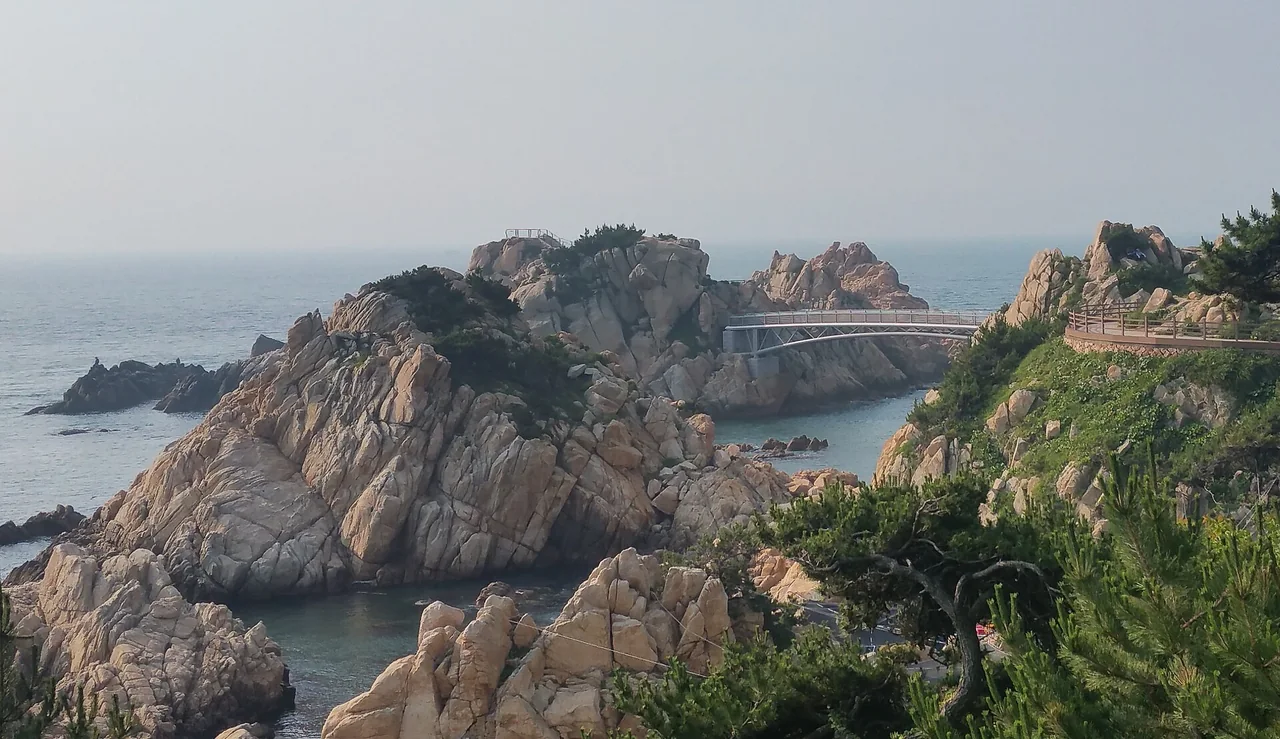
The rocky shore at Daewangam Park, Ulsan. Photo: Shinfull, CC BY-SA 4.0.
1. One train line links Busan to the Ulsan coast
The Donghae commuter line connects Bujeon station📍Map in Busan with Taehwagang station📍Map in Ulsan. That is 65.7km, 23 stations, 76 minutes end to end. No intercity bus terminal, no rental car.
Ulsan rarely makes anyone’s list. Head out to its east coast, though, and you get things Busan does not have: pale granite headlands, a pine forest over a century old, and a row of shipyards on the horizon.
Daewangam Park
Ganjeolgot
Get off at
Taehwagang, end of the line
Seosaeng, partway along and closer to Busan
From the station
City bus 1411 terminates at the park. Bus 124 also runs there
Ulsan bus 735, every 20 to 40 minutes, or the 515
Main draw
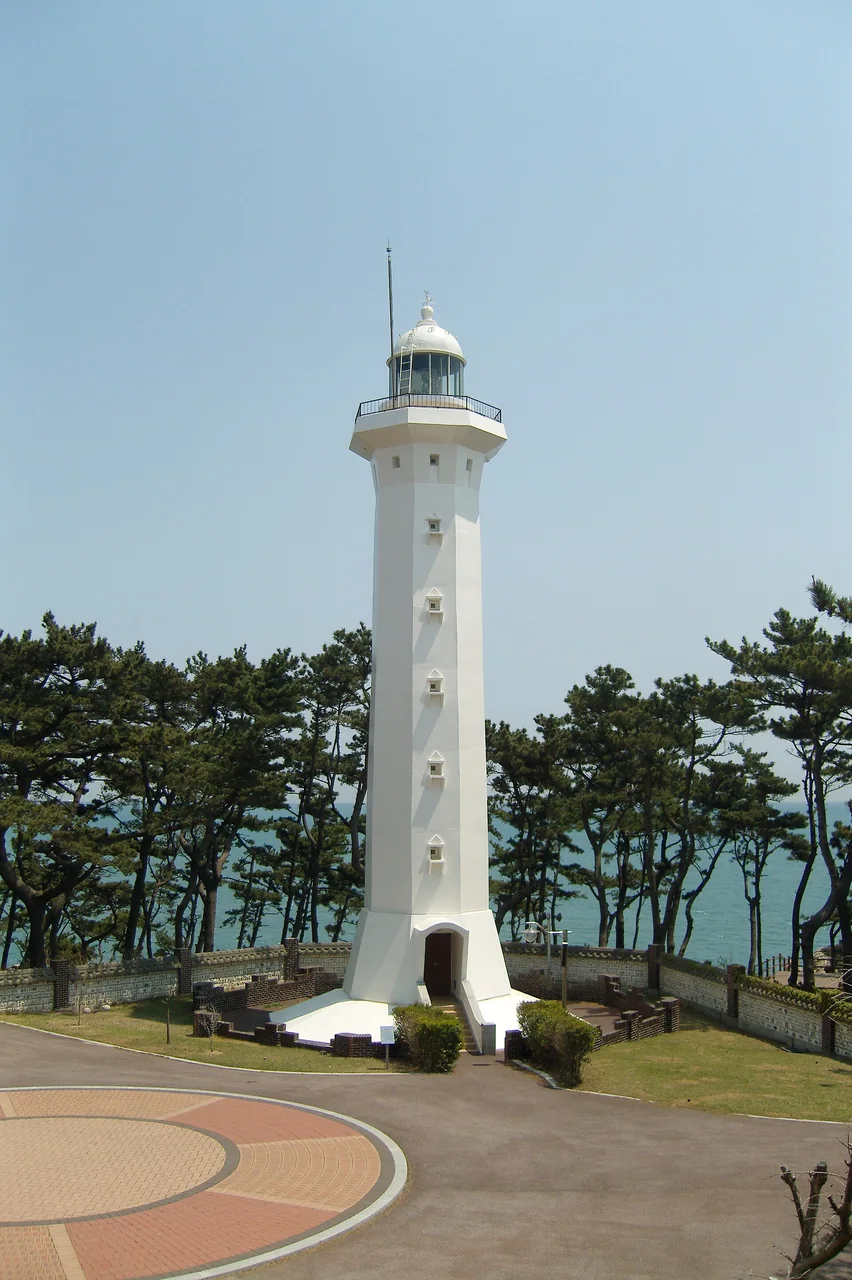
303m suspension bridge, pine forest, Ulgi lighthouse
Lighthouse, giant postbox, lawn, sunrise
Timing
Bridge open 09:00 to 18:00
Outdoors, always open
Entry
Free
Free
🏨 Bujeon station, where the line starts, sits next to Seomyeon, so staying around there makes an early start easySee on Trip.com →See on Agoda →See on Expedia →Affiliate link — we may earn a commission at no extra cost to you.
2. How to choose between them
They are different kinds of outing. Daewangam is somewhere you walk. Ganjeolgot is somewhere you stand.
Daewangam gives you 600 metres of pine forest between the gate and the lighthouse before the granite coast and the suspension bridge even start. Two to three hours is what it takes to have actually seen it. Ganjeolgot puts the lawn, the lighthouse and the postbox in one place, so an hour covers it, but the horizon is vast and the sky is the point.
For sunrise, the two are effectively identical. On 1 January 2026 the sun rose at 07:31 at Ganjeolgot, and at 07:31 in Bangeojin, the Ulsan district where Daewangam Park sits. Ganjeolgot is known as the first place on the peninsula to catch the sun, but the margin is about a minute over Homigot in Pohang and about five minutes over Jeongdongjin in Gangneung.
Photographically they deliver different things. Daewangam puts rock, pines and working shipyards in one frame. Ganjeolgot is horizon, grass and a white tower. If you have already walked a cliff path in Busan such as the Igidae coastal trail, Ganjeolgot repeats less.
3. How the Donghae line works
This was the first commuter rail line built outside the Seoul metropolitan area. It opened between Bujeon and Ilgwang on 30 December 2016 and was extended to Taehwagang on 28 December 2021, which is when Busan and Ulsan became connected by train. Before that it was intercity buses or a thin Mugunghwa service.
Detail
Route
Bujeon to Taehwagang, 65.7km, 23 stations
Journey time
76 minutes end to end
Frequency
Every 15 minutes at peak, every 30 minutes otherwise
Fare
Distance based, roughly 2,600 won for the full run
Payment
Transit card
Fares get revised. Sources disagree on the base fare for the distance system, so the reliable move is to check before you tap in. The one thing to remember is that this line does not share a fare structure with the Busan metro. Card basics are in our Busan transit card guide.
The constraint that actually bites is the 30 minute gap outside peak hours. Miss one train and the whole day shifts by half an hour. Check the return times before you set out.
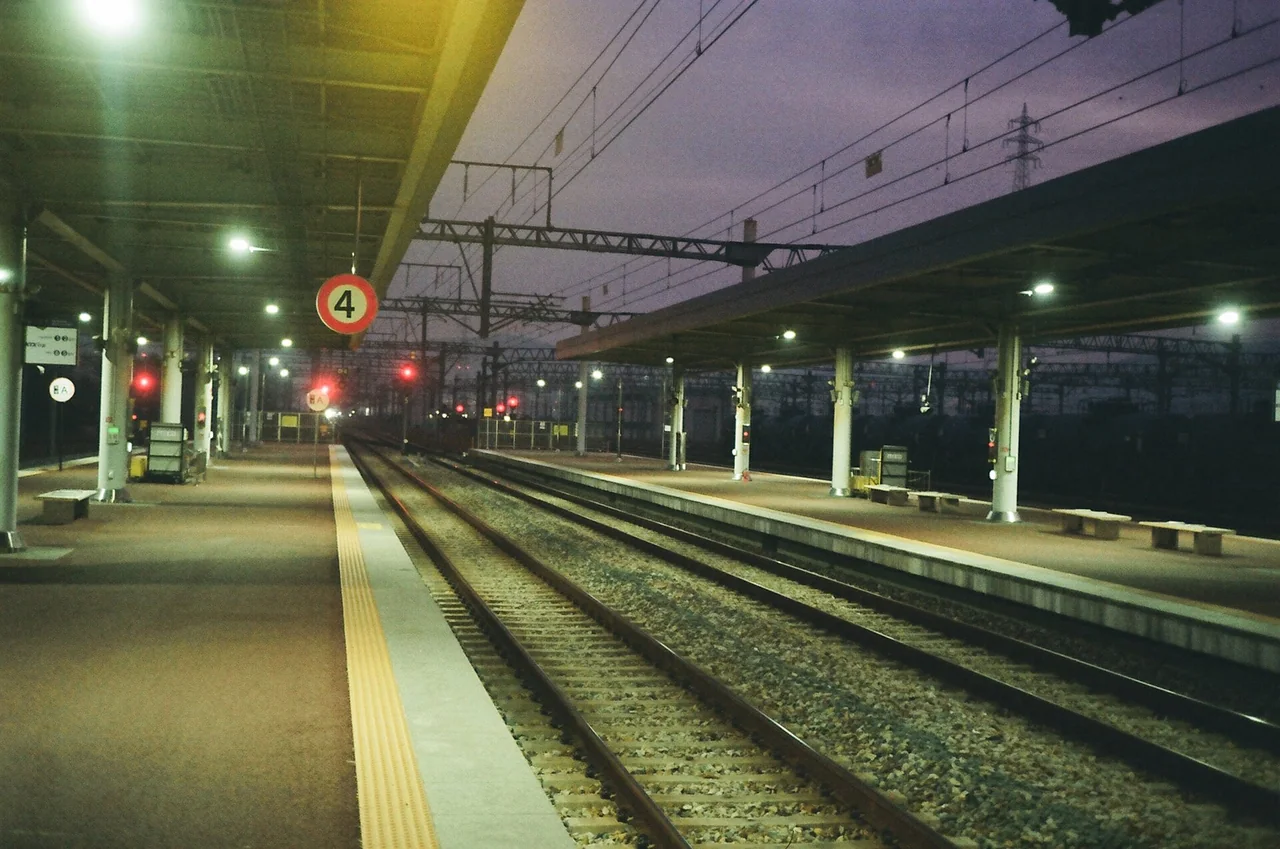
Taehwagang station, 76 minutes from Bujeon. Photo: 책읽는달팽, CC BY-SA 4.0.
4. What you actually see at Daewangam Park
The first thing inside the gate at Daewangam Park📍Map is pine forest. It runs 600 metres from the entrance to the lighthouse and holds roughly 15,000 black pines, many of them over a hundred years old. The shade is continuous, which makes this stretch walkable even in summer.
Past the trees the coast opens up, and the rock is pale. Where Igidae in Busan is dark volcanic stone, this is granite and reads almost white. Same coastline, different ground.
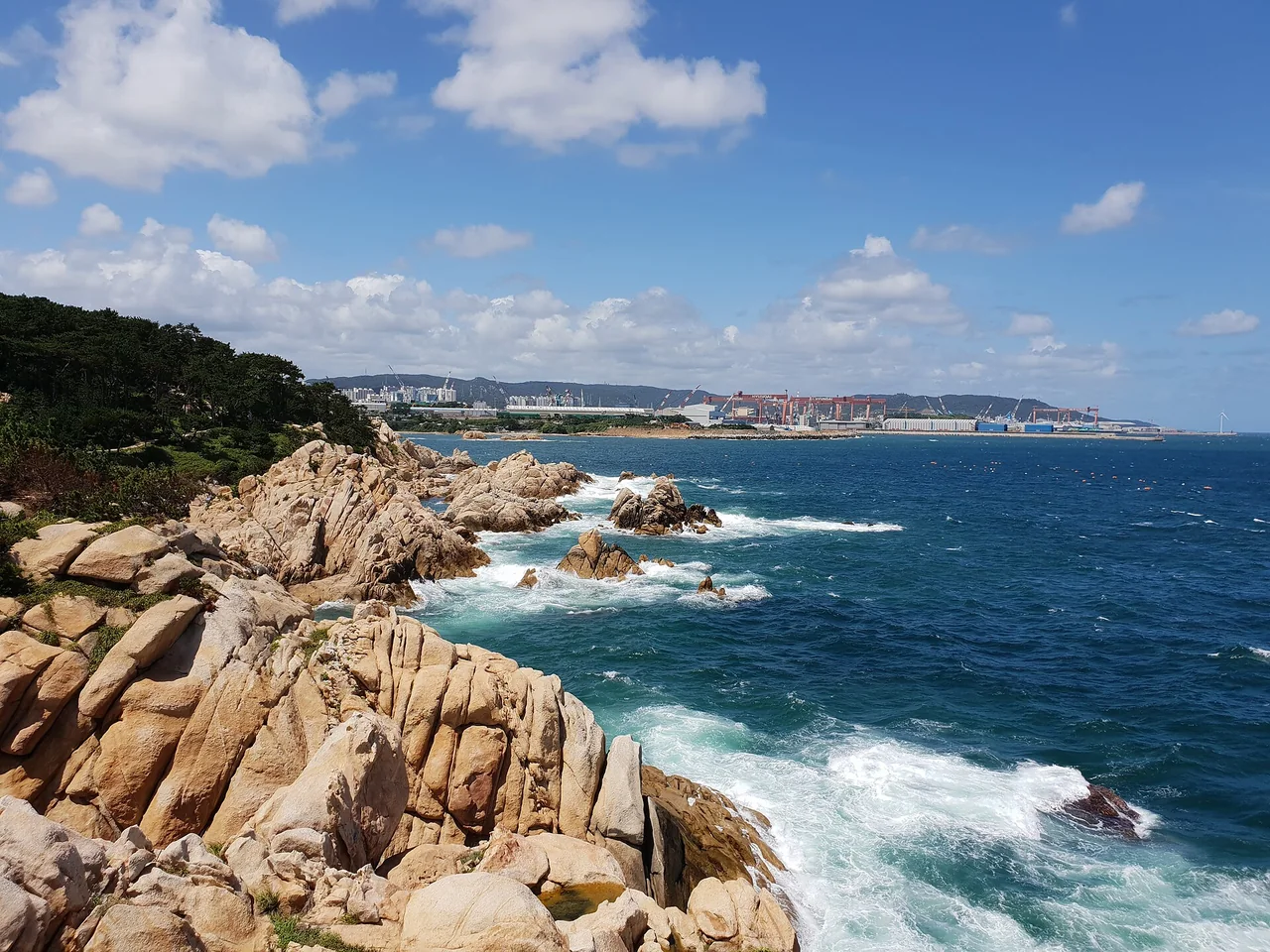
Then there are the shipyards opposite. Cranes and assembly halls lined up along the horizon is not a view any other coastal park in the country gives you. If you came expecting pure nature it lands oddly at first, but it also explains in one frame what kind of city Ulsan is.
Entry is free. It was ticketed until 2021 and is not any more. The car park does charge, with the first two hours free on weekdays.
The shipyards are visible from the park. Photographed in August 2018 by Choi2451, CC BY-SA 4.0.
5. The 303m bridge, and where the timing bites
A 303 metre suspension bridge crosses the water on the park’s north shore. It opened in June 2021 and spans the sea with no intermediate support. It is described as the longest pedestrian sea bridge in the country, and 3.67 million people crossed it in its first three years.
Check the hours before you build the day around it. The bridge runs 09:00 to 18:00 with last entry at 17:40, and it does not operate on the second Tuesday of each month. The park stays open either way, so the trip is not wasted, but if the bridge was the point you have spent the day for nothing.
Add 76 minutes of train to the bus from Taehwagang and the one way trip is close to two hours. Leaving after lunch makes the cut off tight, so a morning start is the safer plan.
The bridge itself is free. The deck is solid rather than transparent, but it moves as you walk. It can close in strong wind.
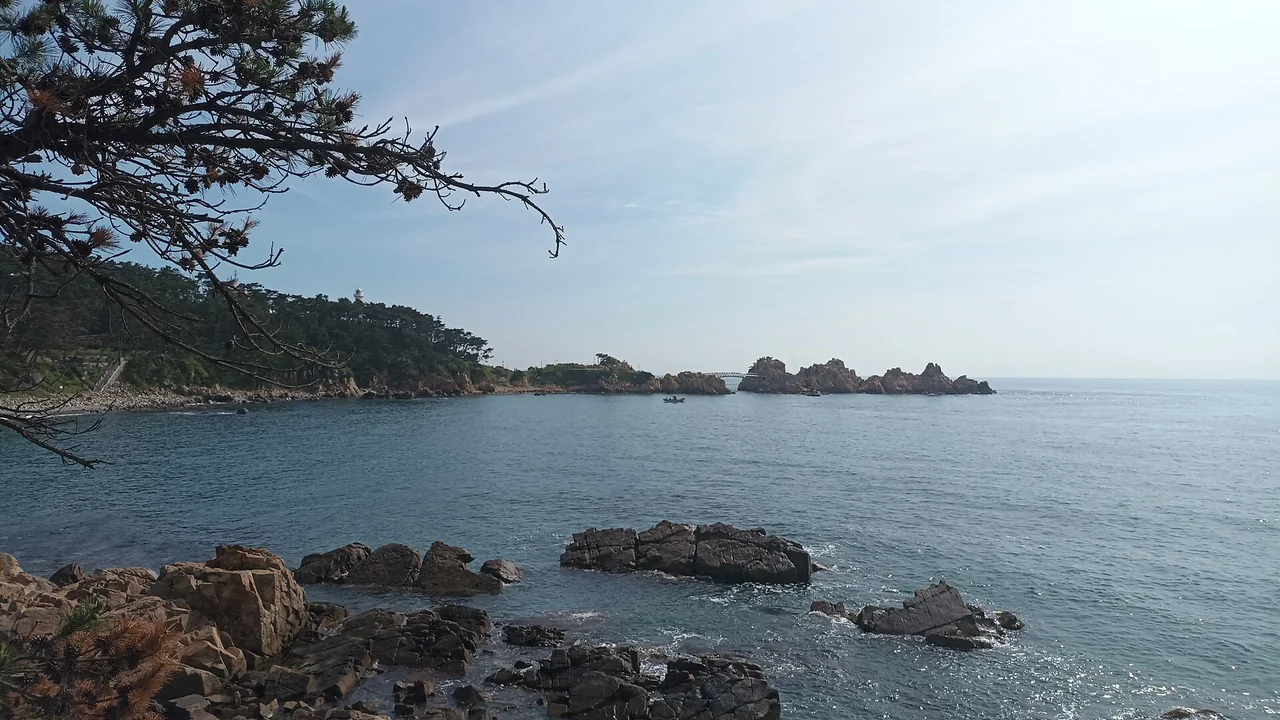
The shore seen through the pines. Photo: Dittwjfsdgkvkdjg, CC BY-SA 3.0.
6. Why there are two lighthouses
At the end of the pines stands Ulgi lighthouse, and there are two towers.
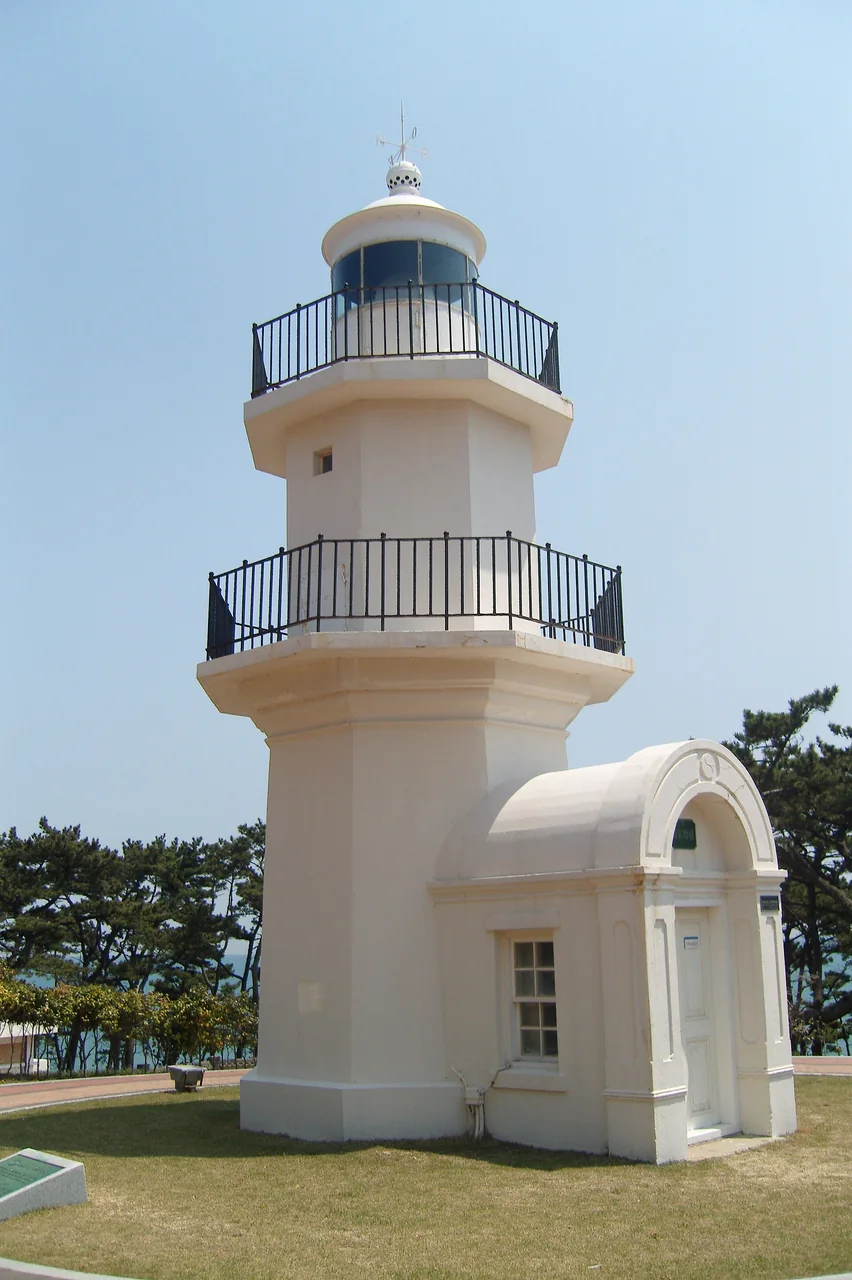
Ulgi lighthouse📍Map was first lit on 26 March 1906 and guided shipping along the southern part of the east coast. That original tower is still there, protected as registered heritage number 106: a squat white cylinder with two levels of railing.
Beside it stands the taller working tower. The pines grew until they blocked the old light, so a higher one had to be built. The pair side by side is one of the most photographed spots in the park.
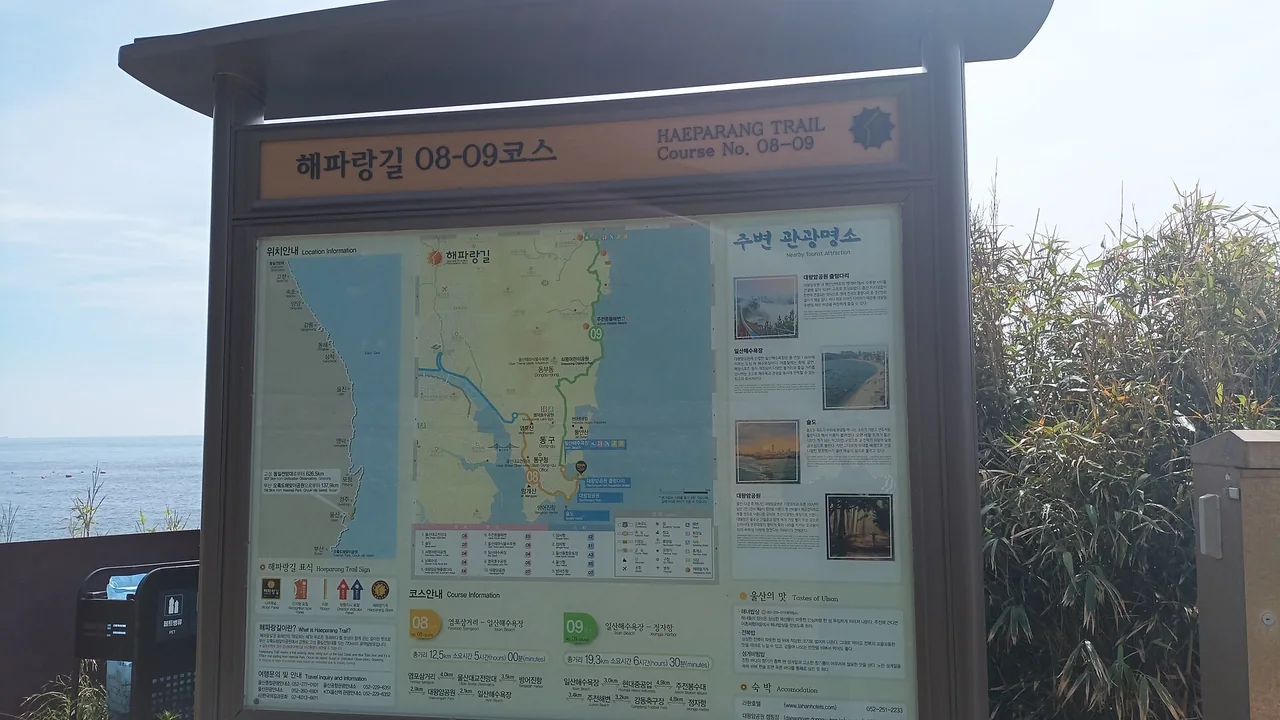
Sections 8 and 9 of the Haeparang Trail pass through here. That is the same route that starts at Oryukdo in Busan and runs north along the entire east coast, so walkers who set off from kilometre zero enter Ulsan on this stretch.
The Ulgi lighthouse tower currently in service. Photo: 책읽는달팽, CC BY-SA 3.0.The original 1906 tower, registered heritage number 106. Photo: 책읽는달팽, CC BY-SA 3.0.
7. Where the name Daewangam comes from
The story you will be told involves the queen consort of King Munmu of Silla: that after her death she became a dragon guarding the kingdom and settled beneath these rocks. Interpretive signs generally repeat it.
It is a legend, not a documented fact. The underwater tomb of King Munmu at Gampo near Gyeongju has physical evidence behind it. That these Ulsan rocks are the queen’s grave has none. The attribution spread through local publications and tourist material from the mid 1980s onward. As folklore it is good. As history it is wrong.
The name itself supports a plainer reading. Sea deities were once addressed as great king, and place names using that word attach to rivers and mountains as well as coastlines. Daewangam may simply be one of those.
Watch your searches, too. Gyeongju has its own Daewangam and results mix the two. Confirm on the map whether the pin sits in Ulsan or Gyeongju. The Gyeongju day trip is reached in a completely different way.
8. Ganjeolgot, where the light lands first
Ganjeolgot📍Map is regarded as the point on the peninsula where the sun rises earliest. On New Year’s Day it beats Homigot in Pohang by roughly a minute and Jeongdongjin in Gangneung by about five. In 2026 that meant 07:31.
The land here is wide and flat, a lawn running out to a white tower. Ganjeolgot lighthouse was first lit on 26 March 1920 and rebuilt into its present form on 1 June 2001. It stands 17 metres tall.
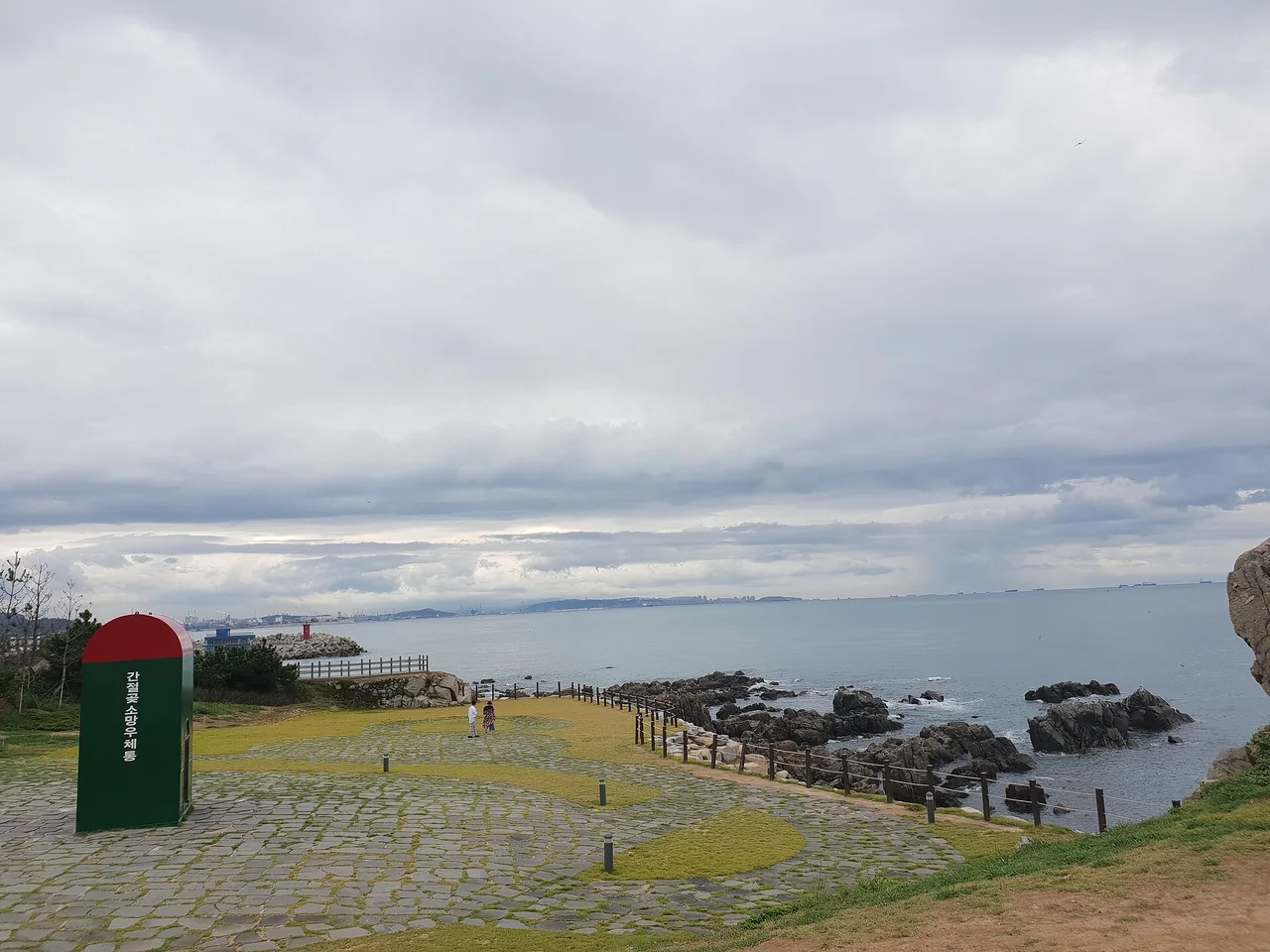
Next to it is an outsized postbox, known as the wish postbox. It is 5 metres tall and 2.4 metres wide, the largest in the country, and despite looking like sculpture it is a working postbox: a card dropped in goes out as ordinary mail.
Over New Year, Ulju county runs a sunrise event from the evening of 31 December into the morning of 1 January, with drone displays and fireworks in some years. The programme changes annually, so check that year’s notice rather than assuming.
The wish postbox at Ganjeolgot, on an overcast day in August 2018. Photo: Choi2451, CC BY-SA 4.0.
9. From Seosaeng station to Ganjeolgot
Ganjeolgot is reached by city bus from Seosaeng station on the same line. Ulsan bus 735 runs every 20 to 40 minutes, and the 515 also serves the area. Namchang station has more routes heading that way, but Seosaeng is closer.
One practical tip: check the bus times first, then pick your train. Trains every 30 minutes against buses every 20 to 40 means a mismatch leaves you standing at a rural station for a long time. Entering an arrival time into a maps app sorts the pairing for you.
For sunrise, the train is not the answer. For much of the year the first service runs later than the sun. The realistic options are staying in Ulsan the night before, or checking whether special transport runs during the New Year event. That changes every year, so go by the county’s announcement.
10. Both in one day does not work
The arithmetic settles it. Daewangam Park and Ganjeolgot sit on the same line but on different parts of it, and each needs a bus from its station.
The train alone is over two and a half hours return. Bujeon to Taehwagang is 76 minutes each way.
Add a bus at each end. Neither destination is walkable from the platform.
Then add the transfer between them. Seeing one means getting back on the train for the other.
The outcome is predictable. You leave both places with a few photographs and nothing else.
So it is one per day. Daewangam if you want to walk, Ganjeolgot if you want the lighthouse and open sky. Against other trips out of Busan, the travel time is similar to Gyeongju and shorter than Tongyeong. The difference is that those two have sights clustered together, so you can string several into a day, while this coast is about spending your time in one place.
Sections 8 and 9 of the Haeparang Trail run through this park. Photo: Dittwjfsdgkvkdjg, CC BY-SA 3.0.
11. Things that save you a wasted trip
Bus numbers change. Ulsan reorganised its city bus network in December 2024, and the route serving Daewangam Park became the 1411 at that point. Do not trust numbers quoted in older trip reports; check before you leave.
Wind
Both places face open sea and it blows. In winter the feel is nothing like central Busan.
Food
Choices inside the park and on the headland are thin. Sort it out at Taehwagang or before you leave Busan.
Getting back
Note the last train. With half-hourly service, missing one rearranges your evening.
Spring and autumn are the easiest seasons. In summer the pine shade at Daewangam is a real advantage and Ganjeolgot has almost none. Winter puts sunrise on the table but makes the transport awkward. Month by month conditions on the Busan side are in the best time to visit Busan.
🏨 This trip works best as a return run from a Busan base, so start with the city's accommodation as a wholeSee on Trip.com →See on Agoda →See on Expedia →Affiliate link — we may earn a commission at no extra cost to you.
Q. How long does the train from Busan to Ulsan take?
The Donghae commuter line covers Bujeon to Taehwagang in 76 minutes end to end, running every 15 minutes at peak and every 30 minutes at other times.
Q. What does the ticket cost?
Fares are distance based and the full Bujeon to Taehwagang run comes to around 2,600 won. Fares are revised periodically, so check before you travel. You pay with a transit card.
Q. Is there an entrance fee for Daewangam Park?
No. It was ticketed until 2021 but is free now, and so is the suspension bridge. The car park does charge, with two hours free on weekdays.
Q. What are the suspension bridge hours?
09:00 to 18:00 with last entry at 17:40, and it is closed on the second Tuesday of each month. The park itself stays open.
Q. How do I get from Taehwagang station to the park?
City bus 1411 terminates at Daewangam Park and bus 124 also goes there. Ulsan reorganised its bus network in December 2024 and the numbers changed, so ignore numbers quoted in older posts.
Q. Which station do I use for Ganjeolgot?
Seosaeng, on the same Donghae line. From there Ulsan bus 735 runs every 20 to 40 minutes, and the 515 is an alternative. Namchang station has more routes into the area.
Q. Can I do both places in one day?
Not sensibly. The train alone is over two and a half hours return and each destination needs a bus from its station. Fitting both in means seeing neither properly.
Q. Does the sun really rise first at Ganjeolgot?
It is regarded as the earliest point on the peninsula, by about a minute over Homigot and five over Jeongdongjin. That said, Bangeojin next to Daewangam Park sees it at effectively the same moment.
Q. Can I get there by train for sunrise?
For most of the year, no. The first train runs later than the sunrise. Staying in Ulsan overnight, or checking for special New Year transport, are the workable options.
Q. Is Daewangam the tomb of King Munmu’s queen?
There is no evidence for it. The story is folklore that spread through tourist material from the mid 1980s. Unlike the underwater tomb at Gampo near Gyeongju, nothing here supports a burial.
Q. Is this the same as Daewangam in Gyeongju?
No. Gyeongju has a separate place of that name and searches mix them up. Check on a map whether the pin is in Ulsan or Gyeongju before you leave.
Q. Does it work with children?
The pine forest section at Daewangam is level and easy. The rocky shore and the suspension bridge need more supervision, and Ganjeolgot has everything in one place, so it suits a short visit.
Images: Photographs from Wikimedia Commons, reused under their stated licences. Daewangam Park rocks: Shinfull, CC BY-SA 4.0. Taehwagang station: 책읽는달팽, CC BY-SA 4.0. Daewangam shoreline with shipyards (2018) and Ganjeolgot postbox (2018): Choi2451, CC BY-SA 4.0. Coastline through pines and Haeparang trail board: Dittwjfsdgkvkdjg, CC BY-SA 3.0. Ulgi lighthouse towers: 책읽는달팽, CC BY-SA 3.0.