
Dongdaemun, Seoul: Night Market Hours, Wholesale vs Retail, DDP, Doota, Dakhanmari Alley and Where to Stay
Dongdaemun is where Seoul makes and sells clothes, and every building keeps its own hours. This guide shows what is open at each time of day, which malls sell single pieces, how to eat dakhanmari, and what staying in the area is like.
| Is Dongdaemun a food night market? | No, it is a fashion district where some clothing buildings open at night for shop owners buying stock. |
|---|---|
| When should I go shopping? | Late afternoon to midnight in the retail malls, then look around the wholesale buildings on a weeknight if you are curious. |
| Which nights should I avoid? | Friday night and Saturday night, when most night wholesale buildings are shut. |
| Can I buy just one piece? | In retail malls yes, and in wholesale shops some will and some won’t, so ask first. |
| What should I eat? | Dakhanmari, a whole chicken boiled at your table, or grilled fish and samsa nearby. |
| Is it a good area to stay? | Many travellers like it for airport buses at hotel doors and roomier rooms, but pick a quiet side street. |
1. What kind of neighbourhood Dongdaemun is
2. What is open at each time of day
3. Retail malls open from late morning into the night
4. Looking around the night wholesale buildings
5. Daytime markets for fabric, sewing supplies, shoes and toys
6. DDP: the building, the exhibitions and the free night show
7. Heunginjimun Gate and the Naksan city wall walk
8. Along Cheonggyecheon to Dongmyo Flea Market
9. Dakhanmari Alley and the grilled fish alley
10. Central Asia Street and Sindang-dong tteokbokki
11. What to know before staying in Dongdaemun
12. Subway stations and airport buses for Dongdaemun
13. A sample day, holiday closures and the information centre
1. What kind of neighbourhood Dongdaemun is
Dongdaemun is a neighbourhood where clothes and fabric are made, sold and shipped out. Shop owners from all over Korea and from abroad come here to buy stock, and small workshops in the side streets sew what they sell. Tourists shop here too, but the place was built around that trade.
Many English speaking travellers hear the words “Dongdaemun night market” and picture rows of food stalls, like the night markets in Taipei or Bangkok. That picture is wrong, and it is the most common reason people leave disappointed. What opens at night here are clothing buildings, and most of the people inside are buyers stocking their own shops.
Retail and wholesale, and why it matters
Some buildings are retail: normal malls with price tags, fitting rooms and card machines, open from late morning to around midnight. Others are wholesale: rows of tiny stalls that sell to shop owners by the bundle, and many of them open around 8pm and close before dawn.
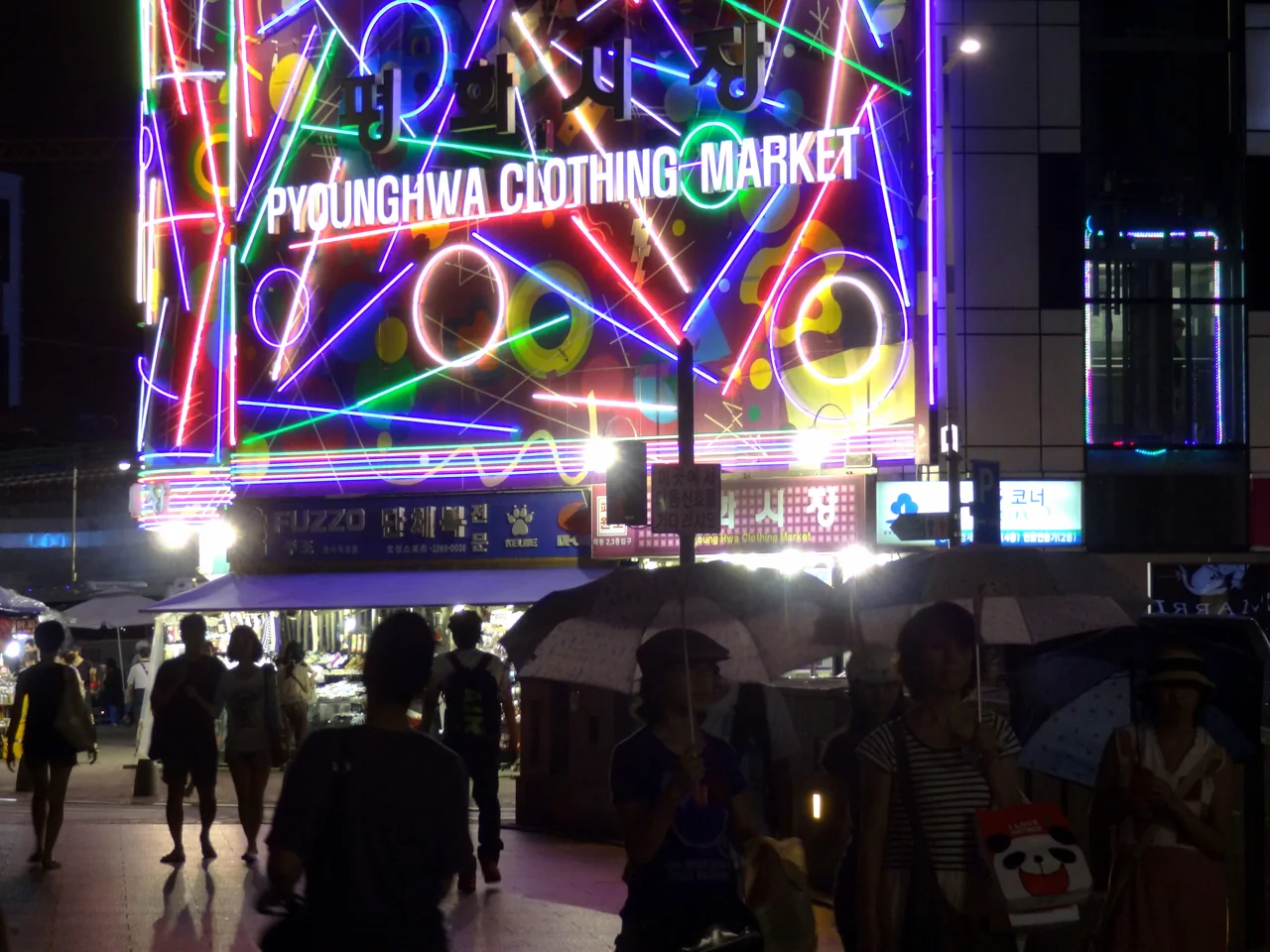
Bloggers in every language use the same rough map. Stand at DDP, the big curved silver building, and look along subway Line 4. The west side, with Doota Mall, dundun and Hyundai Outlet, is mostly retail. The east side, with the apM buildings, Nuzzon, DDP Fashion Mall and Designer Club, is mostly wholesale. Treat it as a rough guide. The older markets along the Cheonggyecheon stream, such as Pyeonghwa Market and Jeil Pyeonghwa Market, sell both ways.
Two districts under one name
The name comes from the old east gate of the city wall, Heunginjimun Gate, which people used to call Dongdaemun (“Great East Gate”). The shopping area itself spreads across two districts. The malls around DDP are in Jung-gu, while the fabric market, the gate, the chicken alley and Dongmyo sit north of the stream in Jongno-gu. When travellers say “Dongdaemun”, they mean all of it, and so does this guide. For how it fits into a wider trip, see the Seoul travel guide.
2. What is open at each time of day
Every building in Dongdaemun keeps its own hours. Some open in the morning, some in the evening, and some at 8pm and shut at 5am. So the Dongdaemun you see depends on when you arrive, and the most useful thing to plan is your arrival time.
| Time | What is open | Watch out for |
|---|---|---|
| Morning to afternoon | Dongdaemun Fabric Market, the shoe market (3am to 3pm), Jeil Pyeonghwa daytime floors, the Changsin-dong toy and stationery street, DDP and its exhibitions, Heunginjimun Gate, the Seoul City Wall Museum, Dongmyo Flea Market | The fabric market closes on Sundays. The toy street closes on Sundays and public holidays |
| Evening to midnight | Doota Mall (to midnight), dundun and Hyundai Outlet (to about 9pm), Migliore (to 2am, closed Mondays), the food alleys | Many places close on the eve and day of Seollal and Chuseok |
| 8pm to 5am or 6am | Night wholesale buildings (the apM buildings, DDP Fashion Mall, Nuzzon, Designer Club and others), Pyeonghwa Market (opens 10pm) | Most are shut on Friday night and Saturday night. They open again on Sunday evening |
| Midnight to noon | Daytime wholesale buildings such as Cheongpyeonghwa and Techno | Closed on Saturdays and Sundays |
This table shows what most buildings do. Each building differs a little, so check the one you care about before you go.
The weekend closing that trips people up
Blogs describe the night wholesale weekend in different ways. Some say “closed Friday and Saturday”, others say “closed Saturday night to Sunday”. Both mean the same thing, and the confusion comes from buildings that open at night and close in the morning. The simple version: on Friday night and Saturday night, most wholesale buildings are shut. If you arrive at 11pm on a Friday expecting a busy market, you will find locked doors on the east side.
On those two nights, plan on retail malls, food and the lights around DDP instead. From Sunday evening to Thursday night the wholesale floors are running.
Holidays close almost everything
Around Seollal (Lunar New Year) and Chuseok (the autumn harvest holiday), most malls and markets close for several days. Even DDP closes on the day itself. If your trip falls on one of these holidays, look up the closing notice of the building you want before you set out.
3. Retail malls open from late morning into the night
If you want to try things on, pay by card and see price tags, head to the retail malls on the west side of DDP. They open around 10:30am, and the biggest one stays open until midnight.
Doota Mall
Doota Mall is in Doosan Tower at 275 Jangchungdan-ro. It is open every day from 10:30am to midnight. The Nike store inside stays open until 2am, and the food court on basement level 2 runs until 10pm. It closes on the eve and day of Seollal and Chuseok.
Many older blogs and guides still say Doota is open until 5am. It used to be, but it now closes at midnight. If you read “shop all night at Doota” somewhere, that page is out of date.
dundun, Hyundai Outlet and Migliore
dundun Dongdaemun at 264 Eulji-ro opened where Lotte Fitin used to be, so older guides may still call it Fitin. Most shops open from 10:30am to 9pm, and restaurants and cafés from 11am to 9pm. Yeonmujang, the café and pub, stays open until 11pm. There is a Uniqlo on the ground floor, and blogs mention Daiso and Olive Young inside too. It closes on the day of Seollal and Chuseok.
Hyundai Outlet Dongdaemun at 20 Jangchungdan-ro 13-gil used to be called Hyundai City Outlet. It opens at 10:30am and closes at 9pm from Monday to Thursday and at 9:30pm from Friday to Sunday, with the CGV cinema on floors 10 and 11. The duty free shop that older guides list in this building has closed.
Dongdaemun Migliore at 263 Jangchungdan-ro is open from 10:30am to 2am and closed on Mondays. There are restaurants on the 9th floor and a money exchange on the ground floor. It is quieter than it used to be. Underneath, the Cheonggye 6-ga Underground Shopping Centre links Migliore to the DDP side, with clothes and small goods. Its shops open from 9am to 5am, close on the last Monday of the month, and the passage itself stays open all day and night, which helps on a rainy day.
Prices in the retail malls are fixed. You might get a little off at a small independent stall, but the big discount numbers you see online don’t apply here.
Map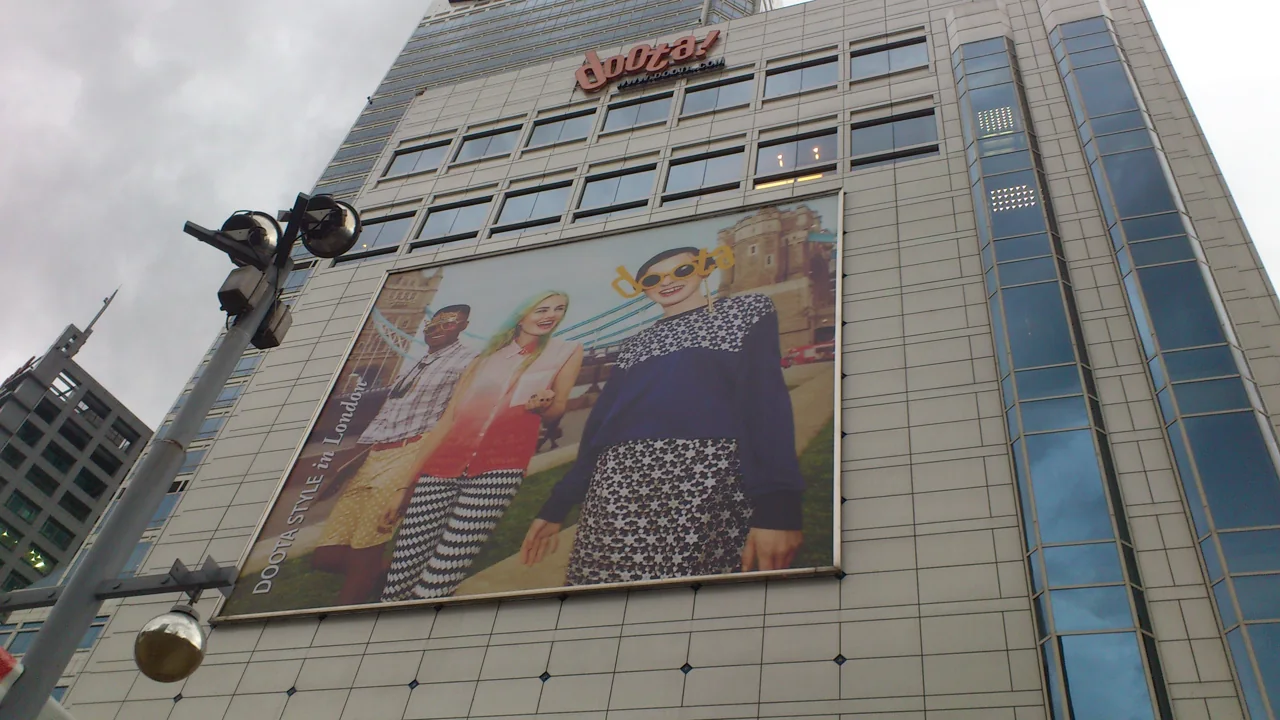
4. Looking around the night wholesale buildings
From about 8pm, the buildings on the east side of DDP light up and fill with buyers. They push carts, carry huge black bags, and move from stall to stall placing orders. For many travellers this is the scene they came to see, and it is worth a walk on a weeknight.
The main buildings and their hours
| Building | Hours | Closed |
|---|---|---|
| DDP Fashion Mall (22 Majang-ro) | 8:10pm to 5am | Friday and Saturday nights, holiday periods |
| Nuzzon (62 Eulji-ro 45-gil) | 8pm to 6am | Weekends |
| apM, apM LUX, apM PLACE | 8pm to 5am | Usually Friday and Saturday nights |
| Pyeonghwa Market (274 Cheonggyecheon-ro) | 10pm to 6pm the next day | Check before a weekend visit |
| Jeil Pyeonghwa Market (13 Majang-ro) | Day: 9am to 5:30pm weekdays, 9am to 5pm Saturday. Night: 8pm to 5am | Friday night |
Pyeonghwa Market and Jeil Pyeonghwa Market describe themselves as selling both wholesale and retail, so they are the easiest places for a visitor to buy something.
Can I buy just one?
This is the question first-timers ask most. The honest answer is that it depends on the shop. Some shops sell single pieces, but it varies from shop to shop, so ask first. Stalls that only sell wholesale put their shop-owner customers first. Many have no fitting room, and some will say no to a single piece or quote a higher price for it.
For accessories, reviews keep pointing to NYU NYU on Majang-ro. It sits among the wholesale buildings but sells jewellery and accessories one piece at a time and stays open late. For clothes on the wholesale floors it is still shop by shop. Bloggers teach a few Korean phrases that help:
- 하나만 살 수 있어요? (hana-man sal su isseoyo?): Can I buy just one?
- 소매 돼요? (somae dwaeyo?): Do you sell retail?
- 현금으로 할게요 (hyeongeumeuro halgeyo): I’ll pay in cash.
How to get along on the wholesale floors
Sellers are often busy with bulk orders or selling on live video streams, and they can seem curt. Reviews say it is usually the pace of the work, not anything personal. Keep to the side of the corridors so porters with carts can get through, and don’t expect much bargaining on single items.
A Japanese blog gives advice worth borrowing: do your actual buying earlier in the evening in the retail malls, and treat the after-midnight wholesale floors as something to look around. That way nothing depends on a busy seller agreeing to sell you one shirt.
At night you may also see a street of yellow tents behind DDP. Korean news reports say it sells fake brand goods, and raids happen often. Fake goods can be seized by customs when you bring them home.
5. Daytime markets for fabric, sewing supplies, shoes and toys
In daylight, Dongdaemun belongs to the people who make things. Fabric sellers, button shops and shoe wholesalers do most of their business before the retail malls get busy. If you sew, knit or make jewellery, this is the part of Dongdaemun you will enjoy most.
Dongdaemun Fabric Market
Dongdaemun Fabric Market (Dongdaemun Jonghap Market) is at 266 Jong-ro, on the Jongno-gu side near Dongdaemun Station. Fabric and clothing supplies run from 8am to 6pm, accessory parts from 9:30am to 7pm, and bedding and home décor from 8am to 7pm. It closes on Sundays, and the whole market shuts on the 2nd and 4th Sunday of the month.
Blogs point people to the 5th floor, where the accessory parts are: beads, buttons, ribbons, charms and clasps. People who make their own clothes and small craft items come here for supplies, and you can also find fabric remnants and alteration shops. The food court runs from 7am to 6pm.
The shoe market and the toy street
The Dongdaemun Shoe Market at 307 Cheonggyecheon-ro opens at 3am and closes at 3pm, and it is closed on Sundays. It is mainly a trade market, but it is interesting to walk past in the morning.
The Changsin-dong Toy and Stationery Street (36 Jong-ro 52-gil) is a short walk from Exit 4 of Dongdaemun Station or Exit 6 of Dongmyo Station. Shops sell toys and stationery wholesale and retail, and the street is closed on Sundays and public holidays. Reviews warn that the street is shorter than people expect, prices are not always low, and some toys are copies. Go if you are nearby, but keep your hopes modest.
Pyeonghwa Market and Jeil Pyeonghwa Market also trade in the daytime (see the table in the section above), so if you want to buy clothes rather than fabric, you can combine them with a morning here.
6. DDP: the building, the exhibitions and the free night show
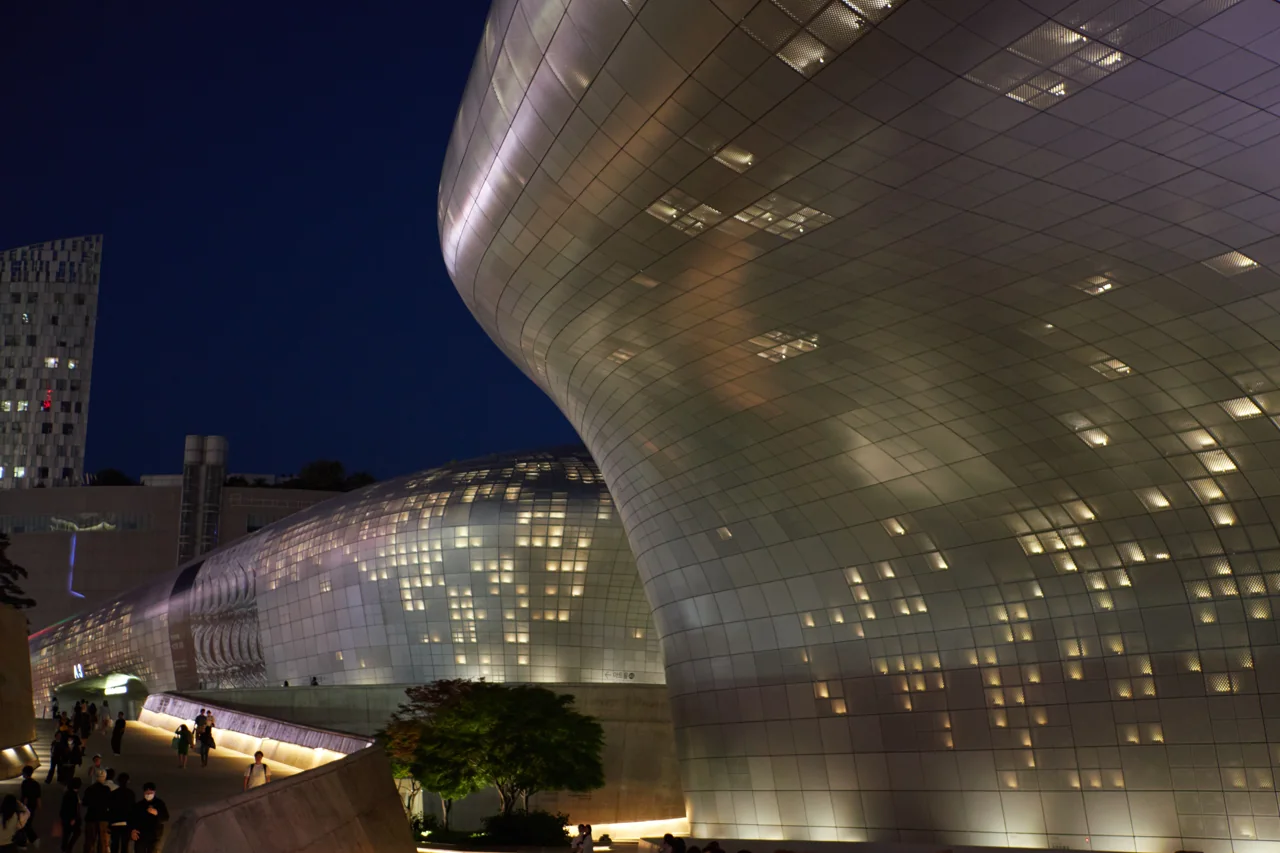
DDP, the Dongdaemun Design Plaza at 281 Eulji-ro, is the curved silver building at the centre of the area. It was designed by Zaha Hadid and stands where the old Dongdaemun Stadium used to be. You can walk around and through much of it without a ticket.
Hours and what costs money
The building is open from 10am to 8pm, with some spaces keeping different hours. It closes only on January 1 and the day of Seollal and Chuseok, so it is open on Mondays. Walking through the building and the plaza is free, while many exhibitions charge their own entry fee. The DDP visitor centre is on basement level 2 at Eoullim Square.
Inside the grounds are the Dongdaemun History Museum and the Dongdaemun Stadium Memorial. Both are free and open from 10am to 7pm, but they close on Mondays, even if Monday is a public holiday, and on January 1, Seollal and Chuseok. So on a Monday the main building is open and these two are shut.
Also in the park is Igansumun, the remains of a water gate from the old city wall. Don’t mix it up with the Igansumun Exhibition Hall, which is a rental space for exhibitions.
DDP at night
At the moment, DDP runs a short free light show called DDP 365 Light in front of the excavated relics display area. After sunset, a laser and video piece of about 5 minutes plays every 30 minutes. The first show starts at a different time each season, around 7pm in autumn and 6pm in winter. It takes a break in December.
You may also have seen photos of the whole outer wall covered in moving images. That big show, Seoul Light DDP, only runs during festival periods, so on most nights what you will see is the shorter show in front of the relics area.
Photo tip from bloggers: the building looks best well after dark, from around 8:30pm. If you are spending the evening in the malls, step out between shops.
Map7. Heunginjimun Gate and the Naksan city wall walk
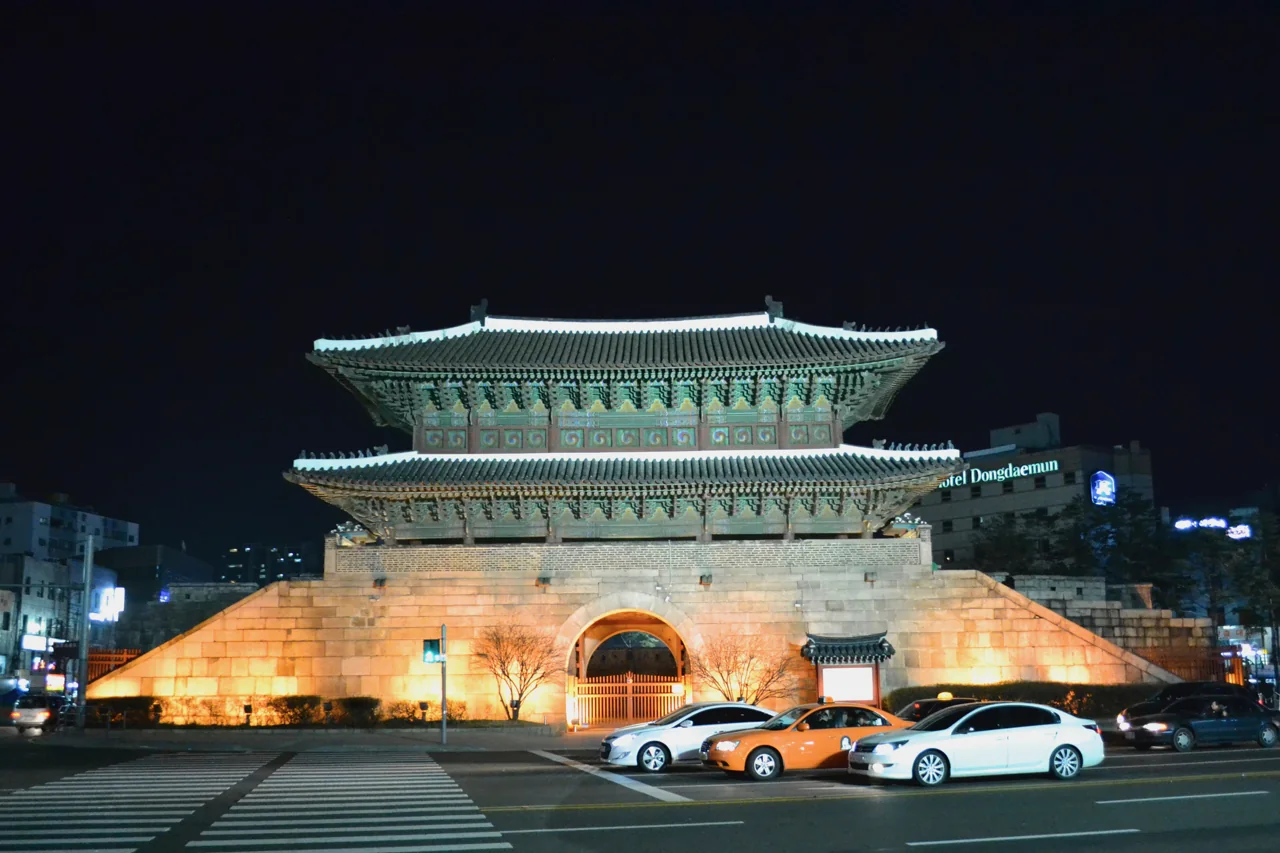
Heunginjimun Gate is the old east gate of Seoul’s city wall and is protected as one of Korea’s listed Treasures. It used to be called Dongdaemun, which is how the whole neighbourhood got its name. Its official name today is Heunginjimun.
Seeing the gate
The gate is always open to view and free, but that means looking at it from outside. It sits in the middle of a traffic circle, so most people see it from Heunginjimun Park on the Dongdaemun Station side, or from the city wall path above. It is lit up at night, and many visitors walk over from DDP after dark just to see it.
The Seoul City Wall Museum at 283 Yulgok-ro is next to the park. It is open from 9am to 6pm (last entry 5:30pm), closed on Mondays and January 1, and entry is free. It explains how the wall was built and how it circles the old city, which makes the walk up the hill more interesting.
Walking up to Naksan Park
The official Naksan section of the wall trail runs from Hyehwamun Gate over Naksan hill to Heunginjimun and on to Gwanghuimun Gate. That is 3.2km and takes about 1 hour 30 minutes. From Dongdaemun, most people do the shorter part: start at Heunginjimun Park and follow the wall uphill to Naksan Park.
The wall is lit at night, and near the top there is a wide view over the city lights. Reviews say the climb is steady but gentle, and the path continues toward Ihwa Mural Village if you want to keep going. Bring water in summer.
Gwanghuimun Gate, another gate of the same wall, stands at the southern edge of the shopping area in Gwanghui-dong. It is quieter and makes a short detour from Central Asia Street.
Map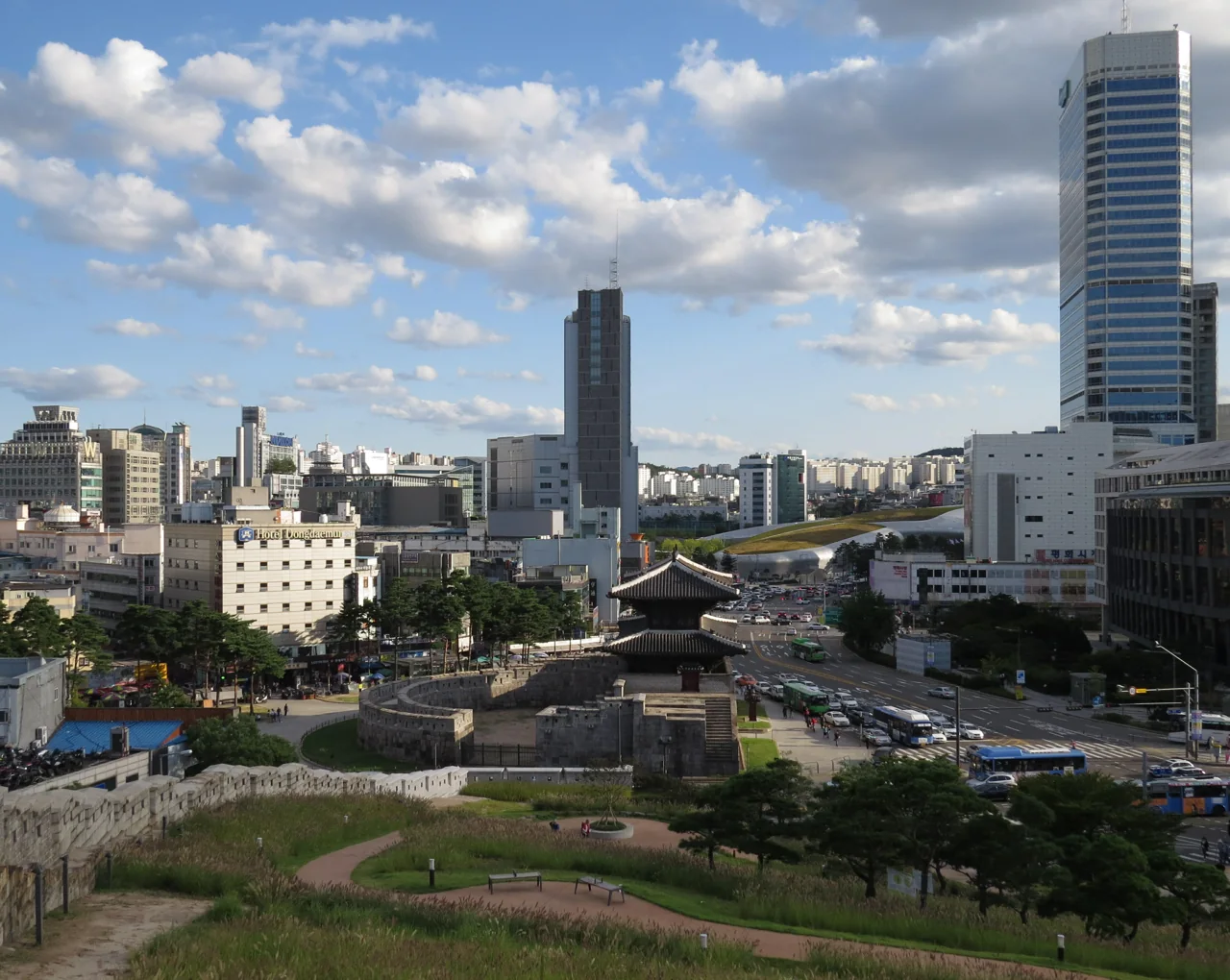
8. Along Cheonggyecheon to Dongmyo Flea Market
The Cheonggyecheon stream runs past the front of Pyeonghwa Market, and its walking path is an easy way to move between the markets without dealing with traffic. Follow it east and after a short walk you reach Dongmyo, home to Seoul’s best known flea market.
Dongmyo Flea Market
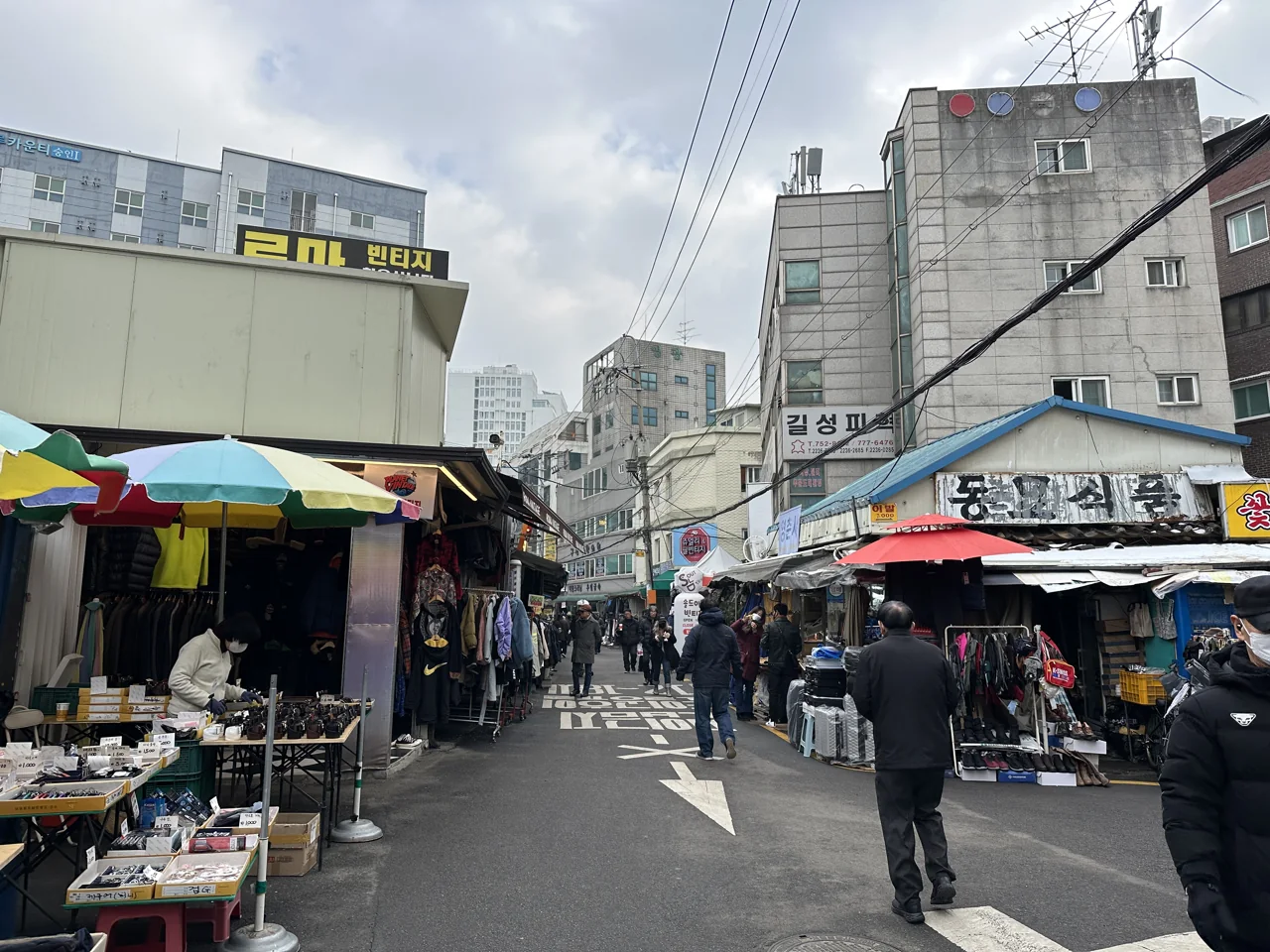
Dongmyo Flea Market is in Sungin-dong, by Exit 3 of Dongmyo Station. The Korea Tourism Organization says holiday afternoons are the best time. On weekdays only some stalls open, while at weekends the market runs all day. Each stall keeps its own hours.
What you find is secondhand clothes, old household things, records, cameras and tools, spread out on tables and on the ground. Korean bloggers like it for cheap vintage clothes, and many say people who know what they are looking for do best. Prices are open to bargaining. Ask before you photograph a stall, since many sellers put up “no photos” signs.
The shrine behind the market
The market takes its name from Dongmyo, officially Seoul Donggwanwangmyo, a shrine to Guan Yu, the general from the Three Kingdoms story. It is a listed Treasure, it is open every day of the year, and entry is free. It is a calm spot to step into after the crowds.
South of Dongmyo, across the stream, are the Hwanghak-dong flea market and a street of kitchen and furniture shops. They make a good extra stop if you like browsing old things.
Map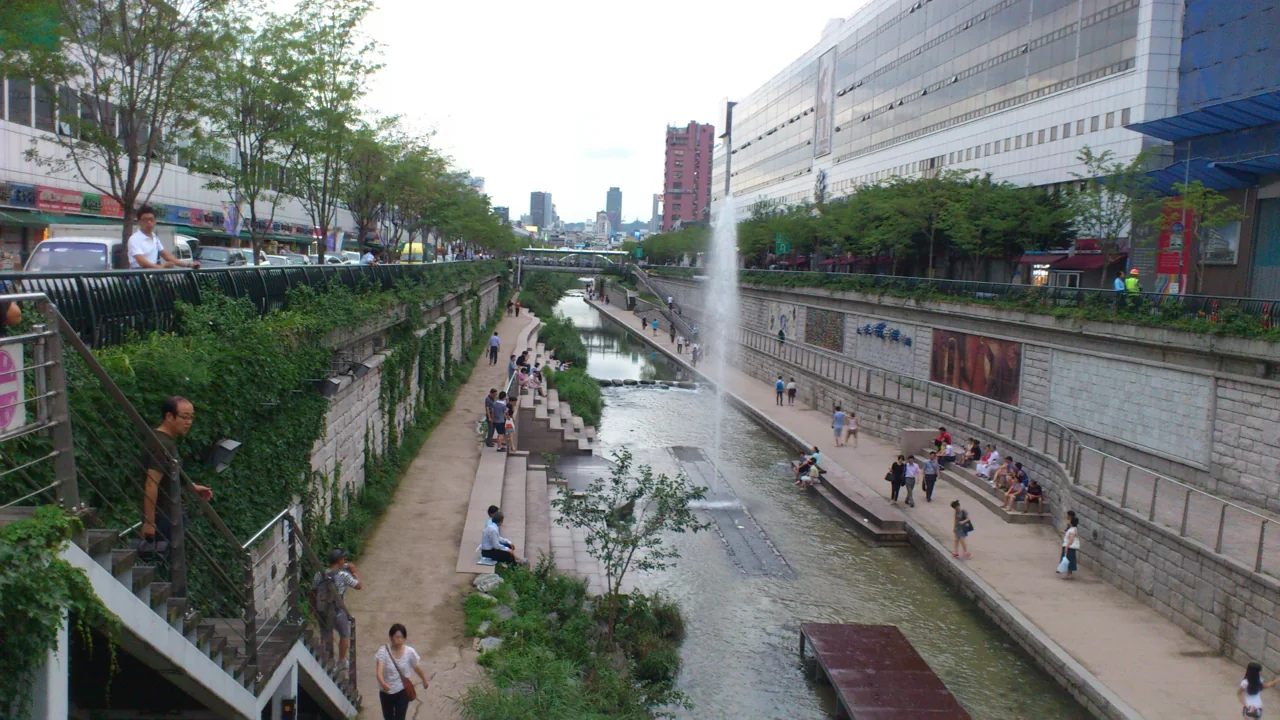
9. Dakhanmari Alley and the grilled fish alley
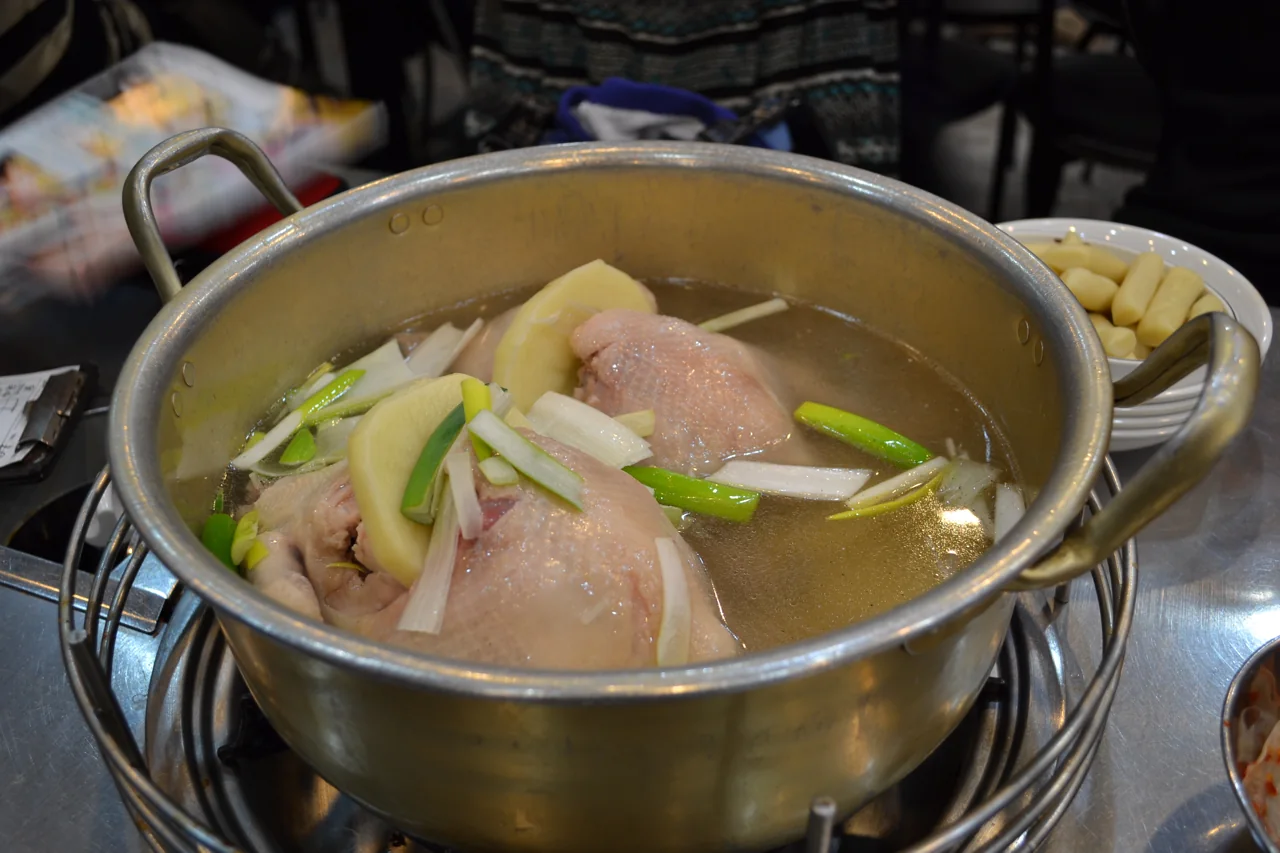
North of the stream near Exit 9 of Dongdaemun Station, in the Jongno 5-ga area, two small food alleys sit side by side. One serves dakhanmari, a whole chicken boiled in a pot at your table. The other grills fish outside over briquette and charcoal fires.
Dakhanmari: what it is and where to go
The name everyone uses is Jin Okhwa Halmae Wonjo Dakhanmari at 18 Jong-ro 40ga-gil. Last orders are at 11:30pm, and according to its menu on Naver, a chicken costs a bit over 30,000 won. There are other dakhanmari restaurants in the same alley too, such as Wonhalmae Somunnan Dakhanmari, and reviews say some have menus in foreign languages.
The complaint that comes up most in reviews, in every language, is this one: “Nobody told us how to eat it.” So here is the order most shops expect.
- Sit down and say how many chickens. There is really only one dish, so the chicken usually comes on its own. You just decide how many for your group.
- Let the staff cut it. Once the pot is boiling, staff cut the whole chicken into pieces with scissors at the table.
- Mix your own dipping sauce. Combine dadaegi (a red chilli paste), soy sauce, vinegar and mustard in your small dish. The dadaegi is very hot, so start with a little.
- Add garlic, then kimchi. Put garlic in the pot, and later add kimchi to change the taste of the broth.
- Rice cakes early, noodles last. Order tteok sari (rice cakes) early so they soak up the broth. Order kalguksu sari (noodles) only after the chicken is finished, to cook in what is left.
Expect a queue, tight tables and fast service. Bloggers suggest going on a weekday in the late afternoon and avoiding normal lunch and dinner times.
The grilled fish alley
Right next door, fish is grilled on racks outside the shops over briquette and charcoal fires: mackerel, Spanish mackerel, yellow croaker and hairtail. You order a fish and it comes as a set meal with rice, a stew and side dishes. These shops started as cheap meals for market workers, and Koreans love them for the smoky taste. Opening hours vary by shop.
For more ideas on what to try, see what to eat in Korea.
10. Central Asia Street and Sindang-dong tteokbokki
Near Exits 5 and 12 of Dongdaemun History & Culture Park Station, in Gwanghui-dong, the shop signs switch to Cyrillic letters. This is Central Asia Street, a few blocks of Russian, Uzbek, Kazakh and Mongolian restaurants, bakeries and shops.
The street grew up when Russian traders started coming to Dongdaemun to buy fabric, and the restaurants followed them. It is a short walk from DDP, so it fits easily into an evening of shopping.
What to order
Samsa, a meat pastry baked in a clay tandoor oven, is the dish reviews mention most. Round loaves of lepyoshka bread come out of the same ovens. For a full meal, try plov (rice cooked with meat and carrots), shashlik (grilled skewers), manti (large dumplings) or borscht. Korean bloggers are big fans of the carrot salad, and the Russian bakeries sell honey cake.
Several restaurants here have almost the same name, a version of Samarkand, so if a friend recommends one, get the exact address. There is also a building full of Mongolian shops and restaurants, New Geumho Tower, known locally as Mongol Town.
Tteokbokki and late night snacks
Sindang-dong Tteokbokki Town at 221 Dasan-ro, near Sindang Station, is a street of restaurants serving spicy rice cakes cooked in a pan at your table. It is one stop from Dongdaemun History & Culture Park on Line 2 or a longer walk south.
At night, tent stalls near the malls sell fish cake skewers, tteokbokki and hotteok (sweet filled pancakes). They are fine for a snack between shops. Gwangjang Market, the famous food market, is also within walking distance in Jongno 4-ga, to the west.
11. What to know before staying in Dongdaemun
Plenty of travellers base themselves in Dongdaemun, and hotel reviews and blogs tend to agree on why. It also has some downsides that are worth knowing before you book.
Why people choose it
Airport limousine buses stop right in front of several hotels. Subway Lines 1, 2, 4, 5 and 6 all pass through, so most of the city is one ride away. Many reviewers say rooms are a little bigger and a little cheaper than in Myeongdong. And if you shop late, you can drop your bags in your room and go back out.
What reviewers complain about
Rooms on the main road can hear shop loudspeakers, and rooms at the back can hear delivery trucks loading at night. Some hotels are older and look it. After the subway stops, you will need a taxi.
Hotels in the area
Hotels on Jung-gu’s official list inside the shopping area include Novotel Ambassador Seoul Dongdaemun Hotels & Residences (238 Eulji-ro), Sotetsu Hotels The Splaisir Seoul Dongdaemun (226 Jangchungdan-ro), Hotel The Designers DDP (293 Toegye-ro), Nine Tree Hotel Dongdaemun (224 Eulji-ro), Ramada Seoul Dongdaemun (354 Dongho-ro), Toyoko Inn Seoul Dongdaemun II (325 Toegye-ro), Travelodge Dongdaemun (359 Dongho-ro) and Hotel Skypark Kingstown Dongdaemun in the Hyundai Outlet building. Hotel U5, Acube Hotel and Mangrove Dongdaemun are nearby too.
Airport bus 6001 has stops named after Nine Tree Dongdaemun, Novotel Ambassador and Toyoko Inn, so the bus pulls up at the door. Bus 6002 stops at Jongno 6-ga, by the JW Marriott Dongdaemun.
There are also many small guesthouses and city-registered homestays in the side streets of Gwanghui-dong, Sindang-dong and Hwanghak-dong. To compare Dongdaemun with other areas, see where to stay in Seoul.
12. Subway stations and airport buses for Dongdaemun
Four subway stations serve the area, and picking the right one saves a lot of walking. The area is bigger than it looks on a map.
| Station | Lines | Closest to |
|---|---|---|
| Dongdaemun History & Culture Park | 2, 4, 5 | DDP, Doota Mall, Central Asia Street |
| Dongdaemun | 1, 4 | Heunginjimun Gate, the fabric market, Dakhanmari Alley |
| Dongmyo | 1, 6 | Dongmyo Flea Market, the toy street |
| Sindang | 2, 6 | Tteokbokki Town, Hwanghak-dong |
Useful exits
The Dongdaemun tourist information centre is about 18m from Exit 14 of Dongdaemun History & Culture Park Station. Dongmyo Flea Market is at Exit 3 of Dongmyo Station. The toy street is at Exit 4 of Dongdaemun Station or Exit 6 of Dongmyo Station. For the chicken alley, head for the Exit 9 side of Dongdaemun Station, and for Central Asia Street, the Exit 5 and 12 side of Dongdaemun History & Culture Park Station. Fares and transfers are in the Seoul subway guide.
Airport limousine buses from Incheon
Two airport limousine routes serve Dongdaemun. Bus 6001 stops at Dongdaemun DDP and Dongdaemun History & Culture Park Station, plus hotel stops such as Nine Tree Dongdaemun, Western Co-op, Novotel Ambassador, Euljiro Co-op and Toyoko Inn, and then carries on toward Myeongdong and Seoul Station.
Bus 6002 comes from Cheongnyangni and stops at Dongmyo, Dongdaemun (Heunginjimun) and Jongno 6-ga (JW Marriott Dongdaemun) before heading on to Hongik University. It does not stop at Dongdaemun History & Culture Park, so check which bus serves your hotel.
Both cost 17,000 won for adults and 12,000 won for children. Seats are first come, first served, there is no online booking, and you can pay with a transit card or cash. Other ways into the city are in getting from Incheon Airport into Seoul.
Getting back late
If you stay out for the wholesale floors, the subway will have stopped by the time you leave. Take a taxi, or look for night bus N6002 in your map app.
13. A sample day, holiday closures and the information centre
You don’t need a fixed plan for Dongdaemun, but it helps to match each part to the right time of day. This is the order many bloggers follow. Use it as a starting point.
A day from morning to night
Daytime: start at Heunginjimun Gate, then either walk up the wall to Naksan Park or browse the fabric market. Have lunch in the chicken alley or the grilled fish alley, then follow the Cheonggyecheon stream to Dongmyo.
Evening: look around DDP and its exhibitions, then shop at Doota Mall, dundun or Hyundai Outlet. Have dinner on Central Asia Street.
Night: after sunset, catch DDP 365 Light, then see Heunginjimun lit up or the lit wall on Naksan. On a weeknight, finish with a look around the wholesale buildings.
On Friday and Saturday nights the wholesale buildings are shut, so keep those evenings for retail malls and food. On a rainy day, DDP, the underground shopping centre and the malls keep you indoors (more ideas in Seoul when it rains). Myeongdong is close on Line 4, so the two pair well (see the Myeongdong guide), and for a different kind of evening there is the Hongdae guide. The full city plan is in the Seoul itinerary.
Holidays, money and bags
Around Seollal and Chuseok, most malls and markets close for several days, and each building posts its own holiday schedule. If you are visiting then, check the building you want before you go.
The Dongdaemun Tourist Information Centre is at 247 Jangchungdan-ro, in front of the Goodmorning City building. It is open from 10am to 1am and closed over the Seollal and Chuseok holidays, with help in Korean, English, Japanese and Chinese. The building behind it may be rebuilt, so the centre could move. Check its location before you head there.
There are several money exchange counters in the area, including one on the ground floor of Migliore. Cash is handy on the wholesale floors, and money and currency exchange in Korea covers the basics. If you want to shop late with free hands, some blogs use luggage storage shops near Dongdaemun Station.
🎡Things to Do12
🚇Getting Around4
🧭All-Korea essentials114
Frequently asked questions
Images: Photographs via Wikimedia Commons: lumoplank (CC0), TealAlligator (CC BY-SA 4.0), Mumbo jiggy (CC BY-SA 3.0), Dquai (CC BY-SA 4.0), Kuroiniisan (CC BY-SA 3.0), Seefooddiet (CC BY-SA 4.0), Rtflakfizer (CC BY-SA 4.0).