
Yeosu Travel Guide: the Island Expo, the Sea Cable Car and the Ferries
Yeosu keeps most of its sights within walking distance of one station and puts the rest behind a ferry timetable. Here is how far the bridges reach, when the boats sail, and where to buy the expo ticket.
| Getting there | The KTX runs from Yongsan in Seoul to Yeosu EXPO in about three hours. The station sits beside Odongdo and the expo grounds. |
|---|---|
| The island expo | It runs 5 September to 4 November and closes for one day on 6 October. The main site is at Jinmo in Dolsan; two more venues are on islands. |
| Tickets | An adult day ticket is 15,000 won, or 12,000 won bought ahead. Partner discounts around town only work with a ticket bought at the gate that day. |
| The cable car | There are no reservations. A ticket bought online is valid from the next day, so buy at the booth if you want to ride today. |
| Now free | Hyangiram and Heungguksa dropped their admission charge, and Jinnamgwan reopened after a ten-year restoration. |
| Taking a boat | Coastal ferries will not issue a ticket without photo ID. Bring your passport. Geomundo is a two-hour sailing each way. |
1. Yeosu is compact in the middle and scattered everywhere else
2. The train drops you where you want to be
3. How far the bridges actually reach
4. You cannot board a ferry without photo ID
5. The island expo happens in four places at once
6. Where you buy the expo ticket changes the price
7. Leave the car behind on expo days
8. The sea cable car does not take reservations
9. Odongdo is an island you walk to
10. The old town is best on foot
11. Jinnamgwan has reopened
12. Yi Sun-sin left traces all over the city
13. Hyangiram and Heungguksa are now free
14. Dolsando has its own set of things to do
15. Yeosu at night is a different town
16. Geumodo is twenty-five minutes by boat
17. Geomundo and Baekdo take a full day, or better, two
18. Nangdo and Gaedo sit side by side and are reached differently
19. Three directions outside town
20. Where to sleep decides your next day
21. Getting around town
22. What to eat
23. Rainy days
24. When to come
25. Putting the days together
Yeosu sits on the south coast of Korea, roughly three hours by train from Seoul and two from Busan. It is a port town that most foreign itineraries skip, and this year it has a reason to be on one. This is the south-coast chapter of our Korea travel guide, and it works differently from coastal towns like Gangneung or Sokcho.
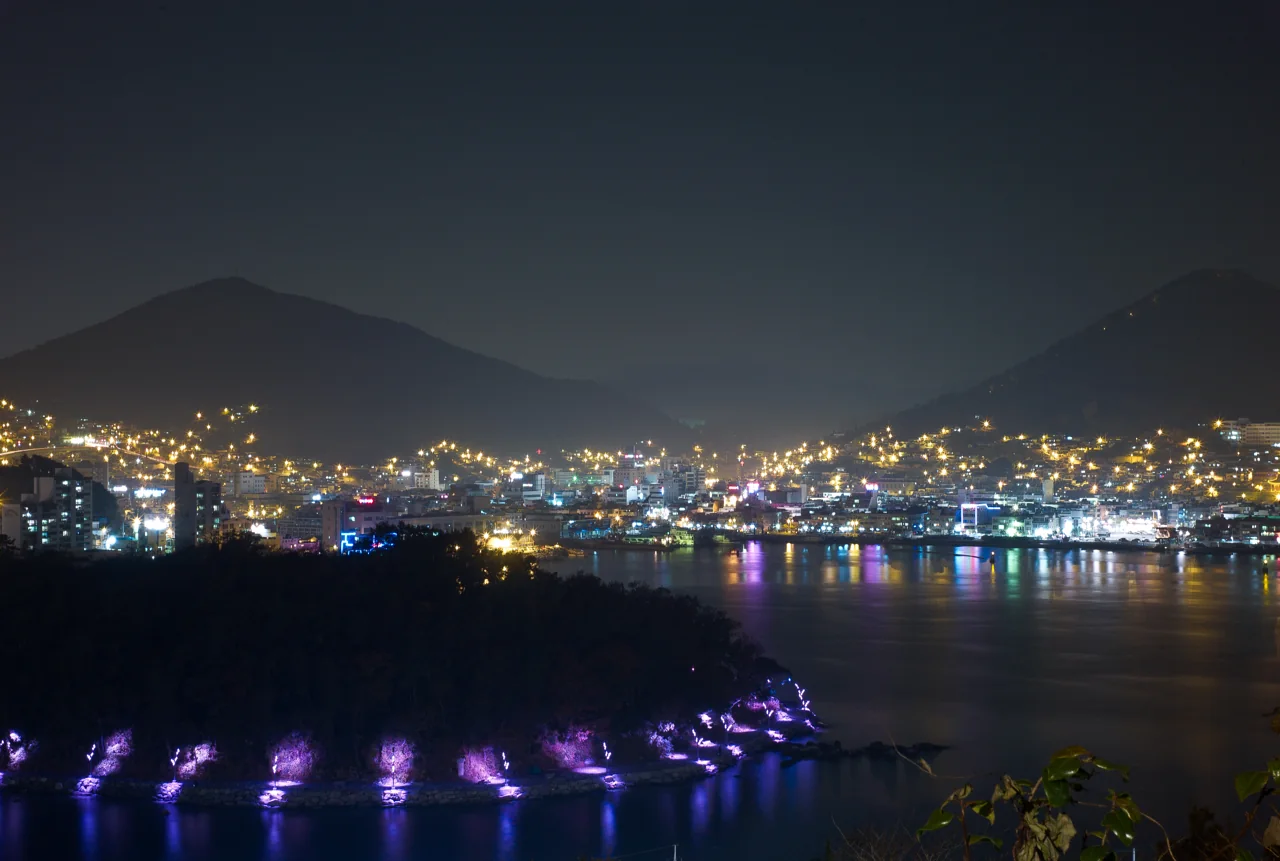
1. Yeosu is compact in the middle and scattered everywhere else
Open a map of Yeosu and one thing stands out. Almost everything with a name sits in a tight cluster around Yeosu EXPO stationMap, and then the map empties out.
Odongdo, the sea cable car, the aquarium, the food stall street, Jinnamgwan and Yi Sun-sin Square are all five to ten minutes from the station by car, and several of them are walkable. Then the next tier is a long way out. Hyangiram takes over half an hour of driving, Heungguksa a little over twenty minutes, and the harbours where the ferries leave are further still.
The city divides itself into nine areas
Yeosu’s own tourism office splits the city into nine areas: downtown, Odongdo and the expo grounds, Dolsando, the industrial complex to the north, Hwayang, Yeojaman, and then Geumodo, Nangdo and Gaedo, and Geomundo with Baekdo. The first six you can drive to. The last three need a boat.
This is where planning a trip here starts. There is as much to see on the boat side as on the road side. What the boat side does not have is anywhere to eat. Restaurants are heavily concentrated downtown, and the island areas have only a handful between them. If you give a day to an island, sort out food before you go.
There are a great many islands
The city counts 365 islands in its waters. Only a few dozen are inhabited and the rest are uninhabited rocks and outcrops. For a visitor the list narrows to about ten, and even those split into the ones a bridge reaches and the ones only a boat reaches.
One direction a day
There is a trap in the map. The islands look close together, so two places that sit a finger-width apart look like an easy hop. They are not. The tip of Dolsando and the far side of Hwayang are barely apart on paper but a long drive back through town in practice, because the bridges from the two sides have not met yet.
So plan Yeosu one direction per day. A Dolsan day, a Hwayang day, and a separate day for any island that needs a boat. That single rule saves more time than anything else on this page.
How long do you need? Two days covers the town comfortably. Add an island reached by boat and it becomes three. Reaching Geomundo pushes it to four.
2. The train drops you where you want to be
From Seoul the KTX to Yeosu leaves from Yongsan, not Seoul Station. This catches people out. Yongsan is on Line 1 and the Gyeongui-Jungang line and is easy to reach, but it is a different station from the one most Korea itineraries start at.
The run takes about three hours and there are seventeen departures a day. The fastest are just under three hours. A few services stop at Seodaejeon and take roughly forty minutes longer, so it is worth checking that when you pick a train. The first train leaves Yongsan a little after five in the morning and arrives around eight; the last leaves in the evening and gets in after midnight. Coming back, trains run from five in the morning until about ten at night.
The station’s location is the real advantage
What makes Yeosu EXPO station good is not the speed but where it puts you. Walk out and the expo groundsMap are right there, Odongdo is a walk away, and the cable car’s Jasan station is five minutes by car. Drop your bag and the first afternoon is usable.
There are also express and intercity buses, and Yeosu has a small airport with domestic flights. Moving between Korean cities in general is covered in our guide to getting around Korea. Slower ITX and Mugunghwa trains run direct from Yongsan too, taking about five hours.
Book the return first. Every way into Yeosu has a fixed number of seats. On weekends and holidays the evening trains back to Seoul sell out before anything else.
3. How far the bridges actually reach
The islands around Yeosu look strung together on a map. In practice the bridges built from the two sides do not meet yet. Not knowing that is how people end up driving an hour to reach somewhere that looked adjacent.
The Dolsan side
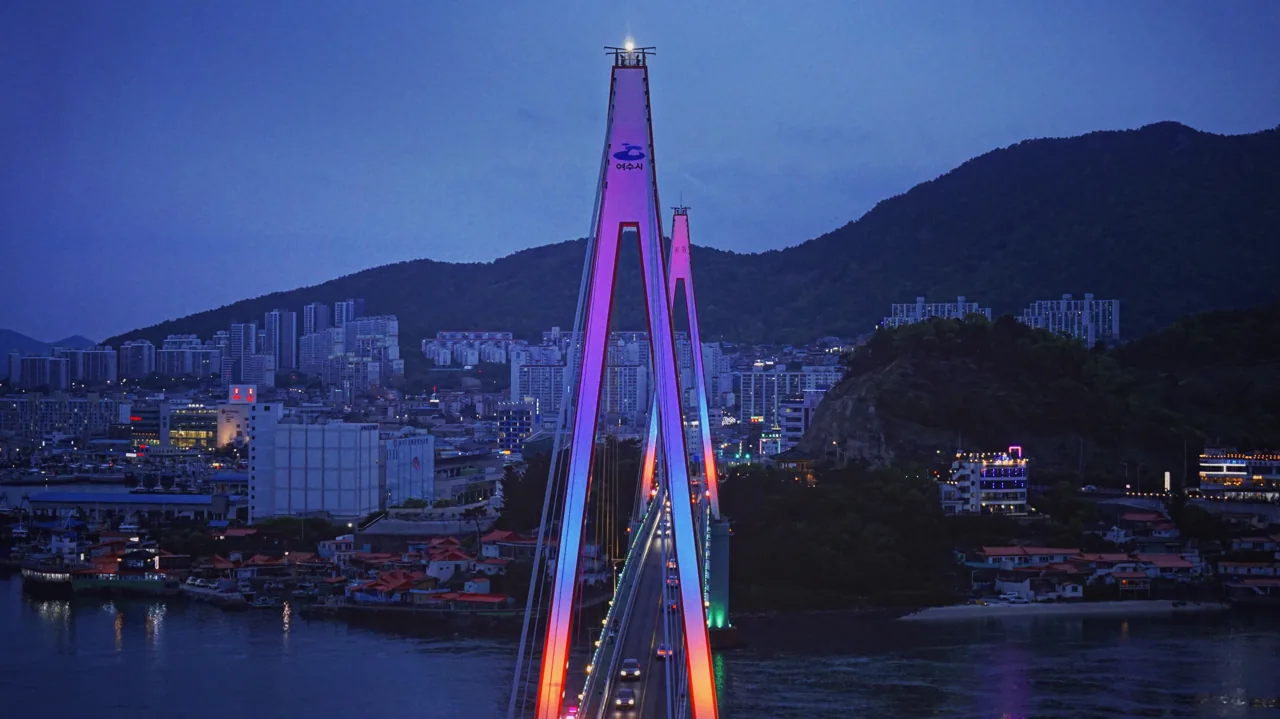
From downtown, Dolsan BridgeMap crosses to Dolsando. It was finished in December 1984, the second road bridge to an island ever built in Korea, and it is lit at night in shifting colours. A second and wider crossing, Geobukseon Bridge, was completed before the 2012 world expo and carries most of the traffic now. Follow Dolsando to its far end and you reach Hyangiram.
From Dolsando another bridge continues to Hwataedo. And there the road stops.
The Hwayang side
On the other side of town, a bridge from Hwayang reaches Baekyado, and a chain of further bridges links Jobaldo, Dunbyeongdo, NangdoMap and Jeokgeumdo all the way to Goheung on the mainland. The route has a name, the Baekri Seomseom-gil, and Yeosu counts eleven bridges and ten islands along it.
The two sides will join later
The road between Hwataedo and Baekyado is still under construction. The city gives 2028 as the completion date; some press reports say 2027, so the sources disagree. When it opens, several more islands join the road network. Until then, Gaedo needs a boat.
Gyeongdo is a three-minute crossing
The resort island of Gyeongdo sits directly off the city and shows up in a lot of hotel searches. It has no bridge yet. The link road is being built with a target of 2029, so for now you take a small ferry from the fishing port at Gukdong. The crossing is three minutes and boats run from twenty past five in the morning until midnight, roughly every ten minutes. Cars go across too, for four or five thousand won depending on engine size.
If you book a room on Gyeongdo, remember the last boat is at midnight. An evening in town has to end in time to catch it.
4. You cannot board a ferry without photo ID
Boats to the islands are coastal passenger ferries, and they run under rules that differ from buses and trains. The larger ones leave from the Yeosu coastal ferry terminalMap, the short hop to Geumodo leaves from Singi harbourMap on Dolsando, and boats towards Gaedo and Nangdo leave from Baekya harbourMap.
The first thing to know is that they will not issue a ticket without identification. For a foreign visitor that means your passport. Korean nationals show a residence card or driving licence, students show a student card, and small children need a family document. Checking identity and issuing tickets takes time, so get to the harbour with some to spare.
Few sailings, and some days none
Depending on the route there are between two and nine sailings a day. Some routes do not run at all on certain days. The boat towards Dunbyeong is tied up on Wednesdays, Saturdays and Sundays, and only goes the full distance on Tuesdays. If your island day is a Saturday, check before you commit.
| To | From | How long |
|---|---|---|
| Geumodo | Singi harbour, Dolsando | 25 minutes, nine sailings a day |
| Geumodo (Hamgumi) | Baekya harbour | 30 to 40 minutes |
| Gaedo | Baekya harbour | 15 to 20 minutes |
| Geumodo, Ando, Yeondo | Yeosu coastal ferry terminal | 1 hour 35 to 1 hour 40 |
| Geomundo | Yeosu coastal ferry terminal | 2 hours, two sailings a day |
Some boats take cars, some do not
Two ferries to the same island can differ on this. The Singi and Baekya boats carry vehicles; the Geomundo boat carries passengers only, so on Geomundo you walk or use island transport. Vehicle spaces cost extra and fill up first, so book several days ahead if you want to bring a car.
Check the boat out before the boat in
Getting to an island is rarely the problem. Leaving it is. An early last sailing quietly shortens your day on the island. Geumodo has boats into the evening; the last one off Geomundo goes at twenty to four in the afternoon. Fix the return sailing first and fill in the day around it.
Weather stops boats
Wind or fog will keep a ferry tied up. Fog around Yeosu is worst in early summer and the wind is strongest in winter. Autumn is the steadiest time for anything involving a boat, with little fog and not much rain. Tickets can be booked through the Korea Shipping Association’s ferry site, and the terminal has a phone line for sailing status.
5. The island expo happens in four places at once
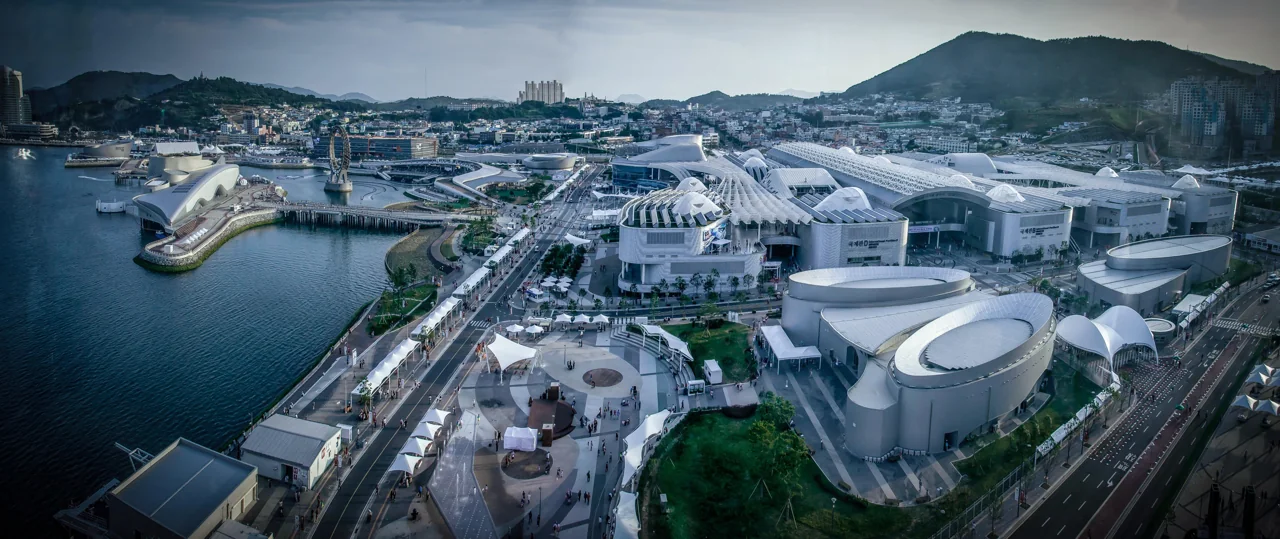
The 2026 Yeosu World Island Expo runs from 5 September to 4 November, closing for a single day on 6 October so that overseas pavilions and food vendors can change over and the site can be serviced. The theme is islands, the sea and the future, with about thirty countries taking part.
The detail most people miss is that the expo is not in one place.
| Venue | Where | Getting there | Open |
|---|---|---|---|
| Main site | Jinmo, Dolsando | Across the bridge by car or shuttle | 10:00 to 21:00 |
| Secondary | Yeosu expo grounds | Beside Yeosu EXPO station | 10:00 to 18:00 |
| Secondary | Gaedo | Ferry from Baekya harbour | 10:00 to 18:00 |
| Secondary | Geumodo | Ferry from Singi harbour | 10:00 to 18:00 |
The secondary venues shut at six while the main site stays open until nine. The two on islands are also bound by ferry times. Seeing the Gaedo or Geumodo venue means a morning boat out and an afternoon boat back, which is a whole day. There is no version of the trip where you finish at the main site in the evening and then cross to an island.
What is at the main site
Pavilions are organised as themed islands: a main theme pavilion, marine ecology, the future, culture, treasure, food and market, and international exchange. The theme pavilion runs through three linked zones and ends in a media show. Outside there are eight themed outdoor areas covering Korean islands such as Dokdo, Cheongsando and Gapado, alongside Madagascar, the Azores, the Maldives and Easter Island.
Ticket booths open at half past nine and close at eight in the evening, and the last entry is eight, not nine. Nine is when the site closes.
The island venues are a different thing
Gaedo and Geumodo are less about pavilions and more about showing the islands themselves, with village facilities, walking routes and programmes, plus a campsite that closes one day a week. Programme times vary, so if an island venue is your reason for going, check what is running that day before you fix the boat.
6. Where you buy the expo ticket changes the price
There are a dozen ticket types, but for a visitor the question is simply whether to buy ahead or at the gate. There is a catch in that choice.
| Ticket | Adult | Youth | Child | Notes |
|---|---|---|---|---|
| Day ticket | 15,000 | 9,000 | 6,000 | Bought ahead: 12,000 / 8,000 / 5,000 |
| Family ticket | 32,000 for four | Bought ahead: 25,000 | ||
| Evening ticket | 8,000 | 5,000 | 3,000 | Entry from 17:00, sold at the gate only |
| Group | 12,000 | 8,000 | 5,000 | Ten or more for foreign visitors, twenty for residents, entering together |
| Season ticket | 60,000 | 50,000 | 40,000 | Bought ahead: 48,000 / 40,000 / 32,000. Named holder only |
Ages run adult 19 to 64, youth 13 to 18 and child 7 to 12. Under-sevens and over-seventy-fives go free, as do holders of certain national service and welfare cards, a severely disabled visitor with one companion, and residents of Yeosu’s island villages.
Worth noting for a group: the group rate starts at ten people for foreign visitors where residents need twenty. Everyone has to enter at the same time, and the group ticket is sold at the gate.
Buying ahead is cheaper and cancels the partner discounts
Here is the part that decides it. The expo has arranged discounts at attractions, hotels and restaurants around Yeosu, and those discounts only apply to a ticket bought at the on-site booth that day. A ticket bought online or through a reseller does not qualify, and the discounts cannot be stacked with anything else.
So: coming for the expo alone and going home, buy ahead and save three thousand won a head. Staying two nights and planning to use the cable car, an attraction and a restaurant, buying at the gate can leave you better off, since partner rates commonly run between ten and thirty per cent. The discount applies once a day per person and you have a week from using a partner to visit the expo.
Tickets are fully refundable until the event ends, but not once used, and a multi-ticket counter purchase cannot be partly refunded. Cancellations are processed on weekdays between nine and five.
7. Leave the car behind on expo days
The main site is on Dolsando, where the roads are narrow and parts run to a single lane. The organisers say so themselves: on weekends and holidays, getting in and out of the site can take an hour or two on its own.
City buses are free during the expo
For the duration of the event, city buses in the Dolsan area and towards the main site cost nothing. Tap your transit card and it charges zero. That alone removes most of the reason to drive.
Eleven free shuttle routes
Free shuttles link outlying car parks and city landmarks to the main site, nine routes on the mainland and two on islands.
| Route | From | Frequency |
|---|---|---|
| EXPO station | Yeosu EXPO station, direct | Every 3 to 7 minutes |
| Gukdong | Gukdong car park and the waterfront park | Every 5 to 10 minutes |
| Jinnam stadium | Jinnam stadium and the intercity bus terminal | Every 7 to 20 minutes |
| Sights route | EXPO station, Yi Sun-sin Square, the marine park | Every 17 to 23 minutes |
| Gaedo | City hall to Baekya harbour, then a loop on the island | Every 60 minutes |
| Geumodo | A loop from Yeocheon harbour around the island | Every 90 minutes |
If you arrive by train, the EXPO station shuttle is the one to use. It runs often enough that waiting is not really part of the plan.
If you do drive
There are eleven temporary car parks, and the six outlying ones hold far more cars than the ones nearest the site. They are at the station, Gukdong harbour, Jinnam stadium, city hall, Yi Sun-sin Park and Mangma stadium. Park on the edge and shuttle in is the organisers’ own advice. Public car parks charge half price during the expo.
Roads around the site change too. The coastal road becomes one-way, a key left turn towards Dolsan Bridge is closed, and Dolsan bus routes detour to match.
There is a way in from the water. Catamarans run to the main site from Gukdong harbour, 35 minutes for 15,000 won, and from the expo grounds, 50 minutes for 20,000 won. With an expo ticket the fare is halved.
8. The sea cable car does not take reservations
This is the busiest attraction in Yeosu, a crossing of about a kilometre and a half over the harbour between Dolsan Park and Jasan Park. It also runs on rules that catch out anyone used to booking things in advance.
A ticket bought online cannot be used today
There is no reservation system and tickets are sold on the day, at the station. Buy online and you get an exchange voucher, and that voucher is not valid on the day of purchase. It works from the following day. If you are standing in Yeosu and want to ride this afternoon, buying on your phone will not help.
Discounts work the same way. Group, senior, disability, veteran and resident rates apply to counter purchases only. You cannot present an online ticket and claim the difference; the ticket has to be cancelled and rebought at the booth.
Two kinds of cabin
| Cabin | Return adult | Return child | One-way adult | One-way child |
|---|---|---|---|---|
| Standard | 17,000 | 12,000 | 14,000 | 9,000 |
| Crystal | 24,000 | 19,000 | 19,000 | 14,000 |
Child fare covers ages three to about twelve. A standard cabin seats eight and a crystal cabin six. There is also a private cabin option at 350,000 won for the whole car, which skips the queue.
What you cannot take into a crystal cabin
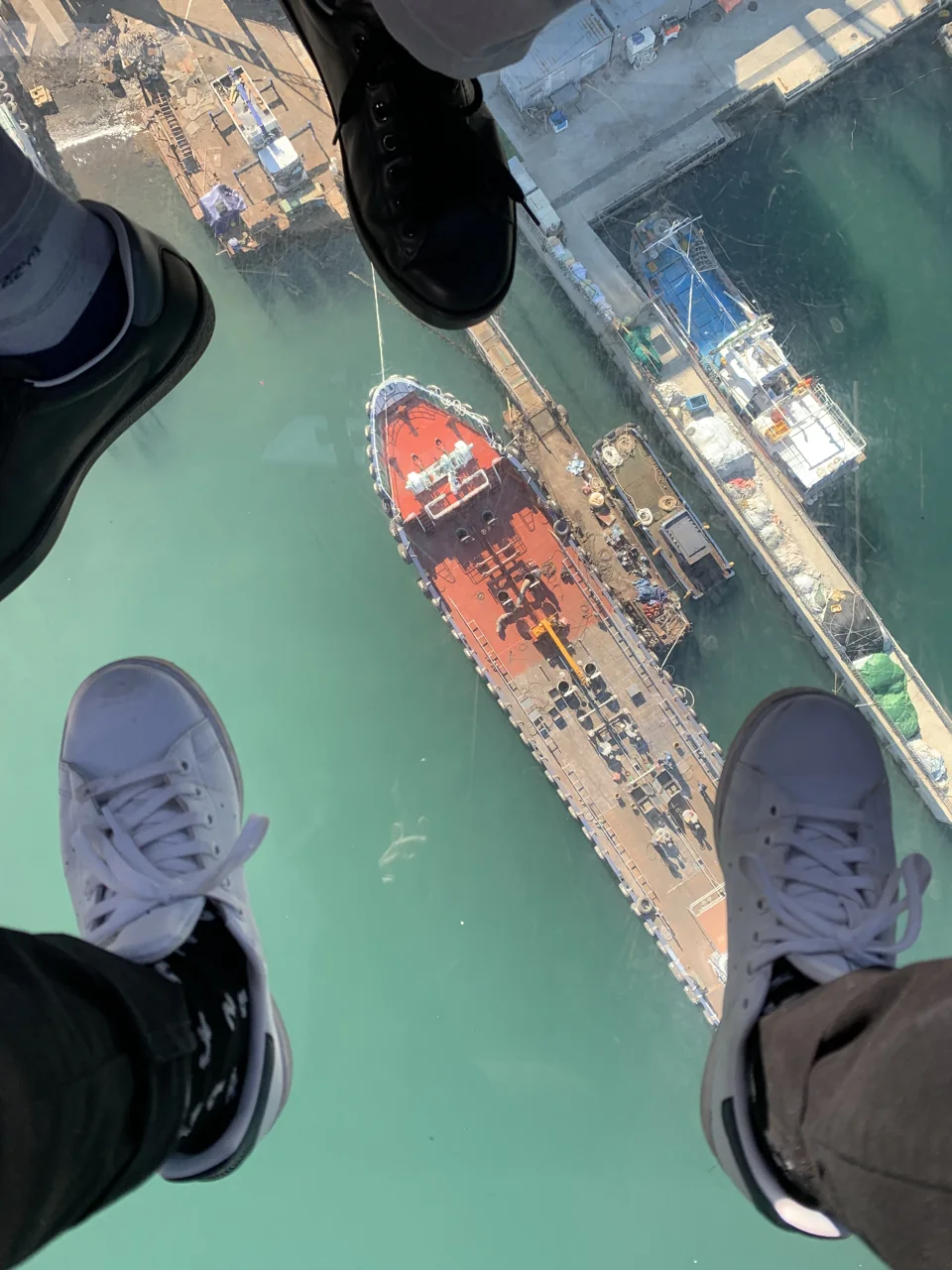
The crystal cabins have toughened glass floors, so wheelchairs, prams, bicycles, suitcases and trekking poles are not allowed in them because of the risk of scratching. If you use a wheelchair or have a pram, ask for a standard cabin. Food and drink have to be finished before the barrier, and pets travel in a fully enclosed carrier.
One late start a month
There is a scheduled safety inspection, and on that day the cable car starts running at two in the afternoon. The date is posted each month on the operator’s site. Otherwise it runs from half past nine in the morning until half past nine at night.
Either end works: the Dolsan stationMap has more parking, and the Jasan station is closer to Odongdo.
9. Odongdo is an island you walk to
OdongdoMap is an island, but you need neither bridge nor boat. A breakwater path of about 768 metres runs out to it from the car park, roughly a fifteen-minute walk. It is part of Hallyeohaesang National Park and there is no admission charge.
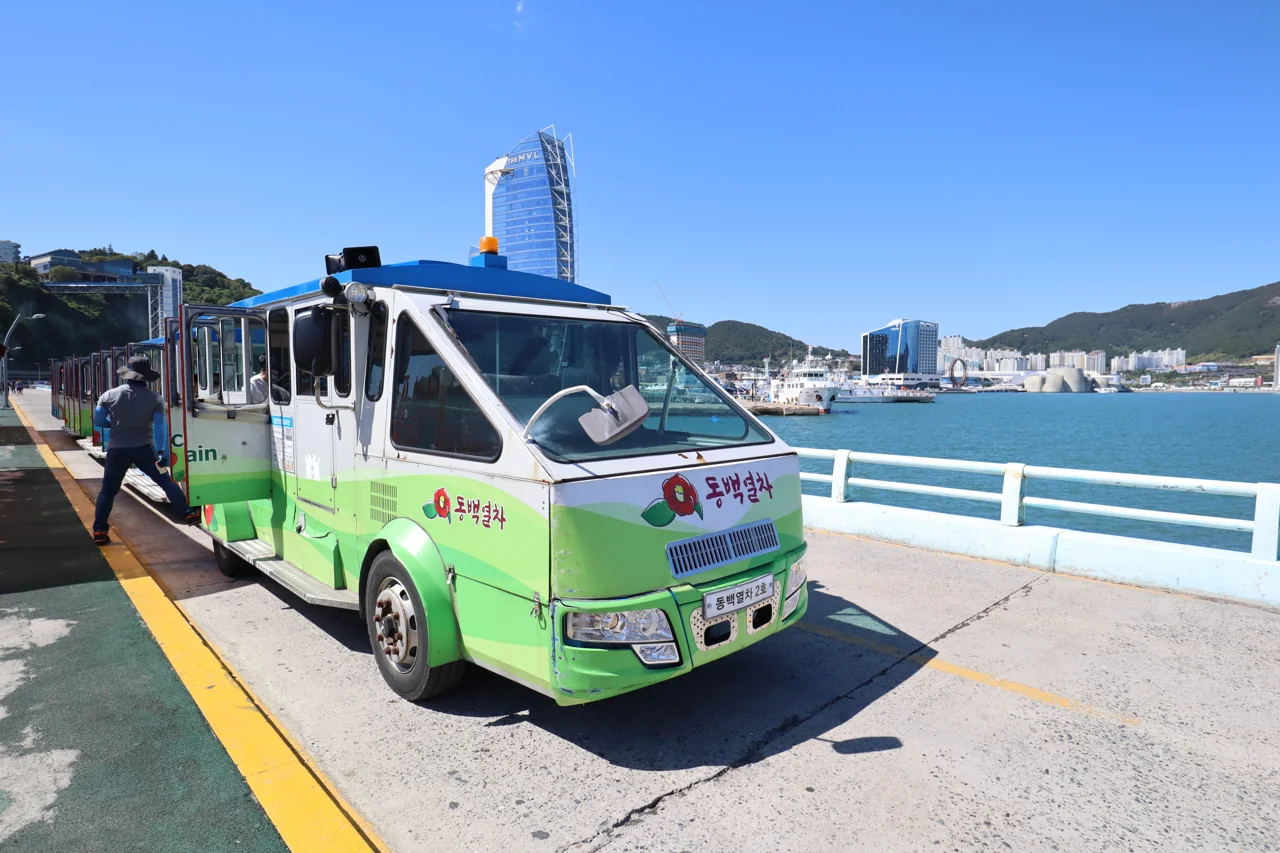
The camellia train
A small road train covers the same path for anyone who would rather not walk it, taking about four minutes.
- One thousand won one way, five hundred for over-65s, Yeosu residents, ages seven to nineteen and students.
- Free for veterans, disabled passengers, under-sevens and Yeosu residents over 65.
- It only sells one-way tickets. Buy again at the far booth for the ride back.
- It stops for an hour over lunch, from twelve to one.
Service runs roughly half past nine to six, extending from around nine in the morning to seven in the evening in the warmer months and finishing at five in winter. The city’s own page contradicts itself here, with a timetable showing a much earlier last departure than the stated hours. If you are going late in the day, ask at the booth.
The camellias flower in late winter
The island is thick with camellia trees. They start in February and peak in March. Outside that window you miss the flowers but the coastal path and the breakwater are good all year. There is a musical fountain in the central square running spring through autumn, on the hour and the half hour for fifteen minutes, weather permitting.
Parking is free for the first thirty minutes, then five hundred won per half hour up to five thousand a day. Leave within five minutes and there is no charge at all.
10. The old town is best on foot
Central Yeosu is small. With Yi Sun-sin SquareMap as the middle point, the waterfront strip takes about an hour to walk. On a busy day, finding a parking space takes longer than the walk itself.
The Gosodong mural alley
Behind the square a hillside lane climbs through about a kilometre of painted walls, with the harbour appearing between the houses as you go. It is a steep walk but the steps are wide. At the top, Gosodae holds stone stelae recording Admiral Yi Sun-sin’s victories.
Markets
The fish market at Gyodong will slice fish for you to eat on the spot; Seosijang is the one for pickled greens and dried seafood. Go in the morning. By late afternoon many stalls are packing up.
Janggundo
A small island sits beside Dolsan Bridge. In 1497 stones were piled underwater around it to block raiders, and it is described as the only underwater fortification of its kind in the country. On the lowest tides you can walk out to it. The rest of the time you look down on it from Dolsan Park.
The waterfront park and the Hamel lighthouse
Benches and stone seats line the shore path, which is where you will find the Hamel lighthouse and a small museum. Hendrick Hamel, the Dutch sailor shipwrecked in Korea in the seventeenth century, spent time in Yeosu, and the museum is an easy walk from the station.
11. Jinnamgwan has reopened
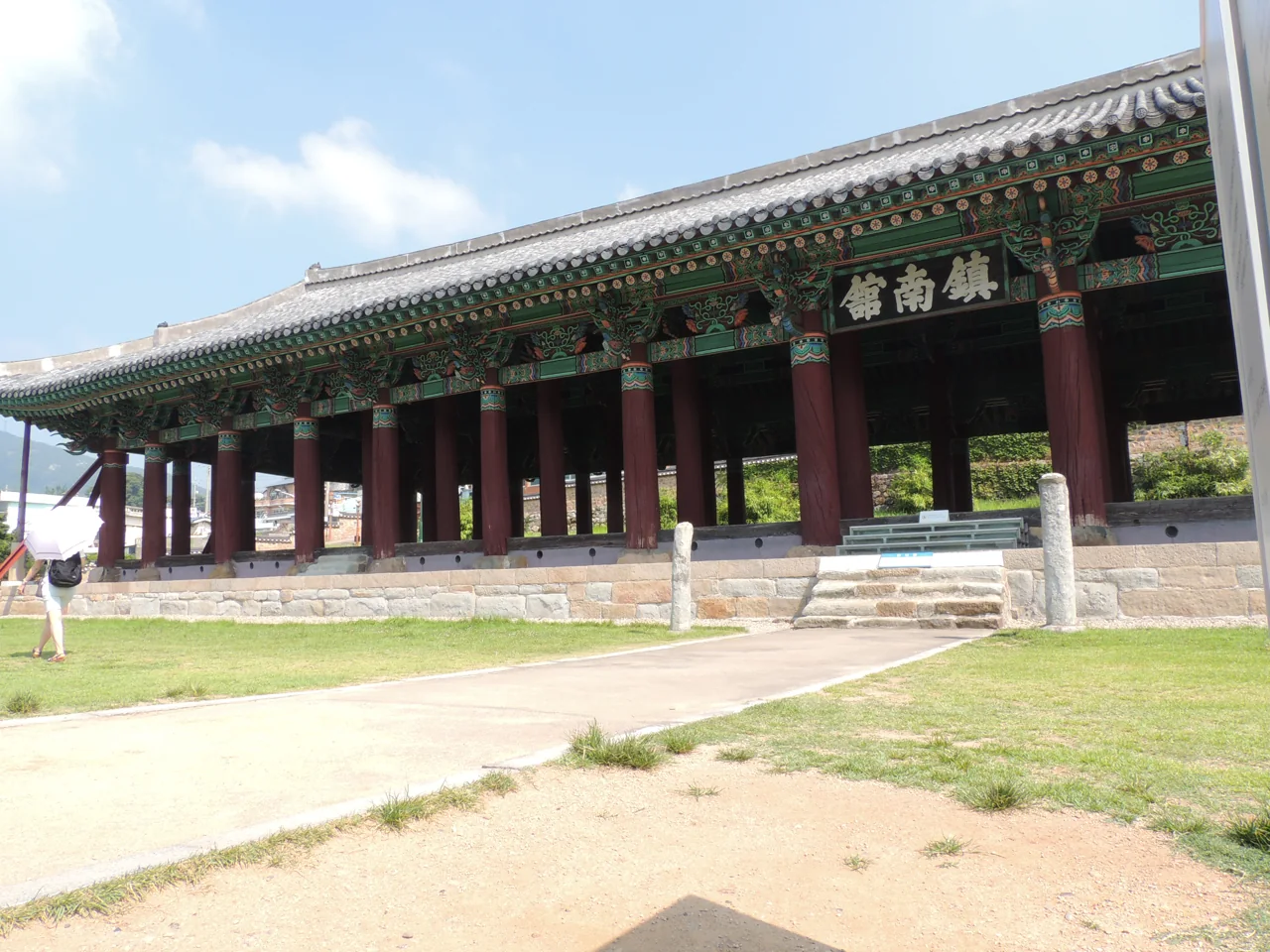
A National Treasure stands in the middle of town. JinnamgwanMap is a single-storey wooden hall built in 1599, the year after the Imjin War ended, on the site Admiral Yi Sun-sin had used as his naval headquarters. It was designated a Treasure in 1963 and promoted to National Treasure status in 2001.
At fifteen bays across and five deep, it is the largest surviving provincial government hall in Korea. During the restoration, two column bases turned up under the floor, which changed the recorded number of pillars.
Most of what is written online is out of date
Jinnamgwan reopened in 2025 after a restoration that ran for ten years. A great deal of travel writing still says it is behind hoardings and can only be seen from outside, and the city’s own tourism page still carries the old notice. It is open.
The relics hall is free
The exhibition hall inside the grounds is free and open every day of the year, from nine in the morning until six in summer and five in winter. Parking is free for the first hour.
Inside there is a scale model of the old naval fortress and a cutaway model of a turtle ship showing where the rowers and gunners sat. Guides give a thirty-minute talk five times a day, at ten, eleven, two, three and four.
In the courtyard stands a stone figure, one of seven carved to look like sentries and fool raiders from a distance. Six are lost; this is the survivor.
12. Yi Sun-sin left traces all over the city
Yeosu was the base of the Joseon navy’s left Jeolla command, which is why so many of its designated heritage sites tie back to the same admiral. Several sit close enough together to do in half a day.
- Chungminsa, the shrine to Yi Sun-sin, is a historic site five minutes from the station by car. It is an easy first stop straight off the train.
- Seonso, the shipyard where turtle ships were built. The dock basin and the stone mooring posts survive. Free to enter.
- The victory stele and the Taru stele at Gosodae, both Treasures. The Taru stele was raised by the admiral’s men after his death.
- A full-size turtle ship sits in front of Yi Sun-sin Square and you can go inside it.
The city runs a sightseeing bus route that strings these together, starting at Yeosu EXPO station and taking in Chungminsa, Jinnamgwan, Gosodae and the square. Without a car that is the simplest way to see them.
A different kind of heritage to the north
Yeosu also holds a set of early modern medical buildings. The Aeyangwon leprosy hospital, its church and the memorial hall to Pastor Son Yang-won are all registered heritage. They are about half an hour north of the station by car, in the same direction as Heungguksa and the Yi Sun-sin Bridge, which makes an easy half-day loop.
13. Hyangiram and Heungguksa are now free
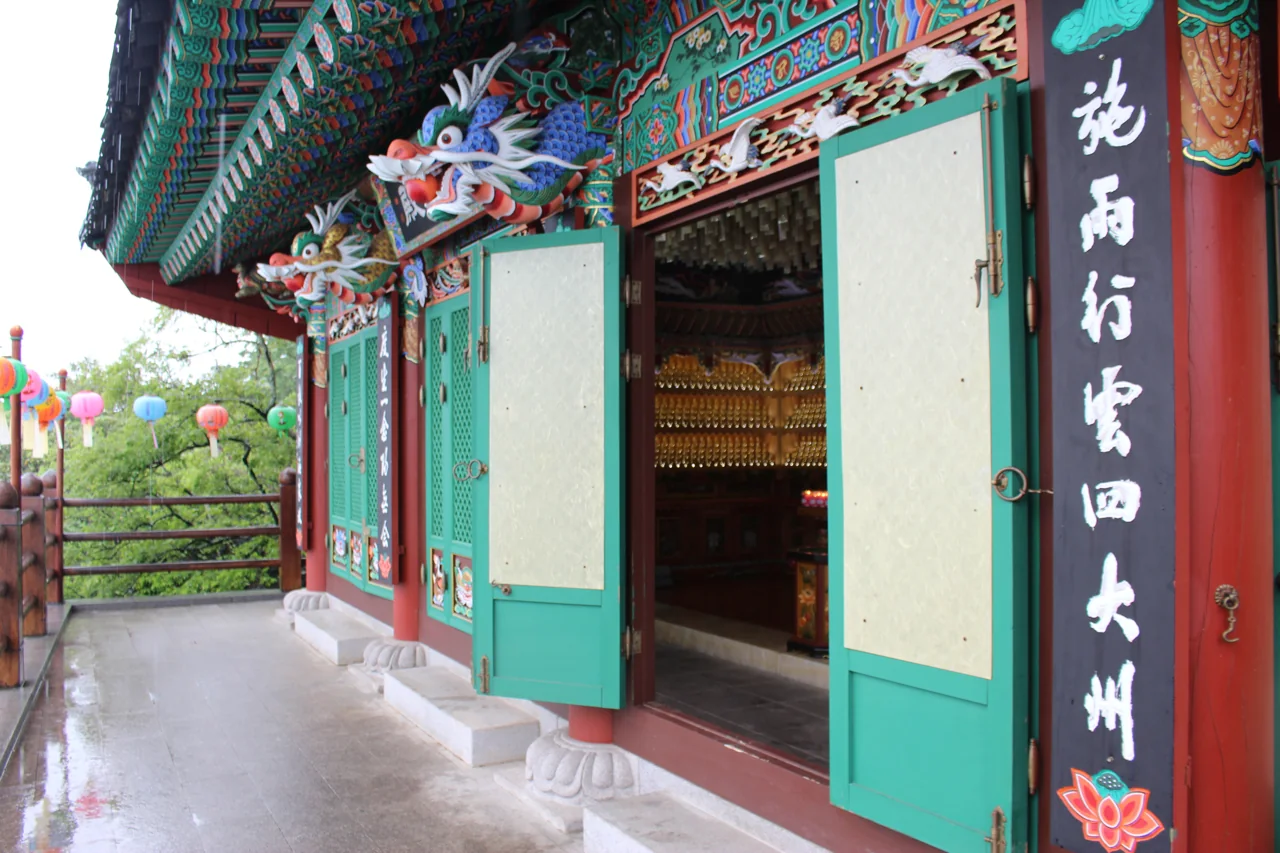
This is the most common thing to get wrong about Yeosu. Plenty of pages still list HyangiramMap at 2,500 won a head. There is no admission charge any more.
An agreement between the national heritage authority and the Jogye Order, backed by a change in heritage law, means temples that hold state-designated heritage no longer collect an admission fee and are compensated instead. Thirteen temples in the province were covered, and in Yeosu that means both Hyangiram and Heungguksa. The ticket booths are now information desks.
Hyangiram is at the far end of Dolsando
It is over half an hour from the station by car, along a road that hugs the water past Dolsan Bridge. The hermitage clings to a cliff, which means a long, steep climb up stone steps from the car park. Anyone unsteady on their feet should think twice.
It is one of the best known places in Korea to watch the sun come up out of the sea, and it is packed on the first day of the year. You can watch the sun set from there too. Parking is free for the first hour, then two hundred won per ten minutes up to five thousand a day.
Heungguksa holds most of the treasures
Of Yeosu’s nationally designated Treasures, the majority are in HeungguksaMap alone. The main hall, the arched stone bridge, the bronze bell, several wooden statues and a mural of the bodhisattva of compassion are all on the list. The mountain around the temple is separately designated as a scenic site.
That mountain, Yeongchwisan, is also known for azaleas in spring. The temple is a little over twenty minutes from the station, in the opposite direction from most of the sights.
14. Dolsando has its own set of things to do
There is more to Dolsando than the temple at the end of it. The stretch just over the bridge holds most of the family attractions in Yeosu.
The art park and the sky walk
A viewing structure and a swing project out over the water about fifteen minutes from the station. There is a sculpture park and a media art exhibition alongside, which keeps it viable in bad weather. During the expo a temporary car park opens here with a shuttle to the main site.
Luge
Not on Dolsando but on the western side of town, gravity carts run down a hillside course. It is often sold combined with the cable car. There is a height requirement, and small children ride with an adult.
Beaches
- Museulmok, ten minutes past Dolsan Bridge. Pebbles rather than sand, so you leave cleaner than you arrived.
- Bangjukpo, on the way to Hyangiram, with pine trees for shade.
- Manseongni, the closest to the station, known for its dark sand.
A zip line over the water
There is a zip line on the Dolsan side, usually bundled with the cable car if you plan to do both. There is a weight limit, so check before booking.
15. Yeosu at night is a different town
A lot of Korean visitors come here specifically for the evening. The shoreline curves in a long arc, which spreads the lights across the water.
On foot
Jongpo Marine ParkMap runs about a kilometre and a half along the shore, taking in the Hamel lighthouse, the cable car, Dolsan Bridge and Geobukseon Bridge in one view. Climb up to Dolsan Park and you look down on both bridges at once, which is generally reckoned the best vantage point in the city.
The food stall street
Nangman PochaMap is a row of eighteen stalls in the plaza under Geobukseon Bridge, serving seafood and drinks with the harbour in front of you.
- Open six in the evening until one in the morning from spring to autumn, five until midnight in winter.
- Closed the first Wednesday of the month, except when that falls in a holiday period, and not at all from April to June or August to October.
- Card payment is the norm.
- Closed when a strong wind or heavy rain warning is in force.
By boat
Sightseeing boats leave from the pier by Dolsan Bridge. Two operators run slightly different trips.
| Trip | When | Length | Adult |
|---|---|---|---|
| Daytime harbour cruise | Daily, afternoons | About 1 hour 10 | 20,000 to 21,000 |
| Night view cruise | Monday to Thursday | About 1 hour 10 | 22,000 to 23,000 |
| Fireworks cruise | Friday to Sunday and holidays | About 1 hour 10 | 43,000 to 45,000 |
The easy mistake here is assuming these are the same trip at different times. The weekday and weekend evening sailings are separate products, and the fireworks one costs roughly double. Booking online is a little cheaper with some operators.
16. Geumodo is twenty-five minutes by boat
Of the islands that need a boat, GeumodoMap is the easiest. From Singi harbour on Dolsando the crossing takes twenty-five minutes and there are nine sailings a day, so the timing is forgiving. Singi harbour is about half an hour from the station by car.
There is also a boat from the city’s coastal terminal, but it calls at several islands and takes an hour and thirty-five minutes. Use Singi if time matters.
The Bireong trail
Bireong is the local word for a cliff. The trail runs along the island’s cut edges for about eighteen and a half kilometres and is designated a scenic site. Each section has a path down into a village, so you can stop partway and come out. One section is plenty for a first visit.
In the Joseon period ordinary people could not set foot here; the island grew timber for palace construction, which is why the forest is still deep.
How long it takes
A section takes three or four hours. Boat out, one section, boat back fills the day. Walking two sections means staying the night. The path is well made but it does run along cliff edges, so be careful in strong wind.
There are very few shops or restaurants on the island. Bring water and something to eat rather than assuming you will find somewhere open when you come back down to the harbour.
Ando is joined by a bridge
From the south end of Geumodo, a 360-metre bridge crosses to Ando. It opened in 2010 and was built with low towers to sit quietly among the islands. The odd part is that reaching Ando takes a boat and then a bridge, because Geumodo itself has no road link.
During the expo a free shuttle loops around Geumodo from Yeocheon harbour, calling at the villages and at Ando, roughly every ninety minutes. You do not need a car on the island.
17. Geomundo and Baekdo take a full day, or better, two
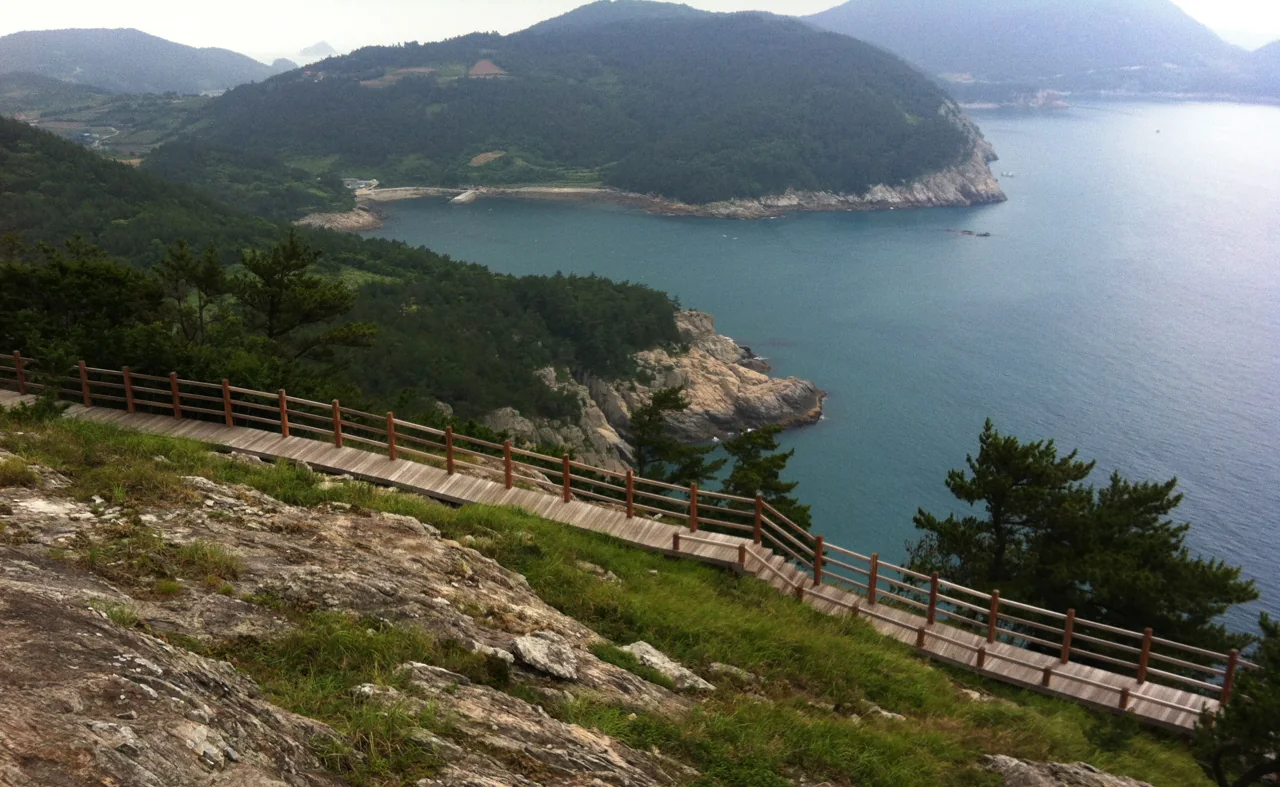
This is the far edge of Yeosu. GeomundoMap is a two-hour sailing from the coastal ferry terminal, calling at several islands along the way.
There are two sailings a day. Boats leave Yeosu at half past seven in the morning and ten past one in the afternoon, and come back from Geomundo at twenty past ten and twenty to four. Take the first out and the last back and you get about eight hours on the island, which is tight once you add the Baekdo boat trip. Most people stay the night.
What is there
The lighthouse on Geomundo was the first lit on Korea’s south coast, and the walk out to it is the main thing people come for. In winter the camellia woods turn red. The island also carries a heavy layer of modern history, from the years when Britain and Russia manoeuvred around it, and the old assembly hall, an undersea telegraph installation and a whole conservation district are registered heritage.
Baekdo is seen from the boat
Baekdo is a cluster of uninhabited rock islands reached by sightseeing boat from Geomundo. You do not land. It is a designated scenic site and the boat turns back after circling. If there is any swell the trip does not run, so check the forecast.
Do not try Geomundo as a day trip. Four hours of the day go on the boat, and the Baekdo excursion needs the rest. A night on the island turns it into a proper visit.
18. Nangdo and Gaedo sit side by side and are reached differently
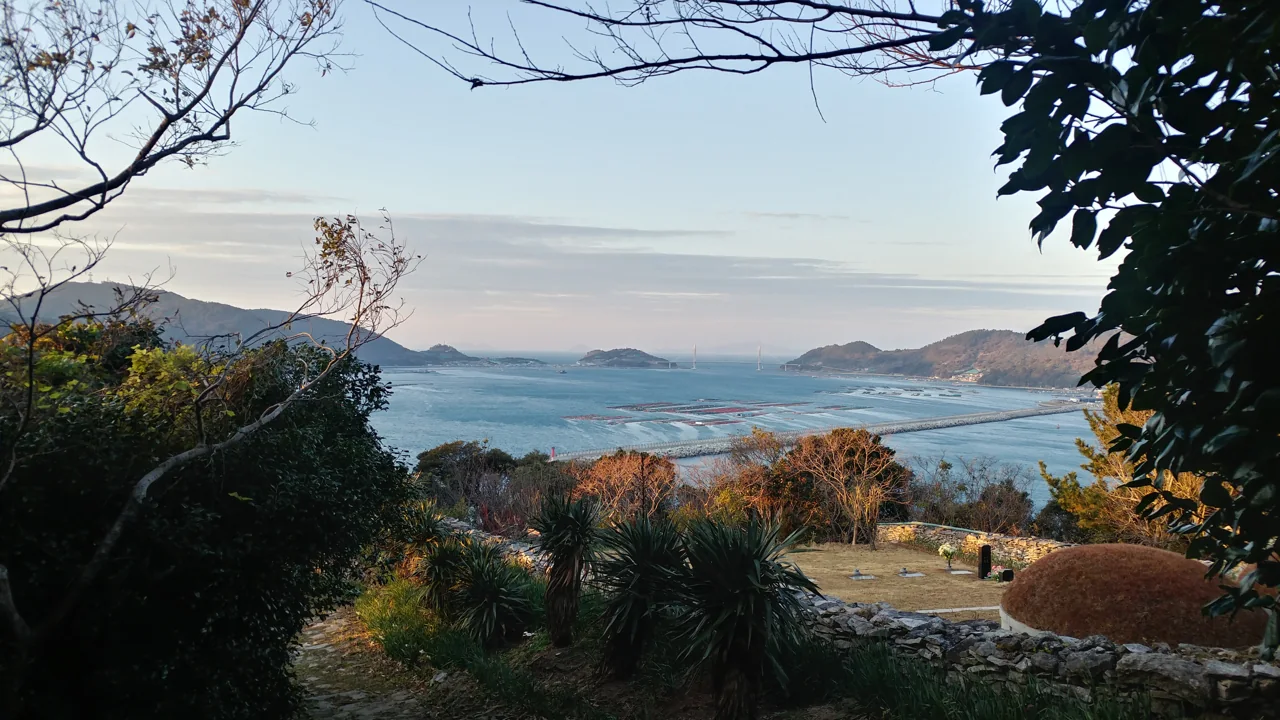
These two islands look like neighbours on the map and are not reached the same way at all. This is where the bridge-and-boat divide becomes a practical problem.
Nangdo you drive to
From Hwayang, bridges carry you over Jobaldo and Dunbyeongdo to Nangdo, about fifty minutes from the station and no boat involved. It is on the Baekri Seomseom-gil, so the drive is part of the point. The island has a beach and a fishing village, and nearby there is a dinosaur footprint site protected as a natural monument.
Keep going over more bridges and you reach Jeokgeumdo, then cross to Goheung on the mainland. You can get from Yeosu to Goheung without a boat.
Gaedo you sail to
Right next door, Gaedo has no bridge. It is fifteen to twenty minutes by boat from Baekya harbour, and Baekya harbour is about forty minutes from the station. In practice that is forty minutes of driving plus twenty of sailing.
One of the expo’s island venues is here. You cross from Baekya to Hwasan harbour on Gaedo, and a free shuttle loops the villages once you land.
When the road between Hwataedo and Baekyado is finished, Gaedo joins the network. The city gives 2028. Until then the boat is the only way.
Sado and Hahwado
A few smaller islands nearby are boat-only. Sado has a tidal path that opens on certain days and a village lane protected as registered heritage. Hahwado is known for its flowers. Sailings are sparse and some days have none, so give either of them a whole day.
19. Three directions outside town
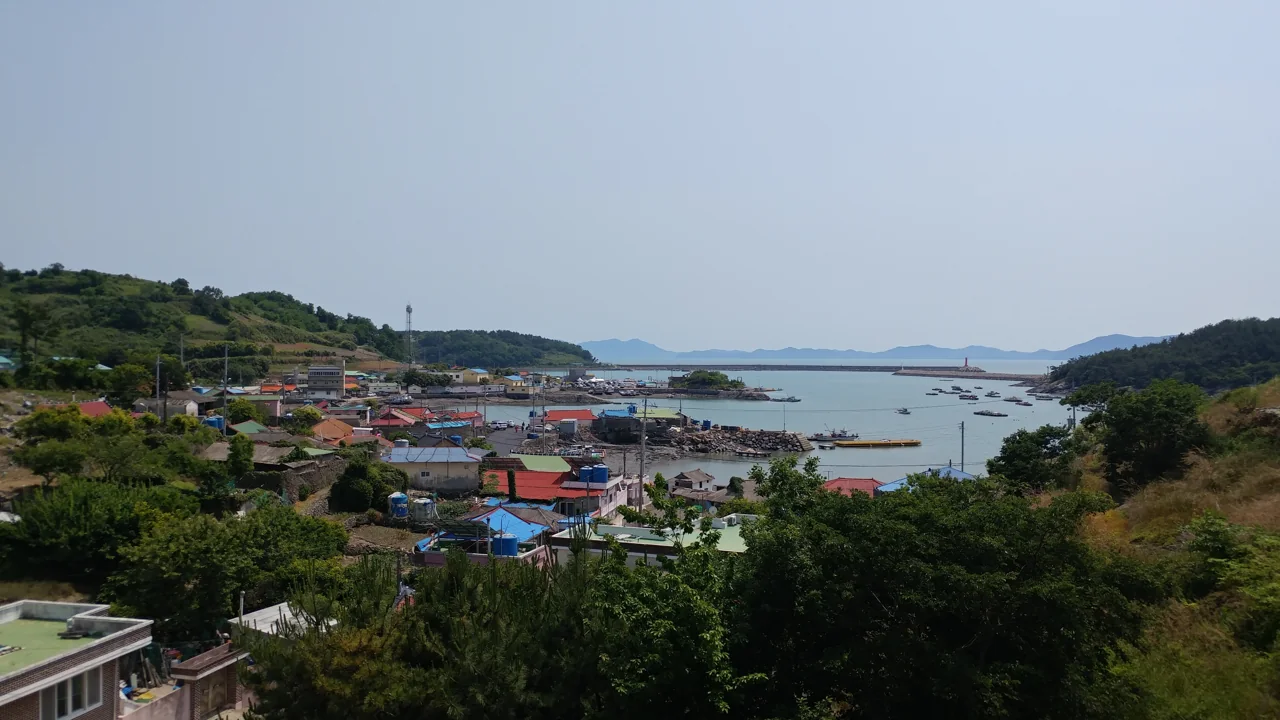
Everything so far has been the centre, Dolsando, or an island. Three other directions are worth a mention if you have a car.
North, past the industrial complex
A large petrochemical complex sits north of the city. The city lists it as a view all the same, because at night the plant lights spread across the shore in a way you will not see elsewhere. At the end of that road is the Yi Sun-sin BridgeMap, a suspension bridge to Gwangyang whose main span is 1,545 metres, a number chosen to match the year the admiral was born.
There is an exhibition hall and rest stop at the bridge, three floors with an indoor viewing deck and a lift, so it works in bad weather. Heungguksa and the Aeyangwon buildings are the same way, which makes a half-day loop.
West, through Hwayang
Before the bridge to Baekyado, Hwayang is quiet countryside. The coast road is a known drive, and there is a beach and a small temple. Few sights, and few people. The road ends at Baekya harbour, where the boats to Gaedo and Nangdo leave.
Yeojaman at sunset
The bay northwest of the city has wide mudflats and is known for sunsets, with tidal flat programmes run by the city. It has the fewest sights of any part of Yeosu, and people still drive half an hour out for the evening light.
20. Where to sleep decides your next day
Yeosu splits into three places to stay, and the choice shapes how the following day runs.
| Area | Good for | Watch out for |
|---|---|---|
| Around Yeosu EXPO station | Odongdo and the expo grounds on foot; easiest with luggage off the train | Few rooms face the water directly |
| Dolsando | Sea views, close to Hyangiram and the main expo site | One bridge in and out, so traffic has no alternative route |
| An island | Quiet, and the views are the reason you came | Your day is tied to the ferry timetable |
For a first visit, the station area is the sensible choice. Most of the sights are walkable and both the shuttles and the city buses use the station as a hub.
Dolsando during the expo
Dolsan is popular for the water views, but during the expo that same road is the route to the main site. The organisers warn of an hour or two just to get in and out at weekends. If you stay there in that window, plan around leaving the car and taking the shuttle.
What sleeping on an island means
Island hotels such as the resort on Gyeongdo need a boat. Gyeongdo is a three-minute crossing but the last boat is at midnight. Stay on Geumodo or Geomundo and that day ends on the island. Plenty of people prefer it that way. It does mean an evening at the food stalls in town is off the table.
Rooms fill up during the expo
Two months of visitors makes Yeosu itself tight. Some people book in Suncheon, under an hour away by car, and drive in. It works, though it lengthens the trip home after an evening out. If you drive, check the hotel actually has parking. Many central places sit in narrow lanes and do not.
21. Getting around town
City buses cost 1,700 won with a transit card, and one transfer within an hour is free as long as it is a different route number. During the expo, buses in the Dolsan area and towards the main site are free.
The double-decker sightseeing bus
A loop leaves Yeosu EXPO station and calls at the aquarium, the cable car car park, Odongdo, the Hamel museum, Yi Sun-sin Square, the fish market and the entrance to Dolsan Park before returning. The circuit takes thirty-five minutes and costs 5,000 won, or 2,500 for residents, students and over-65s. You can get on and off at any stop and pay on board.
It does not run on the first and third Monday of the month. Wheelchairs can board on the lower deck using a manual ramp, and a sign language interpreter can be arranged if you call ahead.
One caution: the official page for this service still carries notices from years ago. Ring to confirm it is running before you plan around it.
Taxis and driving
Taxis are reasonable within the centre, though fares climb once you cross to Dolsando. If you drive, the car parks at Odongdo and Hyangiram are free for an initial period and then charge by time, capped at five thousand won a day, so leaving a car all day is not expensive.
Language
English is patchy outside the main attractions. The expo site and the aquarium are fine; a village on Geumodo will not be. A translation app and the offline map you already use in Korea will cover most of it. Ferry counters in particular are worth approaching with your destination written down.
22. What to eat
Plenty of Korean visitors come to Yeosu mainly to eat, and the city promotes a list of ten local dishes. Korean food in general is covered in what to eat in Korea.
- Dolsan mustard leaf kimchi. Made from greens grown on Dolsando. Milder and more fragrant than the versions elsewhere, and sold vacuum-packed in the markets to take home.
- Gejang. Raw crab cured in soy sauce or in chilli paste, served as a set meal with rice and side dishes. An acquired taste, and the reason many Koreans book the trip.
- Seodae hoe. Tongue sole, sliced raw and dressed with makgeolli vinegar. You will struggle to find it outside Yeosu.
- Conger and pike eel. Eaten in summer, usually as a hot pot you cook at the table.
- Grilled eel, oysters, braised hairtail, cockles and a full multi-dish set meal round out the ten.
Restaurants cluster heavily downtown, around the Gyodong fish market, Seosijang and behind Yi Sun-sin Square. The islands you reach by boat have almost nowhere to eat. If you are giving a day to Geumodo or Geomundo, find out in advance or plan to eat on either side of the crossing.
When you can eat matters
Many places close early. Raw fish restaurants and gejang houses shut when they run out. Late food is concentrated at the harbourside stalls. Breakfast is the harder meal: a few soup places in the markets open early, and some hotels serve it. On a ferry morning there is often nothing at the harbour, so pick something up the night before.
Expo partner restaurants exist too, but the discount only works with a ticket bought at the gate that day.
23. Rainy days
Yeosu loses a lot when it rains, because most of what you came for is the sea and the hills. A few places still work.
The aquarium
It sits inside the expo grounds beside the station, so you can walk there. It is large enough for two hours or more, and it is the most expensive admission in the city. Prices and hours change, so check before you go.
The Jinnamgwan relics hall
Free, open every day, and small. The fortress model and the turtle ship cutaway hold children’s attention, and it is better timed to one of the guided talks.
The Hamel museum and the art park
The Hamel museum on the waterfront is compact. The art park on Dolsando has an indoor media art exhibition alongside its outdoor pieces.
The real problem is the boats
Wind and fog matter more than rain. Any swell keeps the sightseeing boats and the ferries in port. A strong wind warning stops the cable car. The harbourside stalls stay closed as well. If the forecast is bad on your island day, move that day into town. When the boat does not sail there is no alternative.
24. When to come
Yeosu is on the south coast, so winters are mild and summers are hot and humid. For the country as a whole, see the best time to visit Korea. For planning, though, the question that matters is whether the boats run.
Autumn is the steadiest
October is among the driest months here, with few wet days, long hours of sunshine and almost no fog at all. If your trip involves a ferry, this is the easiest time to plan it. The second half of the island expo falls in this window.
Early summer brings fog
June and July are the foggiest months, which delays and cancels sailings, and they are also the wettest. August nights stay warm enough to be uncomfortable. Coming in summer, leave a spare day around anything involving a boat.
Winter is windy
Winter is dry and often sunny but the wind is at its strongest, and more so out on the water. Strong wind stops the cable car and the cruises. On the other hand the Odongdo camellias start in February, so a winter trip focused on the town is quiet and pleasant.
Spring
March is the best of the camellias, and the azaleas on Yeongchwisan follow in April. Fog begins to build over the water around then.
Crowds
Summer holidays and weekends are busy, and Friday and Saturday evenings at the harbour stalls and the cable car mean long queues. Since the cable car takes no bookings, the only defence is going on a weekday or at opening time. During the two months of the expo the whole city is busier; if you want Yeosu without the event, plan around the Dolsan direction and the rest of the city is much less affected.
25. Putting the days together
Everything above turns into a small number of shapes. If you are stitching Yeosu into a longer trip, see how to plan a Korea itinerary.
Two days, town only
Arrive in the afternoon, walk out to Odongdo, and take the evening on the waterfront and at the food stalls. Next morning, the cable car, then Jinnamgwan and the square, then an afternoon train. No boats at all, and short enough walks to work with children or older travellers.
Three days, one island
Add a day and a boat becomes possible. Morning ferry from Singi to Geumodo, one section of the cliff trail, afternoon boat back. Or Baekya to Gaedo. Use the third day for Hyangiram or Heungguksa. Do not put anything else in the island day. The ferry timetable owns it.
Four days, out to Geomundo
Geomundo needs at least four days in total. Morning boat out, a night on the island, the Baekdo excursion the next morning, afternoon boat back. Swell cancels the Baekdo trip, so a spare day helps.
If you are here for the expo
The main site takes half a day. Adding an island venue costs a full extra day, because of the crossing and the six o’clock closing. The evening ticket is worth knowing about: it admits you from five until eight for eight thousand won, so you can spend the day elsewhere and take the site after dark.
One administrative note. Jeollanam-do province and the city of Gwangju merged into a single metropolitan authority, so Yeosu’s address now names that new entity rather than the old province. The city name and boundaries are unchanged and it makes no difference to a visit, but the address may look unfamiliar when you book.
🧭All-Korea essentials138
Yeosu travel questions
Images: Photographs via Wikimedia Commons: thomas park (CC BY 2.0), 허지호 (CC BY-SA 3.0), Cesarexpo (CC BY-SA 3.0), Toobigtokale (CC BY-SA 4.0), Mobius6 (CC BY-SA 4.0), S Shamima Nasrin (CC BY-SA 4.0), Garam (Attribution), Korea.net / Korean Culture and Information Service (CC BY-SA 2.0), Gupdaal (CC BY 4.0).