
Seoul When It Rains: Indoor Things to Do (2026 Guide)
A category-by-category guide to staying dry in Seoul, from free museums and non-verbal shows to aquariums, sky observatories, jjimjilbang, and underground malls you can reach without an umbrella.
| Want one place, all day, no umbrella | Jamsil: Lotte World, the aquarium and Seoul Sky connect underground from the subway |
|---|---|
| Free and completely rain-proof | National Museum of Korea and the War Memorial (both free, huge, indoors) |
| A rainy evening | Nanta or The Painters HERO, non-verbal shows that need no Korean |
| Traveling with kids | Aquariums, Seoul Sky, or Seoul Children’s Museum |
| A couple’s date | An aquarium plus the Starfield Library, an observatory, then a themed café |
| Cold and soaked through | Dragon Hill Spa in Yongsan, open 24 hours |
| Shopping without stepping outside | Goto Mall or the COEX underground shopping city |
1. Rainy day in Seoul: the short answer
2. When is Seoul’s monsoon season, and is 2026 running late?
3. Staying safe in typhoons and heavy downpours
4. Museums and art galleries (mostly free, unbeatable value)
5. Non-verbal shows: the classic rainy-night plan
6. Aquariums: fully indoors, great for families and couples
7. Indoor sky observatories: above the clouds, out of the rain
8. The Jamsil / Lotte World cluster: a whole day under one roof
9. Giant malls and department stores: shop, eat, and explore
10. Underground shopping cities: walk for blocks, no umbrella
11. Jjimjilbang and spas: the best call on a cold, wet day
12. Themed and animal cafés: café-hop while it pours
13. Hands-on indoor experiences: make the most of a wet afternoon
14. VR, arcades, escape rooms, screen sports, and cinema
15. Covered markets and food halls: warm bites out of the rain
16. With kids: rainy-day picks for families
17. When the rain eases: light-rain outdoors and getting around dry
18. Half-day rainy routes, and the bottom line
1. Rainy day in Seoul: the short answer
When it rains in Seoul, you are spoiled for choice, and almost none of it involves getting wet. Start with the free national museums and the War Memorial, then fill the day from a deep bench of indoor options: aquariums, two sky observatories, non-verbal shows, giant malls, underground shopping cities, jjimjilbang spas, themed cafés, hands-on classes, VR arcades, and covered food markets. The single easiest plan is Jamsil, where Lotte World, the aquarium, and Seoul Sky all connect underground so you never open an umbrella.
This guide is organized by category, so you can build a day around whatever you feel like: culture, shopping, food, or just staying warm and dry. Every venue below is genuinely indoor unless noted.
New to the city overall? Pair this with our complete Korea Travel Guide and, for a full multi-day plan, the Seoul 2-day itinerary guide.
2. When is Seoul’s monsoon season, and is 2026 running late?
Seoul’s rainy season (jangma) normally runs for about a month in midsummer, when a stationary front parks over the peninsula. In an average year the rain reaches the central region, including Seoul, around late June and clears by late July.
| Region | Typical start | Typical end |
|---|---|---|
| Jeju | Jun 19–21 | around Jul 20 |
| Southern Korea | Jun 23–25 | Jul 24–25 |
| Central (Seoul) | Jun 25–27 | Jul 26 to end of July |
The average spell lasts roughly 30 to 31 days. Rather than one long gentle drizzle, recent years have leaned toward short, intense downpours that hit hard and then pass.
Expect a hot summer alongside it: June and July have about a 60% chance of running warmer than average. Because the monsoon set in late, the heat and heavy rain may end up compressed into a shorter window. From roughly late July into October comes a second wet spell (autumn jangma) and typhoon season, peaking in August and early September.
3. Staying safe in typhoons and heavy downpours
Most of the time, rain in Seoul is just an excuse to head indoors. But during a typhoon or a concentrated cloudburst, some outdoor operations pause and low ground can flood fast.
- River cruises, cable cars, and some open-air attractions may suspend service in a storm.
- Check the Korea Meteorological Administration forecast and any emergency alert text messages each morning before you set out.
- Avoid low-lying ground and streamside walkways such as the Cheonggyecheon and the Han River parks, where water can rise quickly.
4. Museums and art galleries (mostly free, unbeatable value)
Seoul’s big museums are the best rainy-day value in the city: several are free, all are indoors, and each can easily absorb two or three hours. They also cluster conveniently, so you can pair two in a single afternoon.
| Venue | Location / subway | Hours | Admission | Why it works in the rain |
|---|---|---|---|---|
| National Museum of Korea | Ichon (Line 4, Gyeongui–Jungang) | Mon, Tue, Thu, Fri, Sun 10:00–18:00; Wed & Sat 10:00–21:00 | Permanent & Children’s galleries free | Vast survey of Korean history, among Asia’s largest; the Pensive Bodhisattva hall alone is worth the trip |
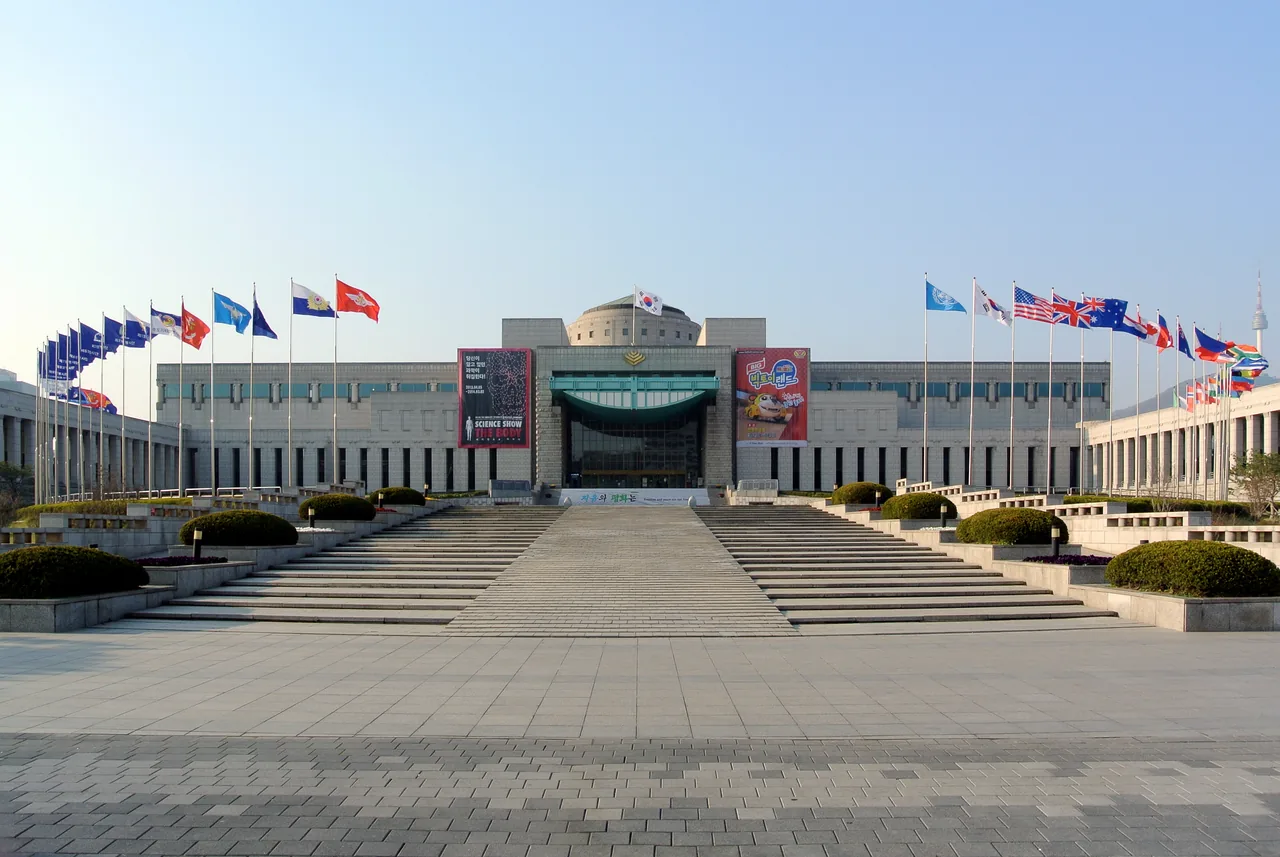
| War Memorial of Korea | Samgakji (Lines 4, 6), Yongsan | Tue–Sun 09:30–18:00; closed Mondays | Free | Six indoor exhibition halls, around 10,000 artifacts covering military history including the Korean War |
| MMCA Seoul (National Museum of Modern and Contemporary Art) | Anguk (Line 3), Samcheong-dong | Mon, Tue, Thu, Fri, Sun 10:00–18:00; Wed & Sat 10:00–21:00 | Permanent collection free; special exhibitions ticketed (a combined ticket runs up to about ₩10,000 when several paid shows are on); free on Wed & Sat evenings (18:00–21:00) and on Culture Day (last Wed of the month) | Korean and international contemporary art, with a library and theater on site |
| Leeum Museum of Art | Hangangjin (Line 6), Hannam-dong | Tue–Sun 10:30–18:00 (last entry 17:30); closed Mondays | M1 antiquities free; M1+M2+M3 combined ₩20,000 | Three buildings by Mario Botta, Jean Nouvel, and Rem Koolhaas; the architecture is part of the show |
Want more, all free? Add the National Folk Museum and the National Palace Museum (both inside Gyeongbokgung), the Seoul Museum of History, and the Seodaemun Prison History Hall (small paid entry). Check exact opening times before you go, since only the four venues above are listed here with confirmed data.
Pins: National Museum of Korea Map, War Memorial of Korea Map, MMCA Seoul Map, Leeum Map.
5. Non-verbal shows: the classic rainy-night plan
A non-verbal show is the perfect rainy evening: you sit in a fully enclosed theater for well over an hour, and there is no language barrier at all. Two long-running productions anchor the scene.
| Show | Venue | Length | Showtimes | Price |
|---|---|---|---|---|
| NANTA | UNESCO Hall 3F, Myeongdong (also Hongdae theater) | ~100 min | Tue–Fri 17:00, 20:00; Sat 14:00, 17:00, 20:00; Sun 14:00, 17:00 | from about $37 (VIP / S / A seating) |
| The Painters HERO | Kyunghyang Art Hill 1F, Gwanghwamun | ~75–80 min | 14:00, 17:00, 20:00 | all ages |
NANTA is a comedy built entirely from kitchen rhythms, chopping, drumming, and slapstick with cooking tools, so nothing gets lost in translation. The Painters HERO paints ten pictures live on stage, mixing K-pop choreography into the act.
Because most showtimes are afternoon and evening, these slot in perfectly after a day of indoor sightseeing. To book NANTA seats ahead, you can reserve through
. Pin: NANTA Map.
6. Aquariums: fully indoors, great for families and couples
Aquariums are the definition of a rainy-day win: entirely enclosed, atmospheric, and easy to stretch across an hour and a half. Seoul has two major ones, and both sit on top of a subway station.
| Aquarium | Location / subway | Hours | Admission | Highlights |
|---|---|---|---|---|
| SEA LIFE COEX Aquarium | Samseong (Line 2), beneath COEX Mall | Open daily 10:00–20:00 (last entry 19:00) | ~₩35,000 at the gate; ~₩27,000 online | Around 650 marine species; about 1.5 hours to walk through; free for children under 36 months (passport needed) |
| Lotte World Aquarium | Jamsil (Lines 2, 8), Lotte World Mall B2 | Weekdays 10:00–20:00; weekends & holidays 10:00–22:00 (last entry 1 hr before close) | ~₩35,000 (child ~₩31,000) at gate; ~₩25,500 online | 13 themed zones, an 85 m underwater tunnel, belugas and otters; connects directly to Jamsil Station underground |
.
The Jamsil option is the more rain-friendly of the two, since you can arrive from the subway without ever surfacing. Pins: SEA LIFE COEX Aquarium Map, Lotte World Aquarium Map.
7. Indoor sky observatories: above the clouds, out of the rain
Both of Seoul’s headline observatories are glass-walled and heated, so you stay perfectly dry no matter what the sky is doing. On an overcast day you may even catch a sea-of-clouds effect below you. For tickets, the cable car, love locks and the best time for the night view, see our full N Seoul Tower guide.
| Observatory | Location / height | Hours | Admission | How to get up |
|---|---|---|---|---|
| N Seoul Tower | Namsan summit, ~236 m | Roughly weekdays 10:30–22:30; weekends 10:00–23:00 (last entry 30 min before close; varies by season) | ~₩26,000 at gate; ~₩16,000–21,000 online | Namsan cable car (scenic, but may stop in high wind or heavy rain); Namsan circular bus 02/03 (fully enclosed, safest in rain); or on foot (steep, not advised when wet) |
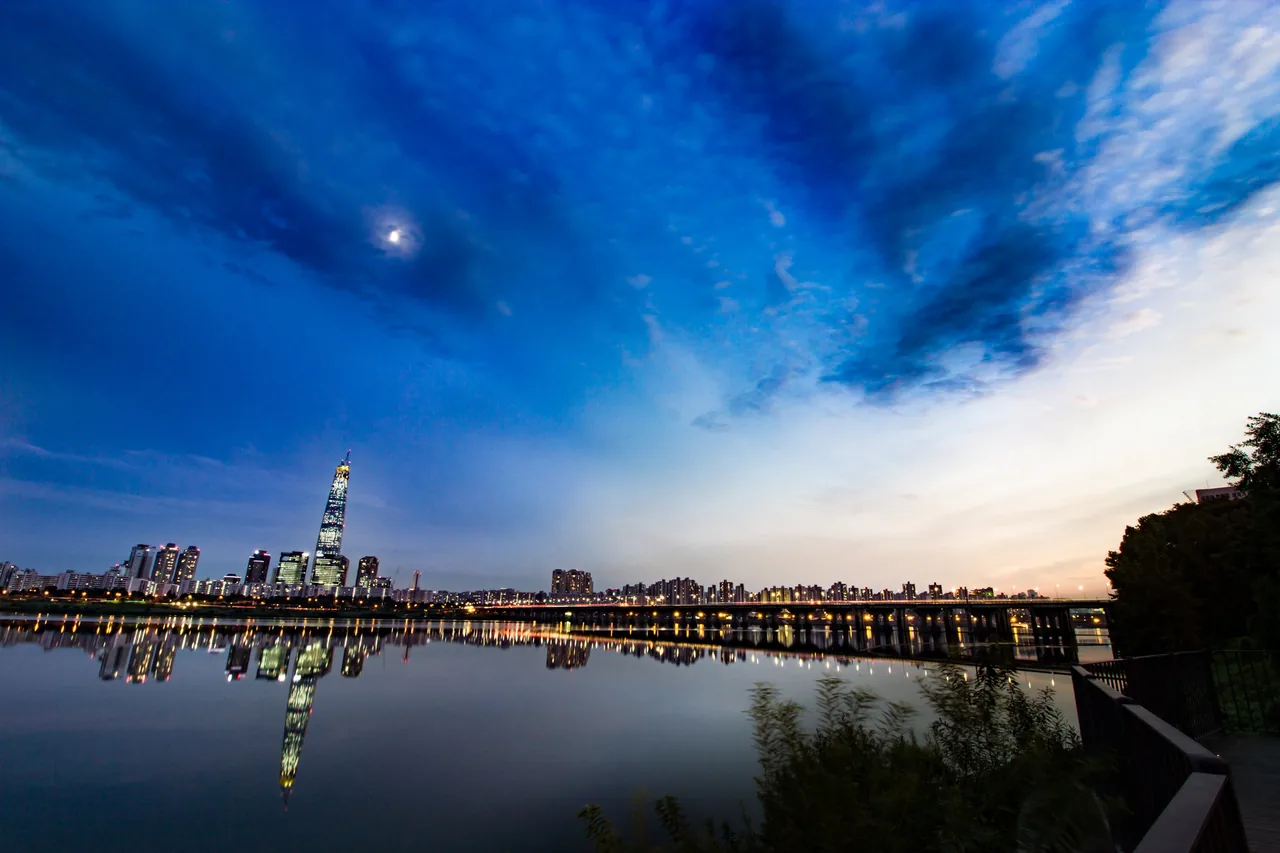
| Seoul Sky (Lotte World Tower) | Jamsil, floors 117–123, observatory ~478 m (Lotte World Tower is Korea’s tallest building at 555 m / 123 floors, and was the world’s 5th-tallest when it opened in 2017) | Sun–Thu 10:30–22:00; Fri, Sat & holidays 10:30–23:00 (last tickets 1 hr before close) | Adult ~₩31,000; child (3–12) ~₩27,000 | Connects directly to Jamsil Station underground, so you reach it umbrella-free; glass-floor Sky Deck at the top |
For N Seoul Tower, the enclosed circular bus (routes 02 and 03) is the most rain-proof way up when the cable car is on hold. Book tickets ahead via
for the tower and
for Seoul Sky. Pins: N Seoul Tower Map, Seoul Sky Map.
8. The Jamsil / Lotte World cluster: a whole day under one roof
If you only remember one rainy-day idea, make it Jamsil. From Jamsil Station (Lines 2 and 8), Lotte World, the aquarium, Seoul Sky, and Lotte World Mall are all linked underground, so a full day happens without an umbrella.
- Lotte World Adventure (indoor): A large indoor theme park under a glass dome, so rides, parades, and the ice rink run regardless of the weather.
- Outdoor Magic Island is the one part that may partly close in rain; the indoor dome carries the day.
- All connected: theme park, aquarium, observatory, and mall dining, reachable dry from the subway.
For ride details and tickets, see our dedicated Lotte World Seoul guide.
9. Giant malls and department stores: shop, eat, and explore
Seoul’s flagship malls are destinations in their own right, with gardens, libraries, and cinemas built in. Any one of them can fill a rainy day of shopping, eating, and browsing.
| Venue | Location | Why it’s great in the rain |
|---|---|---|
| The Hyundai Seoul | Yeouido, Parc.1 | About 89,000 m2. The 5th-floor Sounds Forest is a 3,300 m2 indoor garden with real grass, 30 trees, and a 20 m glass ceiling for natural light. Hours: Mon–Thu 10:30–20:00, Fri–Sun 10:30–20:30 (dining to 22:00), closed once a month. |
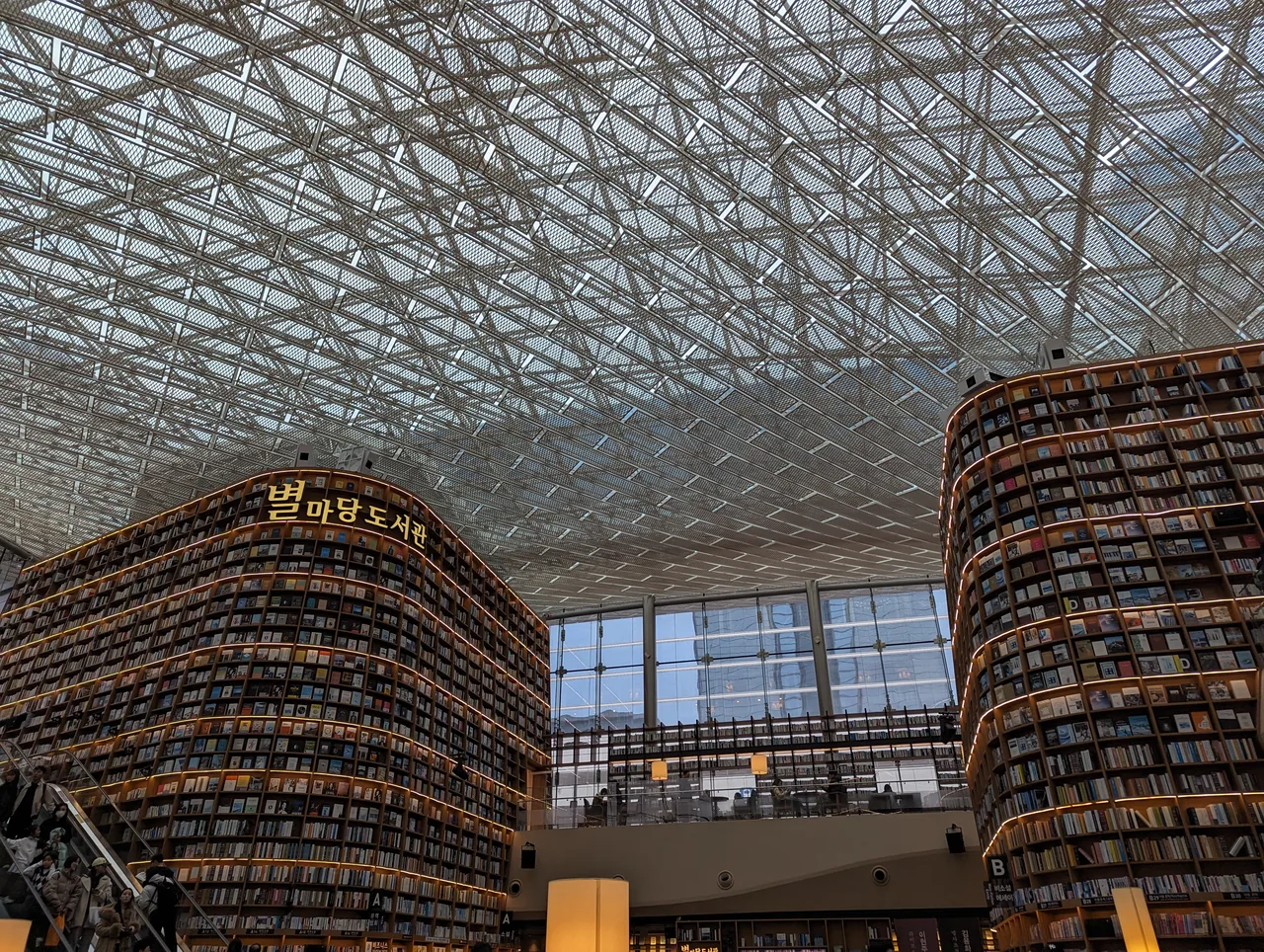
| Starfield COEX Mall | Samseong, Gangnam | One of Asia’s largest underground malls, 300+ stores. Free Starfield Library (open roughly 10:00–22:00, 13 m shelves), the SEA LIFE aquarium, and a Megabox with IMAX and 4DX. |
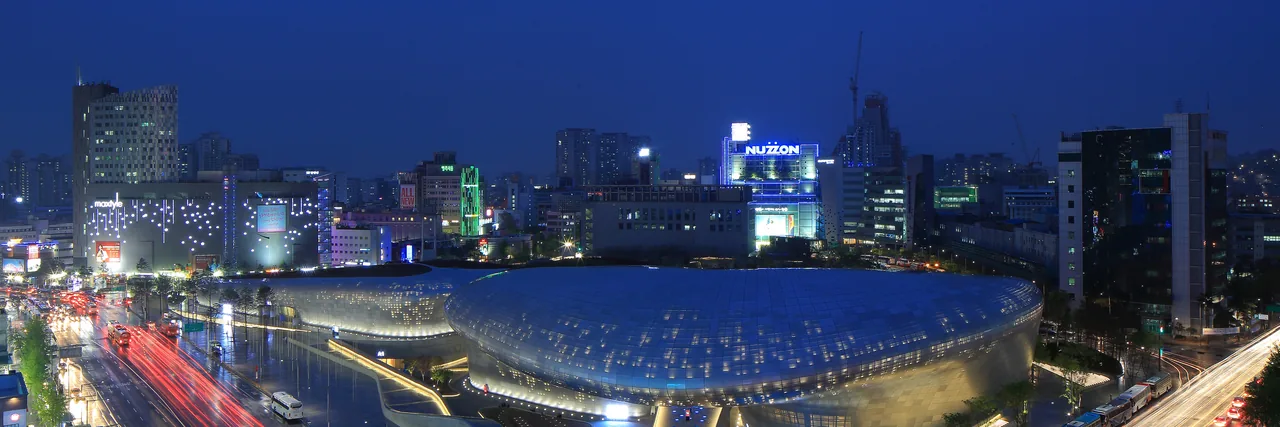
| DDP (Dongdaemun Design Plaza) | Dongdaemun | Zaha Hadid’s curving landmark, with design exhibitions (special shows roughly ₩8,000–15,000) and an LED rose garden of about 25,000 blooms that lights up at dusk. Surrounding fashion malls run late; wholesale floors open 20:00–05:00. |
| More options | — | Times Square (Yeongdeungpo), IFC Mall (Yeouido), and Lotte World Mall (Jamsil) are all large enough for an indoor day out. |
Pins: The Hyundai Seoul Map, Starfield COEX Mall Map, DDP Map.
10. Underground shopping cities: walk for blocks, no umbrella
Many of Seoul’s subway stations are linked by underground passages, so you can walk for blocks, browse hundreds of shops, and never touch the rain. These arcades are their own small cities.
| Arcade | Location / subway | What to expect |
|---|---|---|
| Goto Mall (Gangnam Terminal Underground) | Express Bus Terminal (Lines 3, 7, 9) | Seoul’s largest underground arcade, 880 m and around 620 shops (clothing, accessories, cosmetics, flowers, homeware). Open 10:00–22:00, closed the 3rd Thursday monthly plus Lunar New Year and Chuseok; largely cash-based. |
| Gangnam Station Underground | Gangnam (Line 2, Sinbundang) | 210+ fashion and accessory shops with a young, trend-driven feel. |
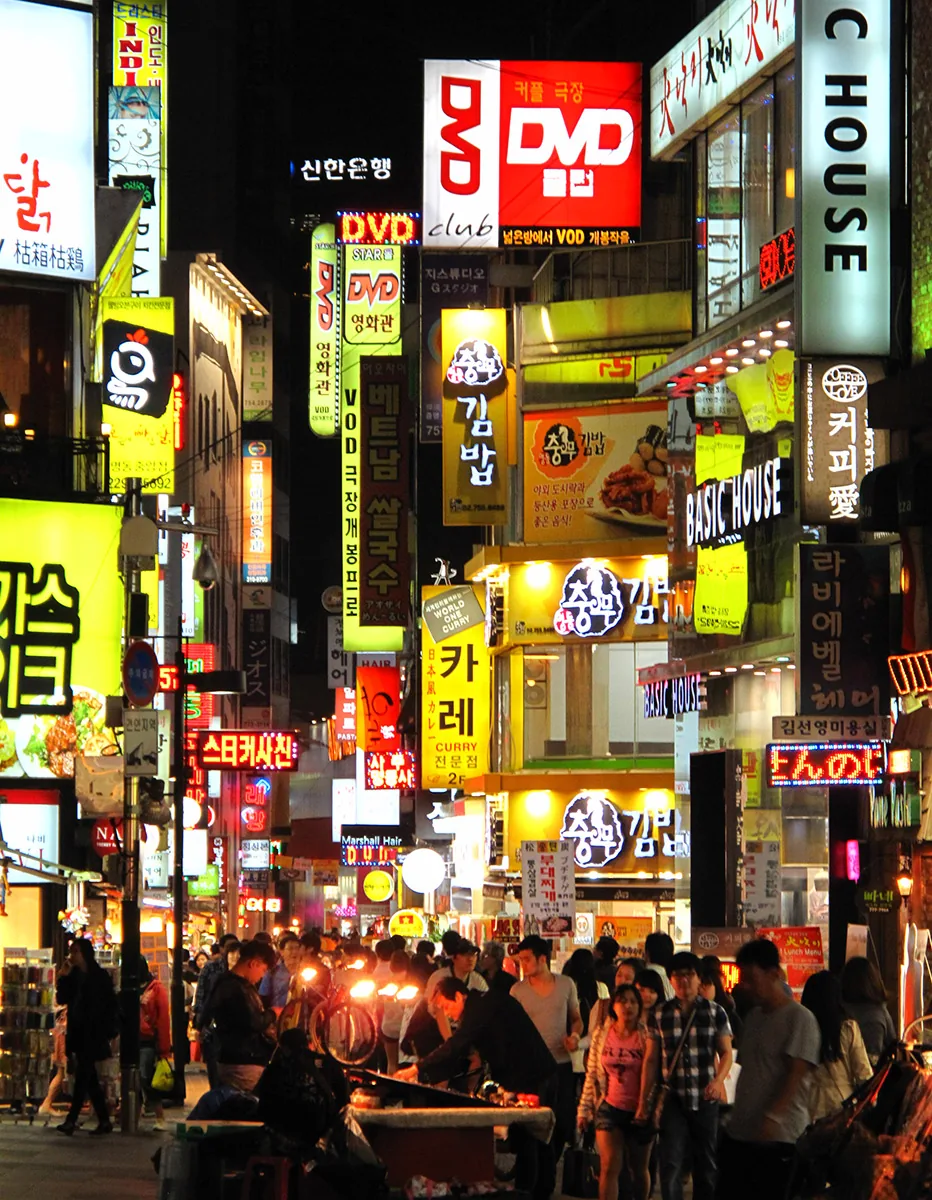
| Myeongdong Underground | Myeongdong / Euljiro 1-ga | Quieter than street level, with a local feel and connections to several exits. |
Pin: Goto Mall Map.
11. Jjimjilbang and spas: the best call on a cold, wet day
Nothing beats a jjimjilbang when you are chilled and soaked. You get a bathhouse, saunas, sleeping rooms, food, and entertainment all in one building, so you never have to step back outside.
Dragon Hill Spa (Yongsan, open 24 hours) is a good first pick, a large complex with saunas, hot pools, sleeping rooms, karaoke, an arcade, a kids’ play area, a movie room, a PC room, a salon, a gym, and a rooftop garden. Entry varies by time and channel, starting from around the low ₩10,000s, with an hourly surcharge if you exceed the base time.
First time in a jjimjilbang? Here is the flow:
- Store your shoes in a locker, then collect a towel and jjimjilbang clothes at the counter.
- Head to the gender-separated bathhouse (this part is nude); wash thoroughly with soap and shower before entering the pools.
- Change into the jjimjilbang clothes and enjoy the mixed common areas (family and co-ed are fine): sauna rooms, sleeping rooms, and food courts.
- Settle your bill on the way out, based on your total time inside.
Pin: Dragon Hill Spa Map.
12. Themed and animal cafés: café-hop while it pours
Hongdae is the heartland of Seoul’s café culture, and a rainy afternoon is a fine excuse to hop between a few. From character stores to animal cafés, you can linger for hours over one drink.
- Character stores: Line Friends Myeongdong flagship (Seoul’s largest, with a basement eatery), Kakao Friends Hongdae flagship (3 floors, a Ryan café and Choonsik space), and the Gangnam flagship.
- Animal cafés (Hongdae): Thanks Nature Cafe (a sheep café; berry waffle around ₩12,500), Meerkat Friends (meerkats, arctic fox, raccoon, wallaby and more), plus cat and dog cafés such as Bau House.
- Board game and comic (manhwa) cafés: concentrated in Hongdae, Gangnam, and Konkuk University, ideal for nursing a drink and staying put.
Pins: Line Friends Myeongdong Map, Thanks Nature sheep café Map.
13. Hands-on indoor experiences: make the most of a wet afternoon
A rainy afternoon is a great time for a hands-on class, since these all happen fully indoors and give you something to take home. Many run in multiple languages for international visitors.
- Kimchi-making and tteokbokki classes: found near Myeongdong, around Gyeonghuigung, and in Bukchon hanok houses; 1–2 hours, often with hanbok and a photo zone, and your kimchi vacuum-packed to take away.
- Hanbok photo studios (indoor): a dry, styled way to get keepsake photos.
- K-pop dance classes and Korean cooking classes: both indoor and well suited to a rainy day.
14. VR, arcades, escape rooms, screen sports, and cinema
For an active indoor day, Seoul’s entertainment complexes deliver: VR arenas, arcades, escape rooms, and premium cinemas are everywhere. Here is a quick map of the main types.
| Type | Where | Notes |
|---|---|---|
| VR | VR Square Hongdae (6 floors, 34 titles); VR Station Gangnam (11:00–23:00, last entry 22:00); VR zone at I’Park Mall Yongsan | Walking sims, simulators, escape and arena modes |
| Arcades & games | Citywide arcades, escape-room cafés, screen golf and screen baseball, karaoke, bowling | Easy to combine several in one building |
| Cinema | Megabox COEX (IMAX, 4DX, Boutique M premium with Evian, blankets, slippers); CGV and Lotte Cinema citywide | Some screenings have English subtitles |
15. Covered markets and food halls: warm bites out of the rain
You can still eat your way through a Seoul market in the rain, as long as you pick a covered one. The classic choice is a market whose lanes are roofed over.
- Gwangjang Market (Jongno): its alleys are covered by roofs and arcades, so browsing and eating go on rain or shine. Open 9:30–22:30 (later hours are food-focused); try bindaetteok, mayak gimbap, yukhoe, and sundae.
- Department store food halls: the basements of The Hyundai, Shinsegae, and Lotte are prime rainy-day spots for a meal or dessert.
Pin: Gwangjang Market Map.
16. With kids: rainy-day picks for families
Traveling with children on a wet day is easy in Seoul, thanks to a strong set of hands-on indoor attractions. These keep younger visitors busy without a drop of rain.
- Seoul Children’s Museum (Sangsangnara): inside Children’s Grand Park in Neung-dong, four floors of hands-on play across sensory, space, art, nature, story, and science themes.
- National Museum of Korea Children’s Museum: free, reservation required.
- National Children’s Science Museum / Seoul Science Museum: hands-on STEM exploration.
- Also great for kids: the indoor Lotte World, the aquariums, and Trick Eye Museum in Hongdae.
17. When the rain eases: light-rain outdoors and getting around dry
If the rain softens to a drizzle, a few outdoor spots become pleasant again, especially where there is shelter. And when it doesn’t, Seoul’s underground network lets you cover the city without an umbrella.
- Palaces: Gyeongbokgung and the other palaces have covered viewing areas under the eaves, and hanbok rental shops are indoors (some lend umbrellas in the rain). See our Gyeongbokgung Palace & hanbok guide.
- Bukchon Hanok Village: fine to stroll under an umbrella, but the sloped stone lanes get slippery, so tread carefully.
- Ikseon-dong and Insa-dong’s Ssamziegil: narrow, partly roofed lanes make it easy to duck a passing shower while you browse.
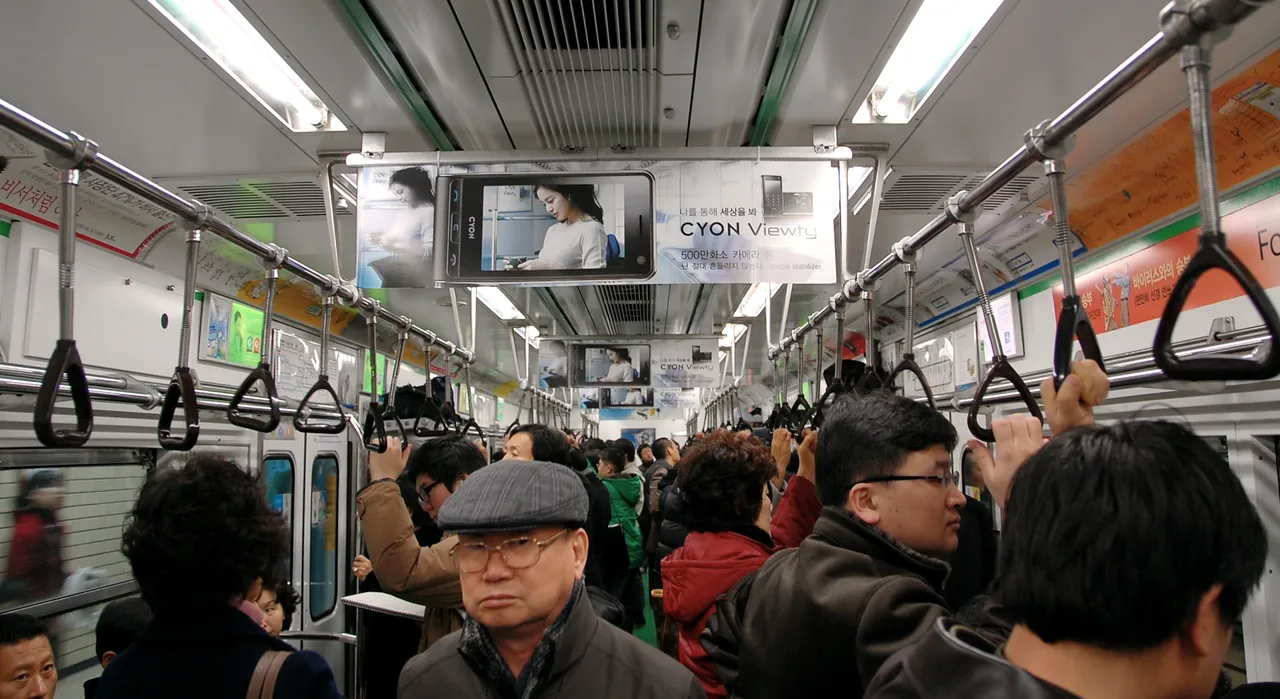
To move around dry, lean on the subway. Underground passages connect stations and malls at Myeongdong, Gangnam, Jamsil, the Express Bus Terminal, and COEX, so you can hop between several stops without surfacing.
| Getting around | Detail |
|---|---|
| Subway base fare (card) | ₩1,550 (reflecting the June 2025 increase; subject to change) |
| Transit cards | T-money, or a short-term Climate Card pass; compare in our Climate Card vs T-money comparison |
| Full transport guide | See our guide to getting around Korea for everything on getting around Korea |
18. Half-day rainy routes, and the bottom line
To make planning easy, here are four half-day routes that keep umbrella time to a minimum. Pick the one nearest where you are staying.
Gangnam / COEX route
- Start at the free Starfield Library inside COEX Mall.
- Walk over to the SEA LIFE COEX Aquarium.
- Finish with a film at Megabox or shopping and dining in the mall, all connected underground.
Jamsil route (all-day indoor)
- Spend the morning at the indoor Lotte World.
- Drop down to Lotte World Aquarium.
- Ride up to Seoul Sky for the view.
- End with a meal in Lotte World Mall, all reachable dry from Jamsil Station.
Yongsan route
- Begin at the National Museum of Korea.
- Continue to the War Memorial of Korea.
- Wind down into the evening at Dragon Hill Spa.
Downtown Myeongdong / Gwanghwamun route
- Start with MMCA Seoul, or lunch at Gwangjang Market.
- Browse the Myeongdong Underground and Line Friends.
- Cap the night with a NANTA performance.
Headed south next? See our sister guide, Busan When It Rains guide, for a rainy-day plan in Busan.
🎡Things to Do12
🚇Getting Around4
🧭All-Korea essentials119
Rainy-day Seoul: frequently asked questions
Images: Starfield Library: Sean Young, CC BY 4.0. Seoul subway interior: LWY, CC BY 2.0. War Memorial of Korea: Adbar, CC BY-SA 3.0. DDP at night: Eugene Lim, CC BY 2.0. Lotte World Tower: Jongjin Lee, CC BY 3.0. Myeongdong (featured image): Ken Eckert, CC BY-SA 4.0. All via Wikimedia Commons.